For a company with several hundred employees and multiple branches, every round of contracts or salary appendices means dozens of document sets sent by post, missing signature pages and lost originals. Electronic labour contracts solve most of this, but only when set up under the right legal conditions with a matching storage process.
This article sets out the conditions for an electronic labour contract to be valid, criteria for choosing a platform, a roadmap for moving from paper, and what HR must do so contracts hold up in disputes or inspections.
Legal validity of electronic labour contracts
A labour contract concluded by electronic means in the form of a data message under the law on electronic transactions has the same validity as a written labour contract (Clause 1, Article 14 of the Labor Code No. 45/2019/QH14)[1]. The framework for data messages and electronic signatures is the Law on Electronic Transactions No. 20/2023/QH15 and Decree No. 23/2025/ND-CP on electronic signatures and trust services.
Specifically for electronic labour contracts, the Government has issued Decree No. 337/2025/ND-CP. The electronic labour contract platform managed by the Ministry of Home Affairs went into operation from 1 July 2026 to receive and connect contract data. Companies should check the application roadmap and specific connection requirements under this decree and the Ministry’s guidance before choosing a solution.
Conditions for an electronic labour contract to hold up in a dispute
In a dispute, the question is not “was it signed electronically” but “can we prove who signed, when, and that the content was not altered”. The five requirements below underpin every e-signing process:
| Requirement | How to meet it | Evidence to retain |
|---|---|---|
| Identifying the signer correctly | Digital signature or electronic signature with identity verification (eKYC, OTP tied to a registered phone number) | Digital certificate, authentication log |
| Company signatory has authority | Legal representative or a person authorised in writing | Valid power of attorney |
| Content integrity after signing | Lock the document after signing, apply a timestamp | Signed original file, hash, timestamp |
| All mandatory content included | Template per Article 21 of the Labor Code | Legal-approved template, version history |
| Accessible and producible when needed | Employees can download their copy; the company can export on inspection or court request | Export procedure, backups |
The company’s signatory must have authority under Article 18 of the Labor Code. If the General Director authorises the HR Director or a branch director to sign, the power of attorney should be stored in the same system and its term tracked; this is often overlooked when switching to bulk e-signing.
Choosing a signing and contract management platform
The platform should at least: provide digital or electronic signatures through a lawful trust service provider; connect to the electronic labour contract platform under Decree No. 337/2025/ND-CP; log all actions; allow export of all contracts in common formats when the service ends; state where data is stored; and sign a personal data processing agreement with the company.
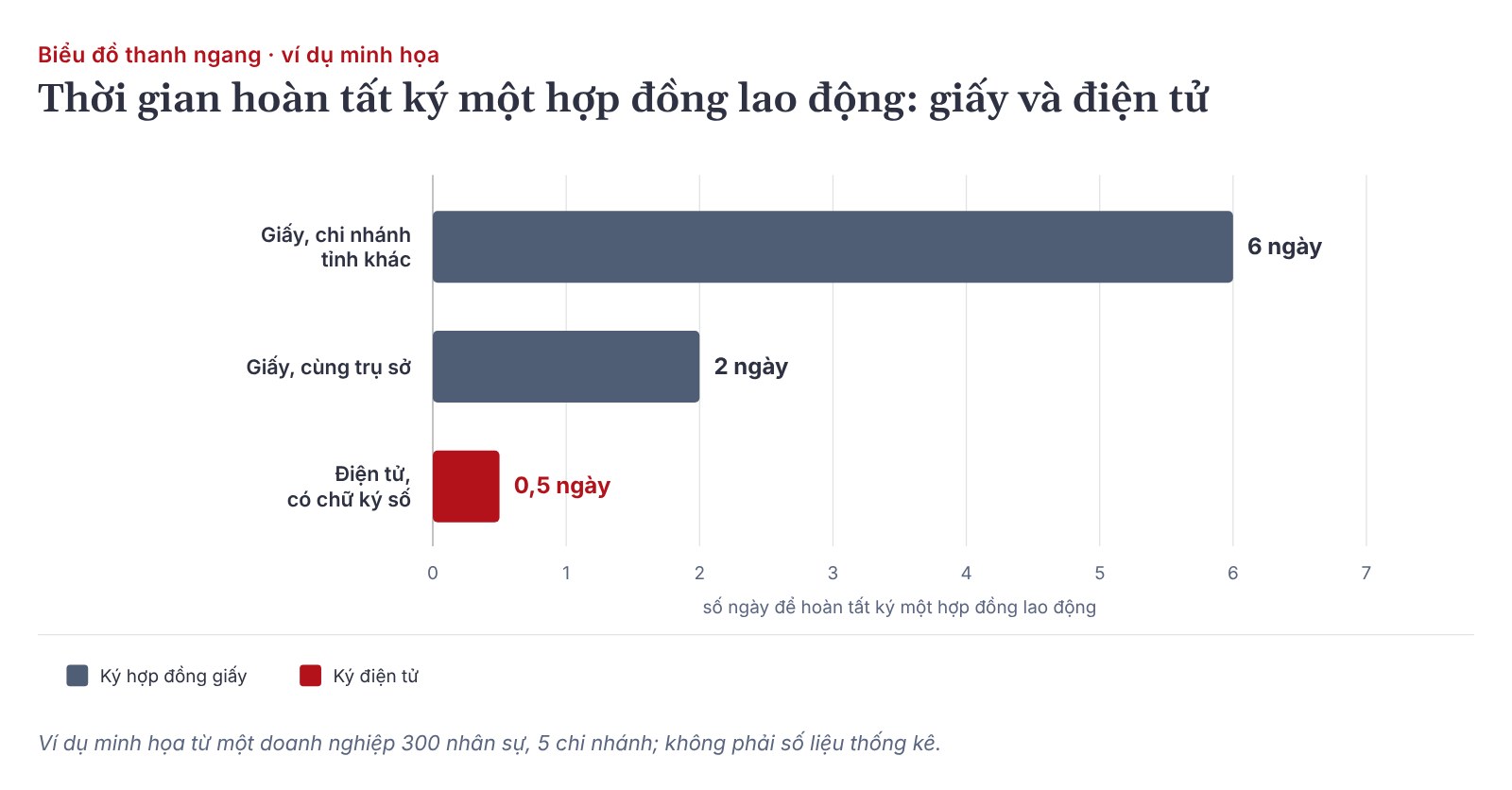
Figure 01. Bar chart of the time to complete signing of one employment contract: paper vs electronic (days)
Illustrative example from a company with 300 staff and 5 branches; not statistics
The shorter the bar, the faster the signing; the red bar is electronic signing with a digital signature, cutting several days to about half a day.
The time savings are clear, but the real cost lies in initial setup: standardising templates, integrating with HR software, training managers and supporting employees using digital signatures for the first time.
Roadmap from paper to electronic labour contracts
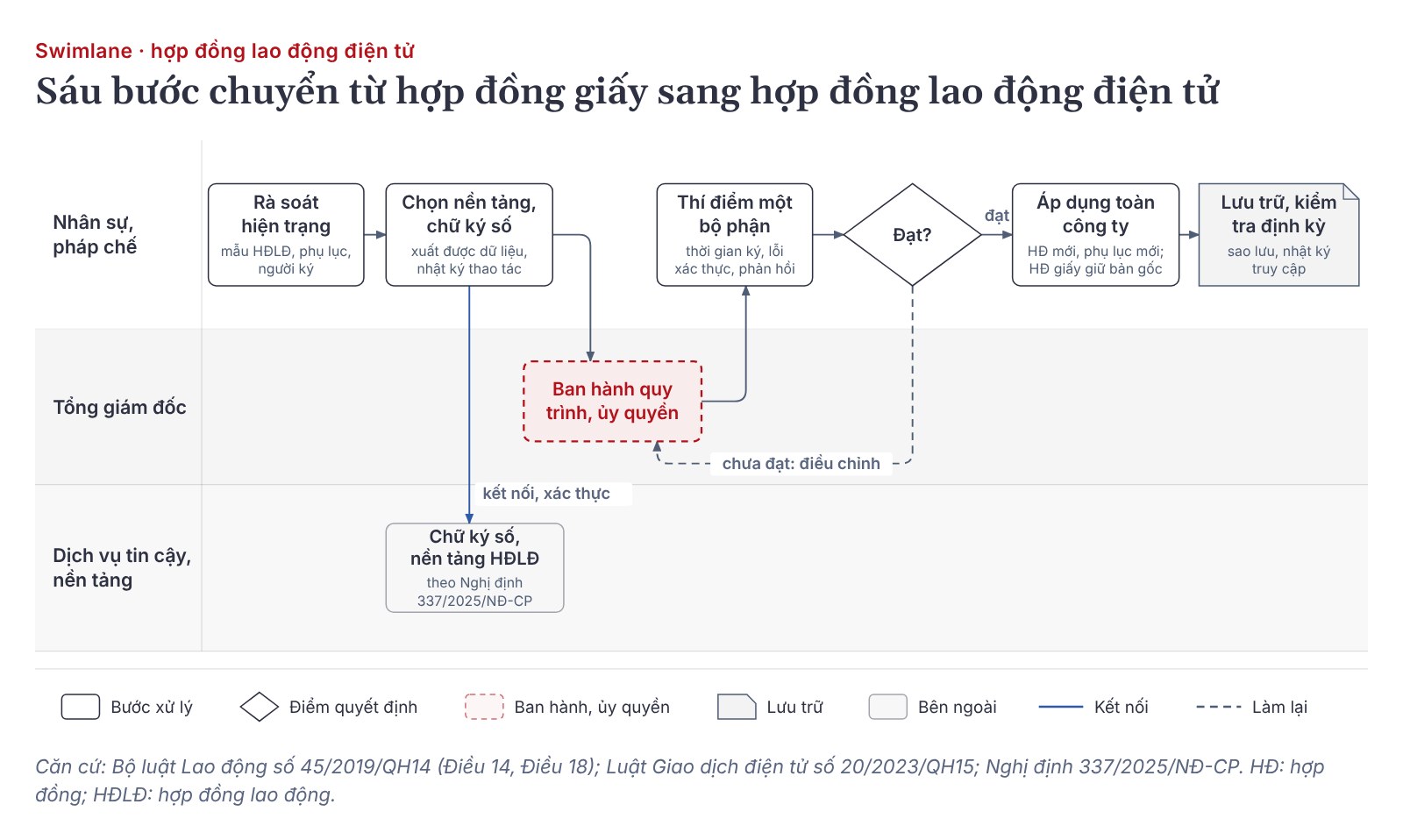
Figure 02. Swimlane of the six steps to move from paper to electronic employment contracts
Basis: Labour Code No. 45/2019/QH14 (Articles 14 and 18); Law on E-Transactions No. 20/2023/QH15; Decree 337/2025/ND-CP
The red box is the general director issuing the procedure and written signing authorisations; the blue arrow is the link to the digital signature service and the electronic employment contract platform. If the pilot fails, the dashed arrow returns to revise the procedure.
Paper contracts still in force do not have to be re-signed. A common approach is to keep the paper original, digitise it for reference, and e-sign from the next appendix onward (clearly referencing the paper contract number and date). Scans are for reference only; for an electronic version to replace the original, the conversion must meet the conditions of the Law on Electronic Transactions, so paper originals should not be destroyed.
Electronic conclusion requires the employee’s consent. The process should provide an alternative for those without devices or who do not agree to e-sign, and separate guidance for special cases such as minors or foreign employees needing bilingual versions.
Storage, data protection and upcoming changes
HR files are company records with retention periods under the Law on Archives No. 33/2024/QH15. The system must keep files readable for many years, even after changing providers. Contracts contain personal data, including ID numbers, bank accounts and health status, so access should be role-based and protected under the Law on Personal Data Protection No. 91/2025/QH15.
For data repositories generally, Decree No. 363/2026/ND-CP (effective 11 November 2026) fines individuals VND 20–40 million for failing to issue a data collection procedure or apply data protection measures (Clause 1, Article 8), with organisations fined double; acts within the scope of personal data protection are handled under separate rules. In addition, on 21 November 2026 the National Assembly passed the Law amending and supplementing certain articles of the Labor Code, the Law on Archives, the Law on Gender Equality, the Law on Red Cross Activities and the Law on Employment, effective 1 March 2027, adding public holidays on 24 November and 27 July; companies should prepare updated appendices and internal rules on the new electronic platform itself.
Legal basis and sources
- Labor Code No. 45/2019/QH14 (effective 1 January 2021).
- Law on Electronic Transactions No. 20/2023/QH15 (effective 1 July 2024); Decree No. 23/2025/ND-CP on electronic signatures and trust services.
- Decree No. 337/2025/ND-CP on electronic labour contracts.
- Law on Archives No. 33/2024/QH15; Law on Personal Data Protection No. 91/2025/QH15 (effective 1 January 2026).
- Decree No. 363/2026/ND-CP on administrative penalties in the field of data, effective 11 November 2026.
- Law amending and supplementing certain articles of the Labor Code, the Law on Archives, the Law on Gender Equality, the Law on Red Cross Activities and the Law on Employment, passed on 21 November 2026, effective 1 March 2027.
How Justeps supports businesses
- Reviewing and standardising labour contract templates, appendices and signing authorisations: Regulatory advice and compliance.
- Designing signing, storage and conversion processes for electronic labour contracts: Operational setup.
- Building HR personal data protection policies: Governance standardisation.
- Reviewing contracts with e-signature platform providers: Corporate governance.
- Training HR teams and branch managers: In-house training.
Contact Justeps for advice on the right conversion roadmap.
Frequently asked questions
Is an electronically signed labour contract as valid as a paper one?
Yes. A contract concluded by electronic means as a data message under electronic transaction law has the same validity as a written contract (Clause 1, Article 14 of the Labor Code).
Must all paper contracts in force be re-signed?
No. The company keeps the paper original and may e-sign subsequent appendices, clearly referencing the paper contract.
How do employees without a digital signature sign?
They can use an identity-verified electronic signature provided by the platform, or an alternative paper process. Electronic conclusion requires the employee’s consent.
Can a branch director sign electronic labour contracts?
Yes, with a valid written authorisation from the legal representative, consistent with Article 18 of the Labor Code. The authorisation should be stored and its term tracked in the same system.
What happens to old contracts when changing platform provider?
The provider contract must require handover of all data, signed original files and logs when the service ends. The company should also back up regularly.
Related articles
- Managing subcontractors in a construction company: selection, contracts, acceptance and payment
- Warehousing and logistics contracts: liability for goods and warehouse operating structure
- Work permits for foreigners, compulsory social insurance and HR management files
This article is for reference and reflects the regulations in force at the time of publication. Please consult Justeps for advice tailored to your company’s records and situation.
For further information, please contact:
📩 Email: info@justeps.vn
🌐 Website: https://justepslegal.com · https://justeps.vn
🌐 Page: Justeps
☎️ Hotline (Zalo): 096 172 2607
📍 Thanh Xuan Office: 12th Floor, Licogi 13 Tower, 164 Khuat Duy Tien Street, Thanh Xuan Ward, Hanoi, Vietnam
📍 Ha Dong Office: LK06B, No.10, Dong Dua Area, Ha Dong Ward, Hanoi, Vietnam
📍 Ho Chi Minh City Branch: 528 Le Van Sy, Ho Chi Minh City, Vietnam
📍 Hai Phong Office: Truong Thinh Village, Ha Dong Commune, Hai Phong, Vietnam
📍 Quang Ninh Office: Van Don Special Zone, Quang Ninh Province, Vietnam