An internal financial regulation for a limited liability company is usually mentioned only when something goes wrong: an advance left open all year, a major contract signed without the Members’ Council, or tax finalisation disallowing expenses for lack of documents. Only then does the company realise it has no common rules on who may spend, how much, and with what evidence.
This article focuses on four operational pillars of a financial regulation: expense norms, approvals, advances and settlement, together with the points that must align with the Law on Enterprises, accounting and tax law so the regulation can be used immediately.
What an internal financial regulation for a limited liability company covers
A workable regulation for an LLC with 30 to 300 staff usually has eight parts: general principles and scope; management of capital and assets; revenue and receivables; costs and expense norms; approval authority; advances and settlement; fund appropriation and profit distribution; inspection, reporting and handling of breaches. Appendices include the norms table, the approval limit matrix and forms.
On issuing authority, the Law on Enterprises No. 59/2020/QH14 (as amended by Law No. 76/2025/QH15)[1] assigns the Director or General Director to issue internal management regulations unless the charter provides otherwise. For the financial regulation, many companies provide in the charter that the Members’ Council (multi-member LLC) or the owner (single-member LLC) approves it, because it touches investment limits, borrowing and profit distribution.
Expense norms, drafting so accounting can control them
A good norm answers three questions: what is the maximum, who approves an excess and what documents are needed. A vague norm such as “reasonable entertainment expenses” does not help accounting reject anything. The table below is an illustrative format:
| Expense item | Norm (illustrative) | Approver | Required documents |
|---|---|---|---|
| Client entertainment | Up to VND 2,000,000 per occasion, VND 15,000,000 per month per department | Department head; above norm: Director | Invoice, guest list, purpose |
| Mobile phone and data | Fixed allowance VND 300,000–800,000 per month by position | Director approves the list at the start of the year | Allowance decision, payroll |
| Stationery and supplies | Per quarterly department budget | Administration, controlled by accounting | Request form, invoice, goods receipt |
| Purchase of assets and equipment | Per annual plan; 3 quotes required from VND 50,000,000 | Per the approval limit matrix | Quotes, contract, handover record, invoice |
| External training support | Up to VND 10,000,000 per person per year | Department head, HR | Training agreement, certificate, invoice |
Norms should be reviewed once a year when the budget is prepared. Fixed allowances such as phone or fuel need a written allowance decision and should run through payroll so that personal income tax treatment is clear.
Approval limit matrix
Approval limits separate the rights to propose, control and decide. The chief accountant does not decide spending in place of the Director but may reject expenses lacking documents or exceeding norms. The Director’s ceiling must match the charter and Article 55 of the Law on Enterprises: the Members’ Council decides loan, lending and asset sale contracts worth 50% or more of total assets in the latest financial statements (or a lower ratio set by the charter).
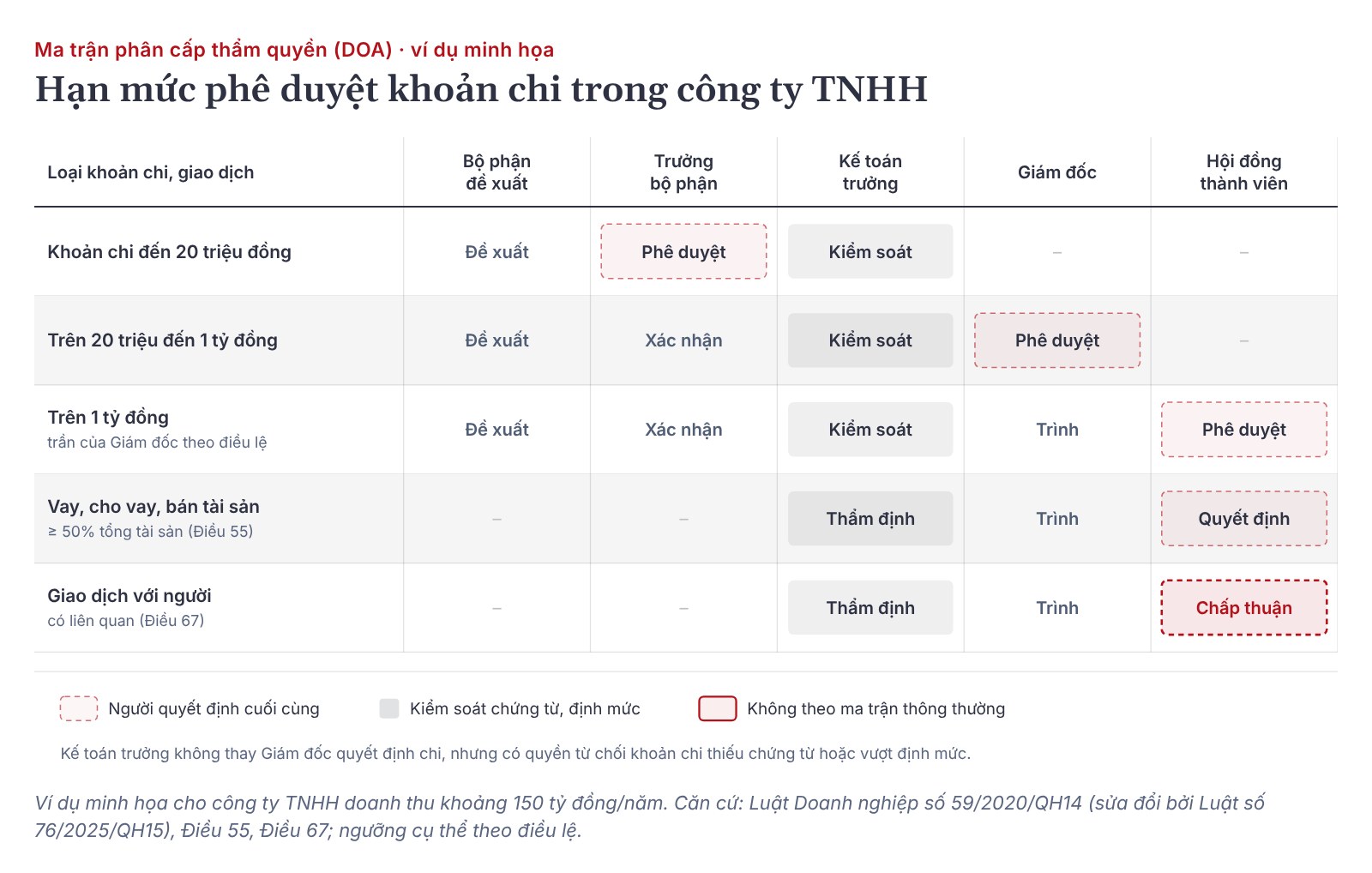
Figure 01. Approval authority matrix for expenditures in a limited liability company
Illustrative example; basis: Law on Enterprises No. 59/2020/QH14 (amended by Law No. 76/2025/QH15), Articles 55 and 67; actual thresholds per the charter
Each row is a threshold or transaction type; dashed cells mark the final decision-maker and grey cells the chief accountant's control. The red cell is related-party transactions, which need Members' Council approval outside the normal matrix.
Transactions with members, the legal representative, the Director and their related persons do not follow the ordinary matrix. They must be approved by the Members’ Council under Article 67 of the Law on Enterprises, so the regulation needs a separate article and a separate proposal template.
Advances and settlement
Advances carry the most risk: money leaves the company without documents, the recipient resigns, or the advance is used for another purpose. The regulation should specify who may receive advances (only employees under labour contracts), the maximum per advance, the settlement deadline (for example 7 working days after completing the task) and the rule of no new advance while an overdue one remains.
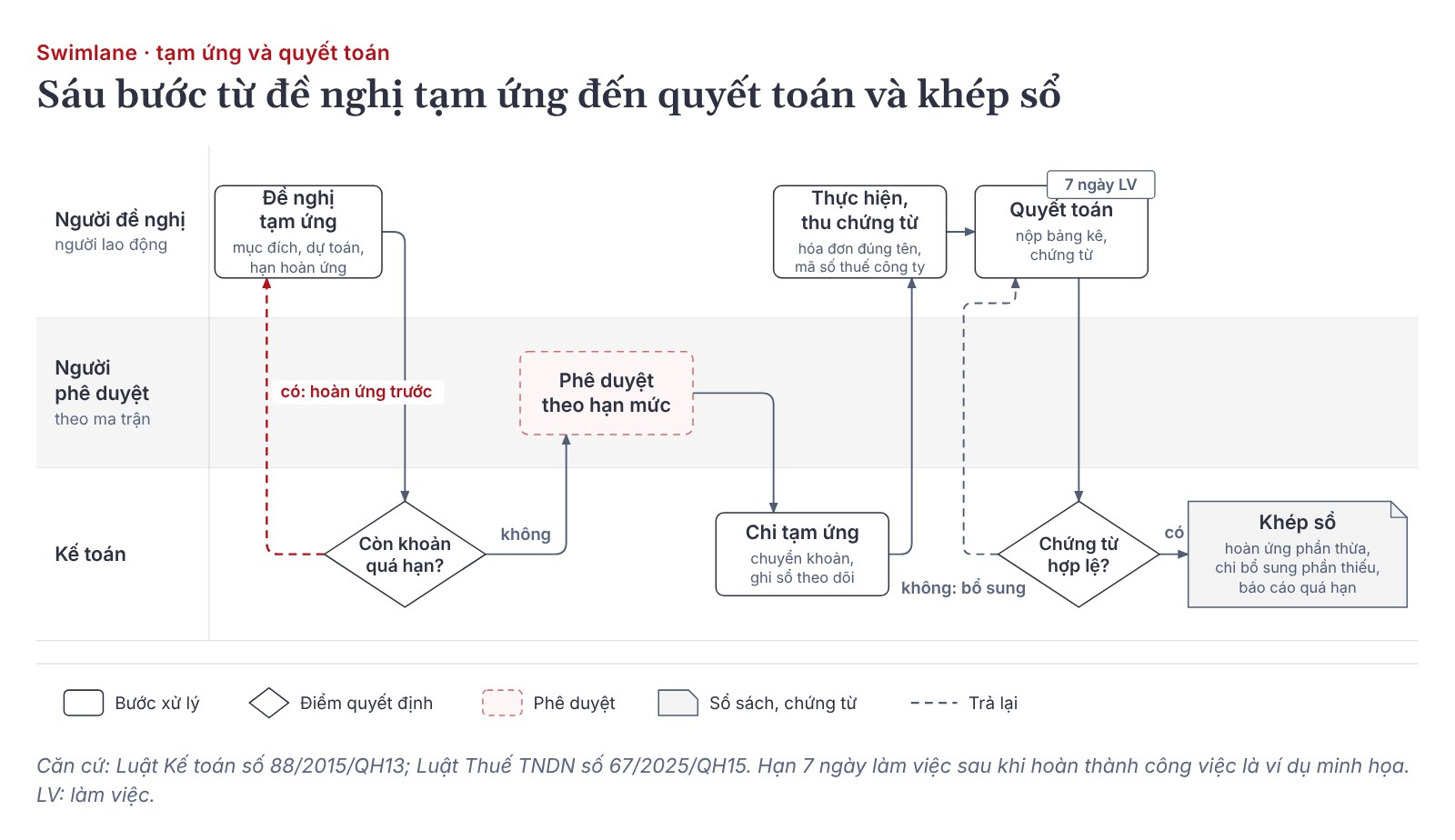
Figure 02. Swimlane of the six steps from advance request to settlement and closing
Basis: Accounting Law No. 88/2015/QH13; CIT Law No. 67/2025/QH15 | The 7-working-day deadline is illustrative
The first diamond blocks a new advance while an overdue one is outstanding (red arrow); the dashed box is approval under the authority matrix. Invalid documents send the case back to settlement for supplementation.
A common error is a clause stating that “overdue advances will be deducted from salary”. Article 102 of the Labor Code No. 45/2019/QH14 permits salary deductions only to compensate for damage to tools, equipment or property under the statutory procedure. A safer approach is a separate repayment undertaking signed by the recipient, monthly reminders from accounting and an overdue list reported to the Director.
Documents and deductible expense conditions
The financial regulation must align with the documentation standards of the Law on Accounting No. 88/2015/QH13 and the deductibility conditions of the Law on Corporate Income Tax No. 67/2025/QH15: expenses actually incurred, for business purposes, with lawful invoices and documents. Decree No. 320/2025/ND-CP (effective from 15 December 2025) requires expenses with invoices of VND 5 million or more to be paid by non-cash means to be deductible; the Government is consulting on a draft amendment to this decree, so the regulation should refer to “the threshold under prevailing regulations” rather than hard-coding the figure.
Small companies should also track tax reductions: enterprises with annual revenue of no more than VND 10 billion receive a 30% reduction in CIT payable for the 2026 and 2027 tax periods (Article 3 of Decree No. 398/2026/ND-CP)[4]. Accounting should keep a cumulative revenue tracker to make correct quarterly provisional payments.
Profit distribution, inspection and updating the regulation
A multi-member LLC may distribute profit only when it is profitable, has fulfilled its tax and other financial obligations and can still pay all debts due after distribution (Article 69 of the Law on Enterprises). The regulation should set the order: offset losses, appropriate funds under the charter, then distribute by capital contribution ratio.
Finally, assign inspection responsibilities: the chief accountant reports quarterly on expenses over norms, overdue advances and disallowed expenses; the Director submits an annual report to the Members’ Council. Whenever tax law, minimum wages or the charter change, the norms appendix and approval matrix should be updated.
Legal basis and sources
- Law on Enterprises No. 59/2020/QH14, as amended and supplemented by Law No. 76/2025/QH15 (effective 1 July 2025).
- Law on Accounting No. 88/2015/QH13.
- Law on Corporate Income Tax No. 67/2025/QH15 and its implementing Decree No. 320/2025/ND-CP (effective 15 December 2025).
- Decree No. 398/2026/ND-CP on reduction of personal income tax and corporate income tax, effective from 29 October 2026.
- Labor Code No. 45/2019/QH14.
How Justeps supports businesses
- Drafting or reviewing internal financial regulations, norms tables and approval matrices: Governance standardisation.
- Amending the charter to allocate authority between the Members’ Council and the Director: Corporate governance.
- Setting up advance and settlement processes, forms and approval software: Operational setup.
- Reviewing deductible expenses and tax reductions: Tax, Customs & International Trade.
- Training department heads on the financial regulation: In-house training.
Contact Justeps for a regulation tailored to your company.
Frequently asked questions
Must a single-member LLC issue a financial regulation?
The law does not require every LLC to have a document titled financial regulation, but the company needs internal rules on norms and approvals to control spending and support expenses at tax finalisation.
Who signs and issues the financial regulation?
Under the Law on Enterprises, the Director or General Director issues internal management regulations unless the charter provides otherwise. Many companies require the Members’ Council or owner to approve the financial regulation.
Can salary be deducted if an employee fails to settle an advance?
Automatic salary deduction should not be provided. Article 102 of the Labor Code allows deductions only to compensate for property damage under the statutory procedure. Use a separate repayment undertaking.
Does a contract with a member’s company follow the ordinary limits?
No. It is a related-party transaction requiring Members’ Council approval under Article 67 of the Law on Enterprises.
How often should the financial regulation be updated?
At least once a year at budgeting, and whenever tax law, minimum wages or the charter change.
Related articles
- Spa therapist commission policy: income structure, contracts and service quality
- Work permits for foreigners, compulsory social insurance and HR management files
- Converting an agricultural processing cooperative into an enterprise: choosing the model and restructuring
This article is for reference and reflects the regulations in force at the time of publication. Please consult Justeps for advice tailored to your company’s records and situation.
For further information, please contact:
📩 Email: info@justeps.vn
🌐 Website: https://justepslegal.com · https://justeps.vn
🌐 Page: Justeps
☎️ Hotline (Zalo): 096 172 2607
📍 Thanh Xuan Office: 12th Floor, Licogi 13 Tower, 164 Khuat Duy Tien Street, Thanh Xuan Ward, Hanoi, Vietnam
📍 Ha Dong Office: LK06B, No.10, Dong Dua Area, Ha Dong Ward, Hanoi, Vietnam
📍 Ho Chi Minh City Branch: 528 Le Van Sy, Ho Chi Minh City, Vietnam
📍 Hai Phong Office: Truong Thinh Village, Ha Dong Commune, Hai Phong, Vietnam
📍 Quang Ninh Office: Van Don Special Zone, Quang Ninh Province, Vietnam