
Anti-money laundering compliance in real estate is no longer a matter for banks alone. Project developers, real estate trading floors and brokerage firms are all reporting entities under the Law on Anti-Money Laundering No. 14/2022/QH15, which means they must identify their own customers, detect unusual transactions and file reports with the regulator themselves.
The difficulty lies in operations. The first person to meet the customer is a sales agent, the person who receives the money is an accountant, the person who signs the contract is the legal team, and internal rules rarely say who is responsible for which part. This article looks at how to organise that work inside a real estate business.
Which real estate businesses must comply with anti-money laundering rules
The Law on Anti-Money Laundering No. 14/2022/QH15 (as amended and supplemented) places organisations and individuals engaged in real estate business among the relevant non-financial businesses and professions, except where they only lease, sub-lease or provide real estate consultancy. In practice, the group with the clearest obligations includes developers selling or hire-purchasing project products, businesses operating real estate trading floors and brokerage firms that collect money or arrange sale transactions.
Guidance is provided by Decree No. 19/2023/ND-CP and circulars of the State Bank of Vietnam. The anti-money laundering framework was adjusted during 2025–2026, including reporting thresholds, so the legal team should review the current documents before updating internal rules rather than keeping the figures in the old procedure.
Customer due diligence, what to collect and when
Customer identification must be carried out when the customer first establishes a relationship, i.e. before a deposit or reservation agreement is taken, not when the sale contract is signed. For individual customers, the minimum information includes full name, date of birth, nationality, occupation, personal identification number or passport, contact address and telephone number. For corporate customers, it also includes the name, enterprise code, legal representative, the person authorised to transact and information about the beneficial owner.
Beneficial ownership is the point real estate businesses most often miss. An apartment registered to a newly established company with small charter capital, whose representative has no visible connection to the source of funds, is a case where you need to ask who really owns and controls it. Likewise, when a customer buys through an authorised person, the file must contain information on both the principal and the attorney.
Information must be updated throughout the relationship, especially when the customer changes the payer, transfers the contract to someone else or asks for a refund to an account that is not theirs.
Reports real estate businesses must file
There are two main types of report for real estate businesses. Large-value transaction reports apply to cash transactions at or above the threshold set by the Prime Minister; because the threshold may change, internal procedures should say "according to the current threshold" and assign the legal team to keep it updated. Suspicious transaction reports apply when the business knows or has reasonable grounds to suspect that the assets in a transaction derive from crime or relate to money laundering, regardless of the transaction value.
Besides reporting, the business must issue internal anti-money laundering rules, assess its own risks, appoint a person in charge, train staff and retain customer identification and transaction records for at least 5 years. The fact that a suspicious transaction report has been filed must be kept confidential and must not be disclosed to the customer.
Allocating roles inside the business, who does what, and when
The table below shows a common allocation that Justeps often recommends for developers and trading floors with 30 or more sales staff.
| Task | Responsible unit | Timing | Output records |
|---|---|---|---|
| Collecting customer information | Sales staff, brokers | Before taking a deposit or reservation | Customer identification form, copies of documents |
| Verification and risk rating | Legal or compliance | Within 1–2 working days after receiving the form | Low, medium or high risk rating |
| Reconciling cash flows | Receivables accountant | Each time a payment is received | Log of payers and payment methods |
| Transaction reporting | AML officer | Within the statutory deadline | Report to the State Bank, internal minutes |
| Internal audit, training | Internal control, HR | At least once a year | Audit report, training attendance list |
The AML officer should be a manager with authority to request records from all departments, not a sales executive doing it on the side.
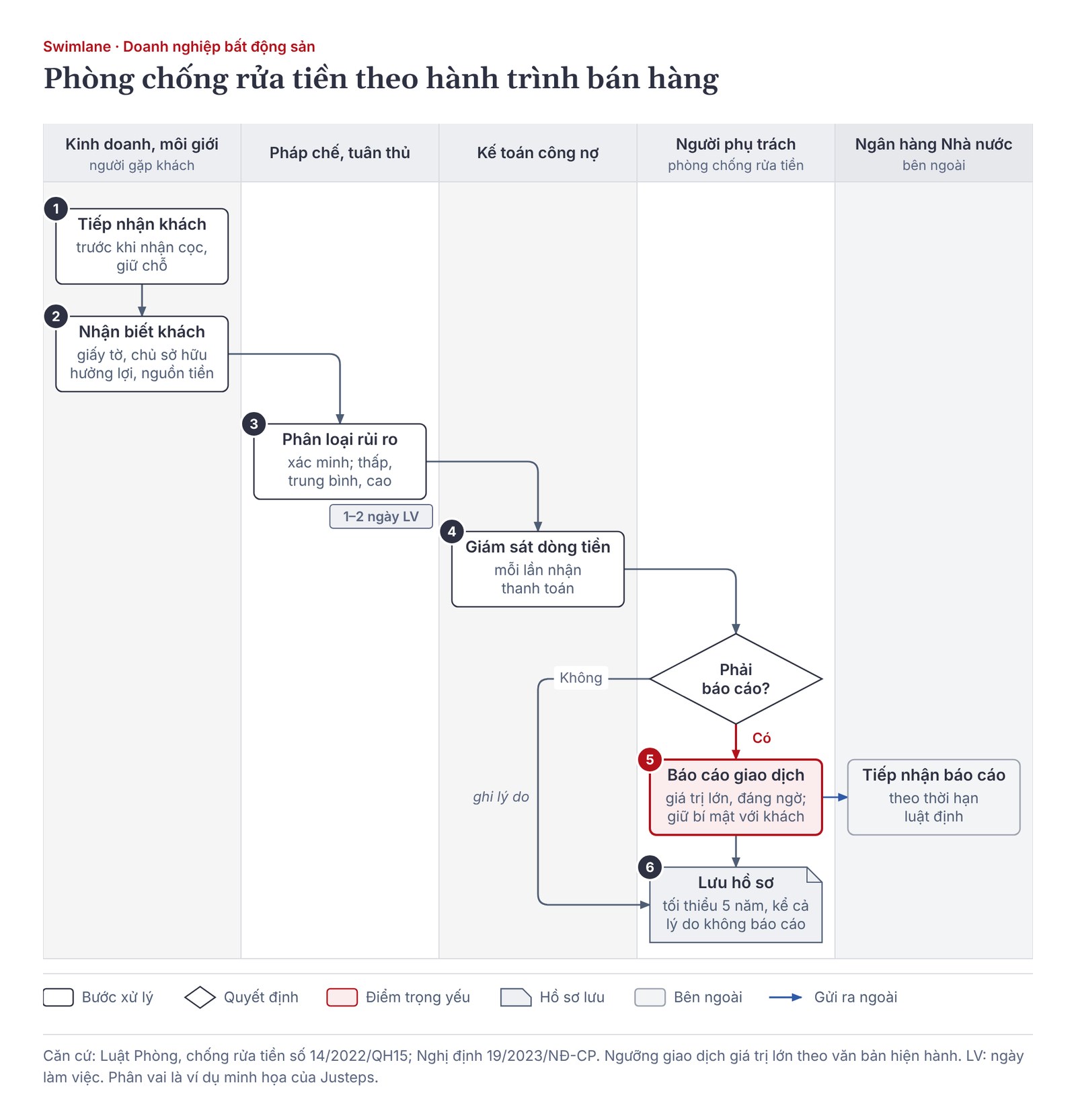
Figure 01. Anti-money laundering along the real estate sales journey
Basis: AML Law No. 14/2022/QH15; Decree 19/2023/ND-CP | Role split is illustrative
Each column is a department; steps move from sales to legal, accounting and the AML officer. The red box is the report to the State Bank; the "No" branch still requires recording the reason and keeping files for at least 5 years.
Common red flags in real estate transactions
The red-flag list should be written in the language of sales staff and accountants, tied to situations they meet every day:
- The customer pays cash several times, each time just below the reporting threshold.
- The person transferring the money is not the buyer and there is no document explaining the relationship.
- The customer accepts an abnormally high price, or asks for the contract price to be lower than the price actually paid.
- The customer makes a large deposit, cancels right away and asks for a refund to someone else's account.
- The customer buys several units at once through several newly established entities sharing the same contact person.
- The customer avoids giving information on occupation, source of funds or beneficial owner.
When any of these signs appears, staff should not draw conclusions themselves but send an alert form to the AML officer on the same day. The officer decides whether to report and records the reasons, including when deciding not to report.
Operational risks and how to control them
The biggest risk usually comes not from ignorance of the rules but from breaks in the sales process. Brokers who collect deposits and only later transfer them to the developer lose track of who paid. The Law on Real Estate Business No. 29/2023/QH15 points towards payment through bank accounts; businesses should make it a firm rule that all receipts go into the company's account with the payer's name stated.
The second break is the transfer of sale contracts. Each transfer brings a new customer who must be identified from scratch. The third break is data: identification forms scattered across emails and chat groups are hard to retrieve during an inspection. Records should be centralised in a customer management system, with access control and personal data protection measures under the Law on Personal Data Protection No. 91/2025/QH15.
Finally, anti-money laundering should be built into the annual internal audit plan: sample customer files, reconcile them with the receipts ledger and review refund and transfer cases. Audit results are the best evidence that the business has performed its obligations in substance.
Legal basis and sources
- Law on Anti-Money Laundering No. 14/2022/QH15 dated 15/11/2022, effective from 01/3/2023, as amended and supplemented.
- Decree No. 19/2023/ND-CP detailing the Law on Anti-Money Laundering.
- Law on Real Estate Business No. 29/2023/QH15, effective from 01/8/2024.
- Law on Personal Data Protection No. 91/2025/QH15, effective from 01/01/2026.
- Guiding circulars of the State Bank of Vietnam on anti-money laundering.
How Justeps supports businesses
- Legal advice on real estate transactions, designing sales files that include customer due diligence.
- Drafting internal anti-money laundering rules and customer risk rating criteria.
- Governance standardisation: role allocation between sales, accounting and legal; internal audit procedures.
- In-house training on suspicious transaction signs for sales and accounting teams.
- Ongoing legal advice on new documents and reporting thresholds.
Contact Justeps for advice on your specific situation.
Frequently asked questions
Does a company that only leases offices have to comply with AML rules?
Activities limited to leasing or sub-leasing real estate are excluded from the real estate business group subject to compliance. If the company also sells or hire-purchases products, that part of its business is still covered.
Do freelance brokers have to identify customers?
Responsibility for organising compliance lies with the business the broker works with. The business should include customer information duties in its contracts with brokers and only accept a transaction once the identification form is complete.
How long must customer identification records be kept?
At least 5 years. Businesses should store them electronically with access control and an edit log.
May the customer be told that a suspicious transaction report has been filed?
No. Reporting must be kept confidential. Staff should only be instructed to say that the file is being processed under internal procedures.
What is the current large-value transaction threshold?
The threshold is set by the Prime Minister and has been adjusted recently. Businesses should check the current document before putting a specific figure into their procedures.
Related articles
- Legal and communications crisis management: a 72-hour playbook for companies
- Labor dispute mediation in the workplace: the internal procedure before going to a labor mediator
- Handling breach of contract: notice, negotiation, mediation and dispute resolution
This article is for reference and reflects the regulations in force at the time of publication. Please consult Justeps for advice tailored to your company’s records and situation.
For further information, please contact:
📩 Email: info@justeps.vn
🌐 Website: https://justepslegal.com · https://justeps.vn
🌐 Page: Justeps
☎️ Hotline (Zalo): 096 172 2607
📍 Thanh Xuan Office: 12th Floor, Licogi 13 Tower, 164 Khuat Duy Tien Street, Thanh Xuan Ward, Hanoi, Vietnam
📍 Ha Dong Office: LK06B, No.10, Dong Dua Area, Ha Dong Ward, Hanoi, Vietnam
📍 Ho Chi Minh City Branch: 528 Le Van Sy, Ho Chi Minh City, Vietnam
📍 Hai Phong Office: Truong Thinh Village, Ha Dong Commune, Hai Phong, Vietnam
📍 Quang Ninh Office: Van Don Special Zone, Quang Ninh Province, Vietnam





