
Companies growing from 50 to 200 employees tend to hit the same pattern: the director can no longer approve everything, departments invent their own ways of working, and internal governance regulations either do not exist or are copies from elsewhere that nobody reads. The result is slow approvals, labor disputes that are hard to handle and audits with nothing to check against.
This article proposes a minimum set of internal governance regulations made up of nine documents, the order in which to issue them, and how to keep the set up to date without a large legal department.
Why companies with 50–200 employees need internal governance regulations
Below about 50 people, most decisions pass through one or two individuals, so unwritten rules still work. From roughly 50 people, the company has department heads, branches or shifts, and the same task may be handled in several different ways. Internal governance regulations standardise how work is done, define who may decide, and create evidence in disputes or inspections.
Some documents are legal obligations, not just good practice. An employer with 10 or more employees must have written labor regulations (under Clause 1, Article 118 of Labor Code No. 45/2019/QH14)[2] and register them with the state labor authority (under Article 119 of the Labor Code). The company must also develop salary scales and pay tables (under Article 93 of the Labor Code) and may set out bonuses in a bonus policy (under Article 104 of the Labor Code).
The nine documents in a minimum set of internal governance regulations
The table below lists the documents, whether they are mandatory or recommended, the typical approving body and the lead department. The exact approving body must be checked against each company's charter.
| Document | Nature | Typical approving body | Lead department |
|---|---|---|---|
| Regulation on organisation and operation | Recommended | Owner, Members' Council or Board of Directors | Management |
| Delegation of authority regulation | Recommended | Owner, Members' Council or Board of Directors | Management, accounting |
| Labor regulations | Mandatory; must be written and registered from 10 employees | Employer | HR |
| Salary scales, pay tables and bonus policy | Salary scales and pay tables are mandatory | Director or General Director | HR, accounting |
| Financial regulation | Recommended | Owner, Members' Council or Board of Directors | Accounting |
| Contract management regulation | Recommended | Director or General Director | Legal, administration |
| Regulation on grassroots democracy at the workplace | Mandatory | Employer | HR, trade union |
| Personal data protection policy | Mandatory in substance | Director or General Director | HR, IT |
| Occupational safety and health regulation | Mandatory in substance | Director or General Director | Administration, production |
The company charter is not on the list because it is a mandatory foundation document from incorporation. Before drafting regulations, however, the company should reread its charter to make sure the regulations do not conflict with it or with Law on Enterprises No. 59/2020/QH14 as amended in 2025.
Organisation and authority
The regulation on organisation and operation describes the organisational chart, each department's functions and reporting lines. The delegation of authority regulation comes with a matrix of who proposes, who checks and who approves, by type of matter and value threshold. These two should be issued first because the other regulations refer to the titles and authority defined here.
Labor
Labor regulations must include provisions on preventing sexual harassment at the workplace under Decree No. 145/2020/ND-CP. Note the timing: the Law amending and supplementing certain articles of the Labor Code and related laws, passed by the National Assembly on 21/11/2026, adds two paid public holidays on 27/7 and 24/11, effective from 01/3/2027. Companies should review the rest-time provisions in their labor regulations and work schedules before this date. Salary scales must also stay at or above the new regional minimum wages under Decree No. 399/2026/ND-CP from 01/01/2027.
The regulation on grassroots democracy at the workplace sets out how employees are informed, how they give input and how periodic dialogues are held. It is often forgotten even though labor inspectors regularly ask for it.
Finance, contracts and data
The financial regulation covers spending norms, advances, payments and asset management, in line with Law on Accounting No. 88/2015/QH13. The contract management regulation sets out who may sign, which contracts require legal review and where they are stored. The personal data protection policy defines which employee and customer data is collected, for what purpose and for how long, under Law on Personal Data Protection No. 91/2025/QH15.
Order of issuing internal governance regulations
There is no need to issue all nine documents at once. A realistic roadmap is three to six months, following the sequence below.
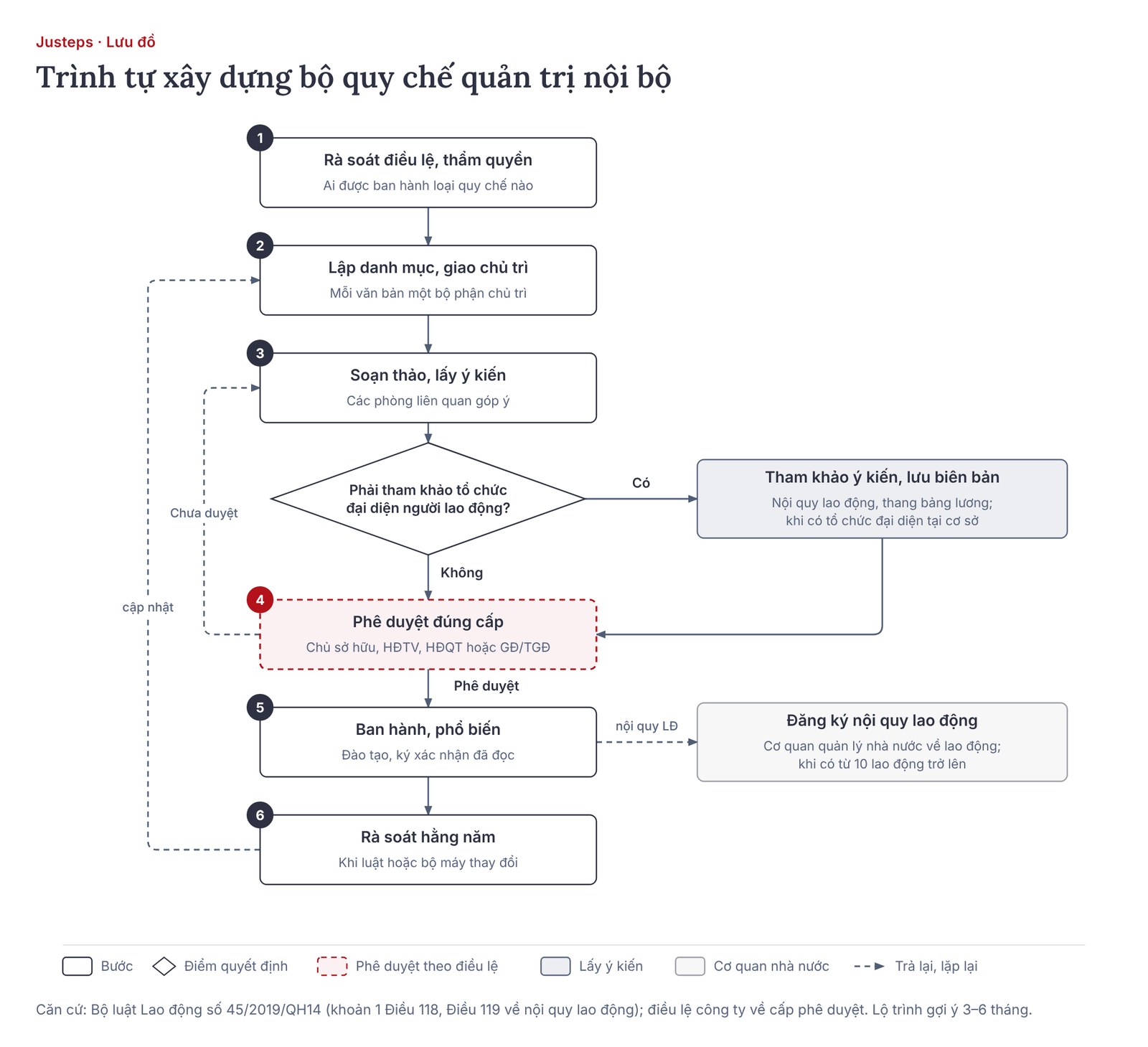
Figure 01. Flowchart for building the internal governance rulebook
Basis: Labour Code No. 45/2019/QH14 (Article 118.1, Article 119); company charter
Read top-down through six steps; the diamond asks whether employee representative consultation is required. The red dashed box is approval at the level set by the charter; dashed branches show return for revision, labour rules registration and annual review.
The first month should focus on the organisation regulation, delegation of authority and labor regulations. Months two and three complete the salary and bonus policy, the financial regulation and the grassroots democracy regulation. The following months cover contract management, the personal data policy and occupational safety and health under Law on Occupational Safety and Health No. 84/2015/QH13.
At the consultation step, some documents must be discussed with the employee representative organisation at the enterprise, if one exists, notably the labor regulations and salary scales. Minutes or written comments should be kept as evidence for inspections.
Keeping the regulations alive after issuance
Regulations only work when the people who apply them know them and follow them. Companies should do three things.
- Keep a register of regulations: reference number, effective date, version, lead department and date of last review.
- Communicate with acknowledgement: send by email or HR software and ask employees to confirm they have read it; post labor regulations at the workplace.
- Review annually and on trigger events: new laws, organisational changes, new branches, internal incidents.
Each amendment should be issued as an amending decision or a replacement version with a clear effective date, rather than editing the old file. This makes it possible to determine which rule applied when an incident occurred.
Common mistakes when building internal governance regulations
Copying another company's regulations and keeping job titles that do not exist in your own structure. Issuing without proper authority, for example the director signing the financial regulation when the charter assigns it to the Members' Council. Regulations that contradict each other on approval thresholds. Failing to register labor regulations, so the basis for disciplinary action is challenged. Writing in so much detail that nobody can follow it.
Legal basis and sources
- Law on Enterprises No. 59/2020/QH14, as amended and supplemented in 2025.
- Labor Code No. 45/2019/QH14, effective from 01/01/2021 (Articles 93, 104, 118 and 119).
- Law amending and supplementing certain articles of the Labor Code, the Law on Archives, the Law on Gender Equality, the Law on Red Cross Activities and the Law on Employment, passed on 21/11/2026, effective from 01/3/2027.
- Decree No. 145/2020/ND-CP detailing and guiding certain articles of the Labor Code on working conditions and labor relations.
- Decree No. 399/2026/ND-CP on minimum wages, applicable from 01/01/2027.
- Law on Accounting No. 88/2015/QH13.
- Law on Occupational Safety and Health No. 84/2015/QH13.
- Law on Personal Data Protection No. 91/2025/QH15, effective from 01/01/2026.
How Justeps supports businesses
- Governance standardisation: reviewing the organisation and proposing a list of internal governance regulations suited to your size and sector.
- Advisory and regulatory compliance: drafting and reviewing regulations, issuance files and registration of labor regulations.
- Operational setup: delegation of authority matrix, approval workflows, register of regulations.
- Corporate governance: reviewing the charter and the issuing authority of the owner, Members' Council or Board.
- In-house training: rolling out regulations to middle managers and employees.
Contact Justeps for advice on a set of regulations that fits your company.
Frequently asked questions
Does a company with fewer than 10 employees need labor regulations?
The employer must still issue labor regulations, but they only have to be in writing and registered from 10 employees. In practice a written version is still advisable as a basis for discipline.
Who has authority to issue the financial regulation?
It depends on the company type and charter. In a limited liability company it is usually the owner or the Members' Council; in a joint stock company, usually the Board of Directors. Read the charter before signing.
Do internal governance regulations have to be registered with the authorities?
Most are internal and need no registration. Labor regulations are the exception and must be registered once the company has 10 or more employees.
Which documents must change when new public holidays apply from 01/3/2027?
Usually the labor regulations (rest-time section), the salary and bonus policy if it covers holiday overtime, production calendars and shift arrangements. Amended labor regulations must also be re-registered as required.
How often should the regulations be reviewed?
At least once a year, and immediately when a relevant new law is issued, the organisation changes or a new branch opens.
Related articles
- Outsourced legal counsel: when to use it, what to assign and how to measure results
- Personal data protection in HR under Vietnam's 2025 Law on Personal Data Protection
- Trademark registration and management in Vietnam: clearance, filing, renewal and enforcement
This article is for reference and reflects the regulations in force at the time of publication. Please consult Justeps for advice tailored to your company’s records and situation.
For further information, please contact:
📩 Email: info@justeps.vn
🌐 Website: https://justepslegal.com · https://justeps.vn
🌐 Page: Justeps
☎️ Hotline (Zalo): 096 172 2607
📍 Thanh Xuan Office: 12th Floor, Licogi 13 Tower, 164 Khuat Duy Tien Street, Thanh Xuan Ward, Hanoi, Vietnam
📍 Ha Dong Office: LK06B, No.10, Dong Dua Area, Ha Dong Ward, Hanoi, Vietnam
📍 Ho Chi Minh City Branch: 528 Le Van Sy, Ho Chi Minh City, Vietnam
📍 Hai Phong Office: Truong Thinh Village, Ha Dong Commune, Hai Phong, Vietnam
📍 Quang Ninh Office: Van Don Special Zone, Quang Ninh Province, Vietnam





