A private placement is the fastest way for a non-public joint stock company to raise capital: no registration with the State Securities Commission and no prospectus. But precisely because the external procedure is simple, many companies underestimate the internal side, ending up with incomplete resolutions, complaints from existing shareholders who lost their pre-emptive rights, or a capital increase filing that gets rejected.
This article focuses on the internal process of a private share placement: who decides what, which documents are needed, how funds are received, and what to do after the offering closes so that the charter capital change is registered on time.
When an offering counts as a private placement
Under Article 125 of the Law on Enterprises No. 59/2020/QH14, a private offering of shares by a non-public company must meet two conditions: it is not made through mass media, and it is offered to fewer than 100 investors (excluding professional securities investors) or only to professional securities investors.
Operationally, this means the communications team must not post invitations to buy shares on the website, social media or in the press, and the person in charge should count the number of investors approached, not just the number of buyers. The company should also monitor its shareholding structure after the offering, because once contributed capital and the number of shareholders exceed the thresholds of the Law on Securities No. 54/2019/QH14, the company may become a public company with much heavier disclosure obligations.
Internal private placement process
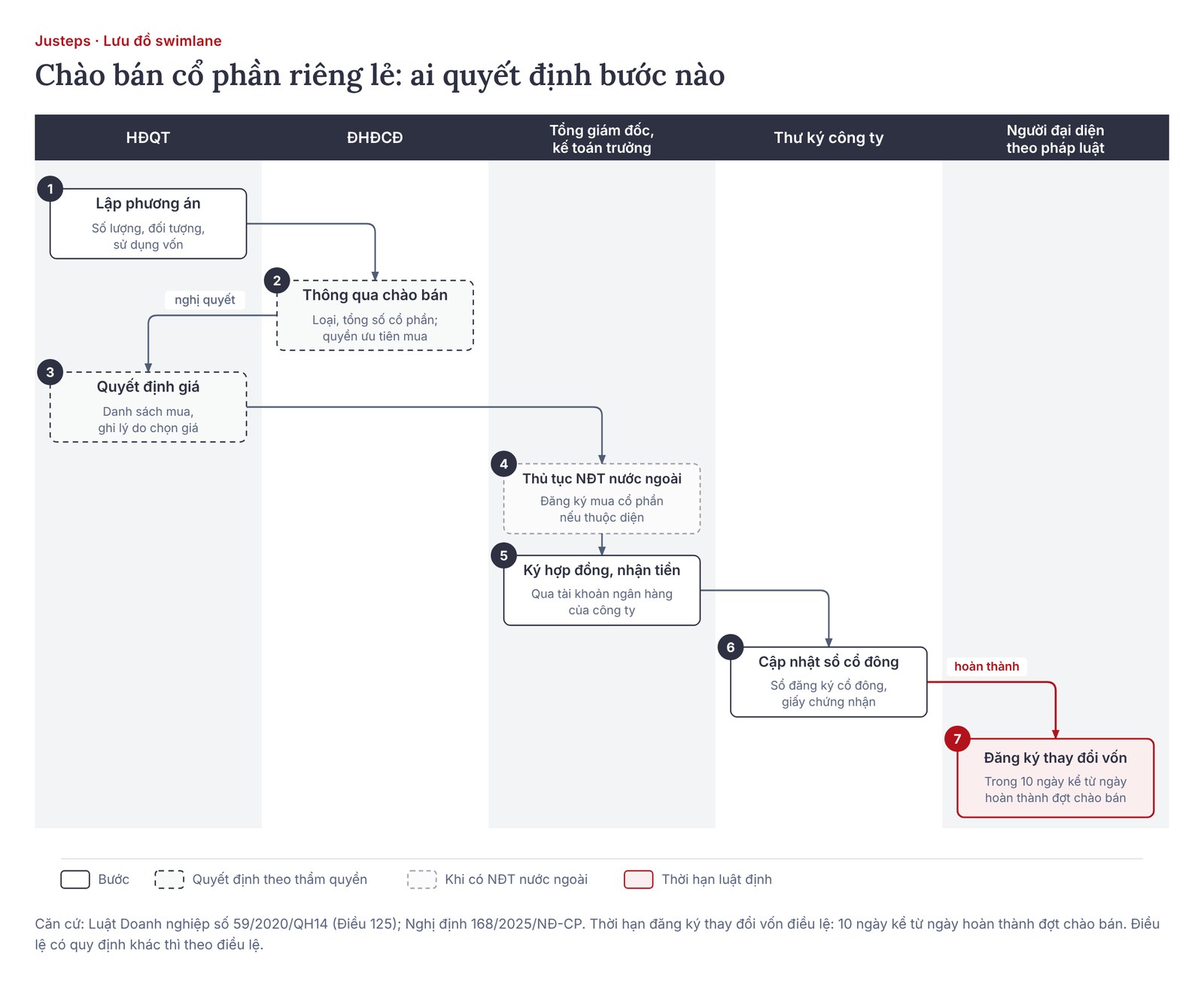
Figure 01. Swimlane of a private share placement by decision-making authority
Basis: Enterprise Law No. 59/2020/QH14 (Article 125); Decree 168/2025/ND-CP; company charter
Each column is a body that decides or acts; dashed boxes are decisions of the General Meeting and the Board, the faint dashed box applies only to foreign investors. The red box is registering the charter capital change within 10 days of completing the offering.
Clear allocation of authority is the key point. The general meeting of shareholders decides the class and total number of shares that may be offered; the board of directors decides the offering within that scope, including price and timing. If the company's charter provides otherwise, the charter applies, so the company secretary should reread the charter before drafting any document.
| Step | Decision maker | Required documents | Common mistakes |
|---|---|---|---|
| Offering plan | Board of directors | Proposal, plan, intended use of proceeds | No description of target buyers or investor selection criteria |
| Approval of the offering | General meeting of shareholders | Resolution, meeting minutes or vote counting minutes | No decision on existing shareholders' pre-emptive rights |
| Price and buyer list | Board of directors | Board resolution, pricing basis | Price below book value without proper approval |
| Receipt of funds | General director, chief accountant | Share subscription agreement, bank records | Cash payments, third-party payments without documentation |
| Recording shareholders | Company secretary | Shareholder register, share ownership certificates | Register not updated in time, inconsistent with registered data |
| Registration of change | Legal representative | Notice of charter capital change with resolutions | Filed after 10 days, missing resolution on offering results |
Pre-emptive rights of existing shareholders
This is the most common source of disputes. When the company issues new shares, existing shareholders have a pre-emptive right in proportion to their holdings, unless the general meeting decides otherwise. The safe approach is for the shareholders' resolution to state clearly whether existing shareholders have priority; if they do, the company sends a notice, sets a subscription deadline and keeps proof of delivery. Shareholders who do not wish to buy should sign a waiver so the file is clean when new investors carry out due diligence.
Offering price and receipt of funds
The board should have a clear basis for the offering price, such as book value in the latest financial statements, an independent valuation or a price negotiated with a strategic investor. The board minutes should record the reasons for the chosen price. This protects board members if shareholders later argue the price was too low and harmed them.
Subscription money should be transferred to the company's bank account in the buyer's own name. For foreign investors, payment must go through a direct investment capital account or another appropriate account under foreign exchange rules, and beforehand the company must determine whether the transaction requires registration of the share purchase under the Law on Investment No. 143/2025/QH15. Accounting reconciles bank statements with the buyer list before the secretary records names in the shareholder register.
How long an offering takes
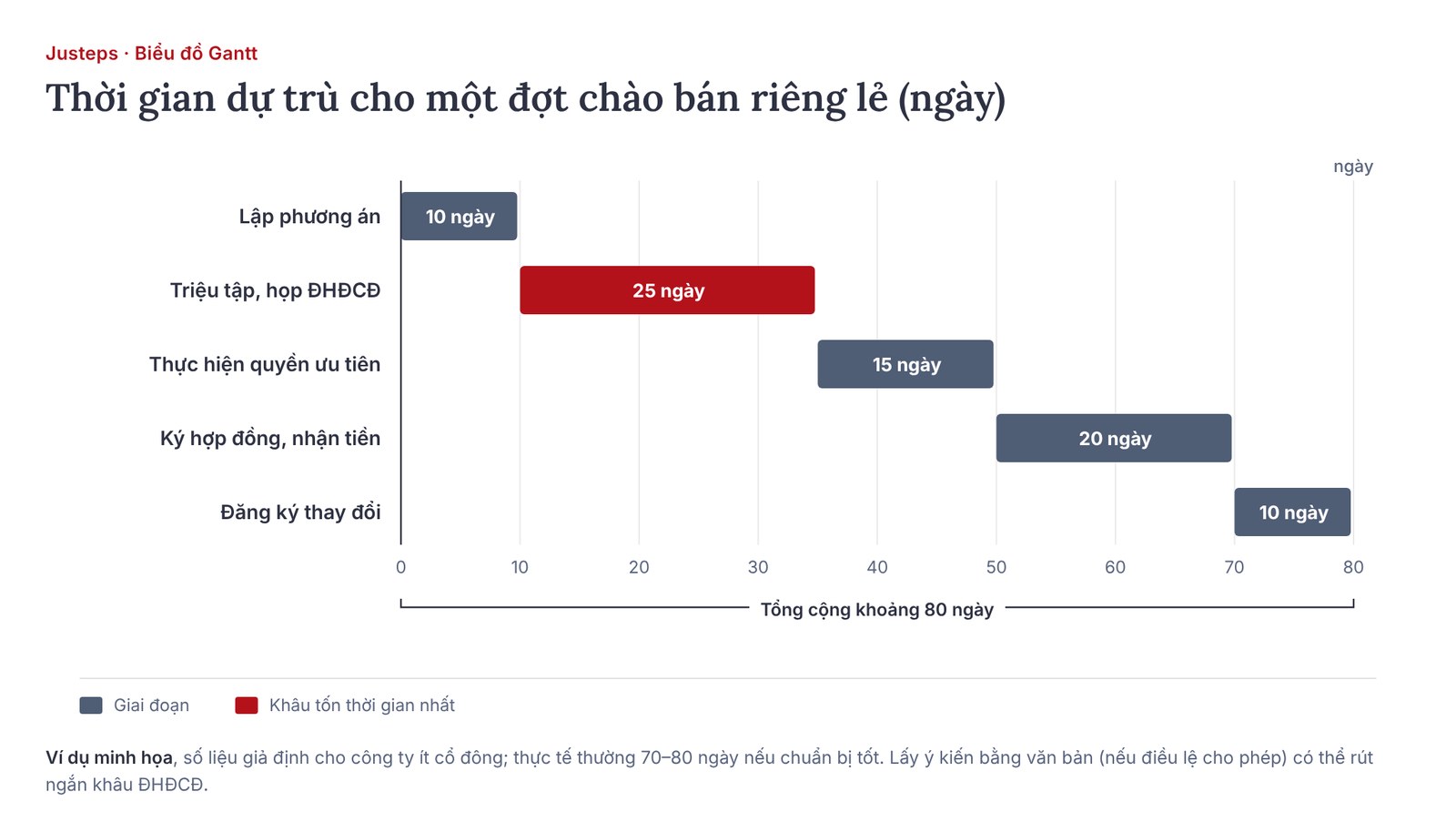
Figure 02. Estimated timeline for a private placement (days)
Illustrative example, assumed figures for a company with few shareholders
Bars run consecutively on the day axis, about 80 days in total; the red bar is convening and holding the General Meeting, the longest phase, which written resolutions can shorten if the charter allows.
Most of the time goes into convening the general meeting and waiting for existing shareholders to exercise their pre-emptive rights. Companies with few shareholders can shorten this by using written shareholder consent if the charter allows it.
Registering the charter capital change after the offering
The Law on Enterprises requires the company to register the charter capital change within 10 days of completing the offering. The filing is made through the National Business Registration Portal under Decree No. 168/2025/ND-CP and usually includes the notice of change plus the resolutions and minutes relating to the offering. If there are new foreign shareholders, the company also updates foreign investor information. Once the confirmation is issued, accounting adjusts contributed capital in the books and the company reviews beneficial ownership information if the ownership structure has changed significantly.
An end-of-offering checklist includes: the shareholders' resolution, the board resolution on price and results, subscription agreements, payment records, the updated shareholder register and the confirmation of change. Keep this file in one place, as it is the first thing investors in the next round will ask for.
Legal basis and sources
- Law on Enterprises No. 59/2020/QH14, as amended by Law No. 76/2025/QH15 (effective 1 July 2025).
- Law on Securities No. 54/2019/QH14 (as amended).
- Law on Investment No. 143/2025/QH15.
- Decree No. 168/2025/ND-CP on enterprise registration.
How Justeps supports businesses
- Preparing the offering plan and the full set of shareholder and board resolutions and minutes (Capital markets).
- Reviewing the charter, pre-emptive rights and shareholder structure to avoid crossing the public company threshold (Governance standardisation).
- Advising on procedures for foreign investors buying shares and on capital accounts (Corporate and M&A).
- Registering the charter capital change and updating the shareholder register (Business growth).
Contact Justeps for support with your company's share offering.
Frequently asked questions
Must the business registration authority be notified before a private placement?
A non-public joint stock company registers the charter capital change after completing the offering. Check the rules in force at the time, as enterprise registration procedures were updated from 1 July 2025.
Can shares be sold to employees by private placement?
Yes, if the total number of investors offered is under 100 and there is no public promotion. An employee programme should have its own rules on eligibility and transfer restrictions.
What if existing shareholders do not respond to the pre-emptive rights notice?
If the deadline passes without a response, the right is treated as not exercised, provided the notice clearly stated the deadline and consequence. Keep proof that it was sent to the address in the shareholder register.
What if an investor pays late?
The subscription agreement should set a payment deadline and allow the board to sell unpaid shares to others. Only record the investor in the shareholder register once full payment is received.
Related articles
- Preparing to raise investment: data room, valuation and the term sheet clauses to negotiate
- Corporate restructuring and lawful tax optimisation: options and risks
- Opening a representative office of a foreign trader in Vietnam: dossier, activity limits and annual report
This article is for reference and reflects the regulations in force at the time of publication. Please consult Justeps for advice tailored to your company’s records and situation.
For further information, please contact:
📩 Email: info@justeps.vn
🌐 Website: https://justepslegal.com · https://justeps.vn
🌐 Page: Justeps
☎️ Hotline (Zalo): 096 172 2607
📍 Thanh Xuan Office: 12th Floor, Licogi 13 Tower, 164 Khuat Duy Tien Street, Thanh Xuan Ward, Hanoi, Vietnam
📍 Ha Dong Office: LK06B, No.10, Dong Dua Area, Ha Dong Ward, Hanoi, Vietnam
📍 Ho Chi Minh City Branch: 528 Le Van Sy, Ho Chi Minh City, Vietnam
📍 Hai Phong Office: Truong Thinh Village, Ha Dong Commune, Hai Phong, Vietnam
📍 Quang Ninh Office: Van Don Special Zone, Quang Ninh Province, Vietnam