
Many companies only discover that they are operating in a conditional business line when inspectors arrive, or when a partner asks for the license before signing. By then the outlet has opened, stock has arrived, staff have been hired, and the eligibility file is only just being started.
The fix is not memorizing the list of business lines but a simple operational tool: a conditions map. This article explains how to build the map, assign owners and set a control gate before opening day, using the example of an accommodation facility under the new security and order rules effective from 15 November 2026.
The list of conditional business lines is changing
Conditional investment and business lines are listed in Article 7 and Appendix IV of the Law on Investment No. 143/2025/QH15, applying from 1 July 2026 and replacing the list under the 2020 Law on Investment. The new list is shorter, adds certain lines related to digital transformation, and is intended to be split into a group requiring prior licensing and a group subject to post-inspection. The specific conditions for each line remain in sector laws and guiding decrees.
In parallel, Decree No. 392/2026/ND-CP (effective 15 November 2026) amends Decree No. 96/2016/ND-CP on security and order conditions for certain business lines. The list of business lines subject to security and order conditions now has 15 groups (under Article 3 of Decree No. 96/2016/ND-CP as amended)[2,3], and accommodation services exclude housing rented under contracts for living, studying or working. Companies that built a conditions map earlier should review it even if they are not opening new lines.
How to build a conditions map
A conditions map is a table listing each actual activity of the company against the applicable legal conditions, supporting documents, owner and deadline. The starting point is actual activity, not the registered sector code: a café with karaoke rooms, a spa offering massage, or a shop that also sells liquor all trigger conditions that the original sector code does not show.
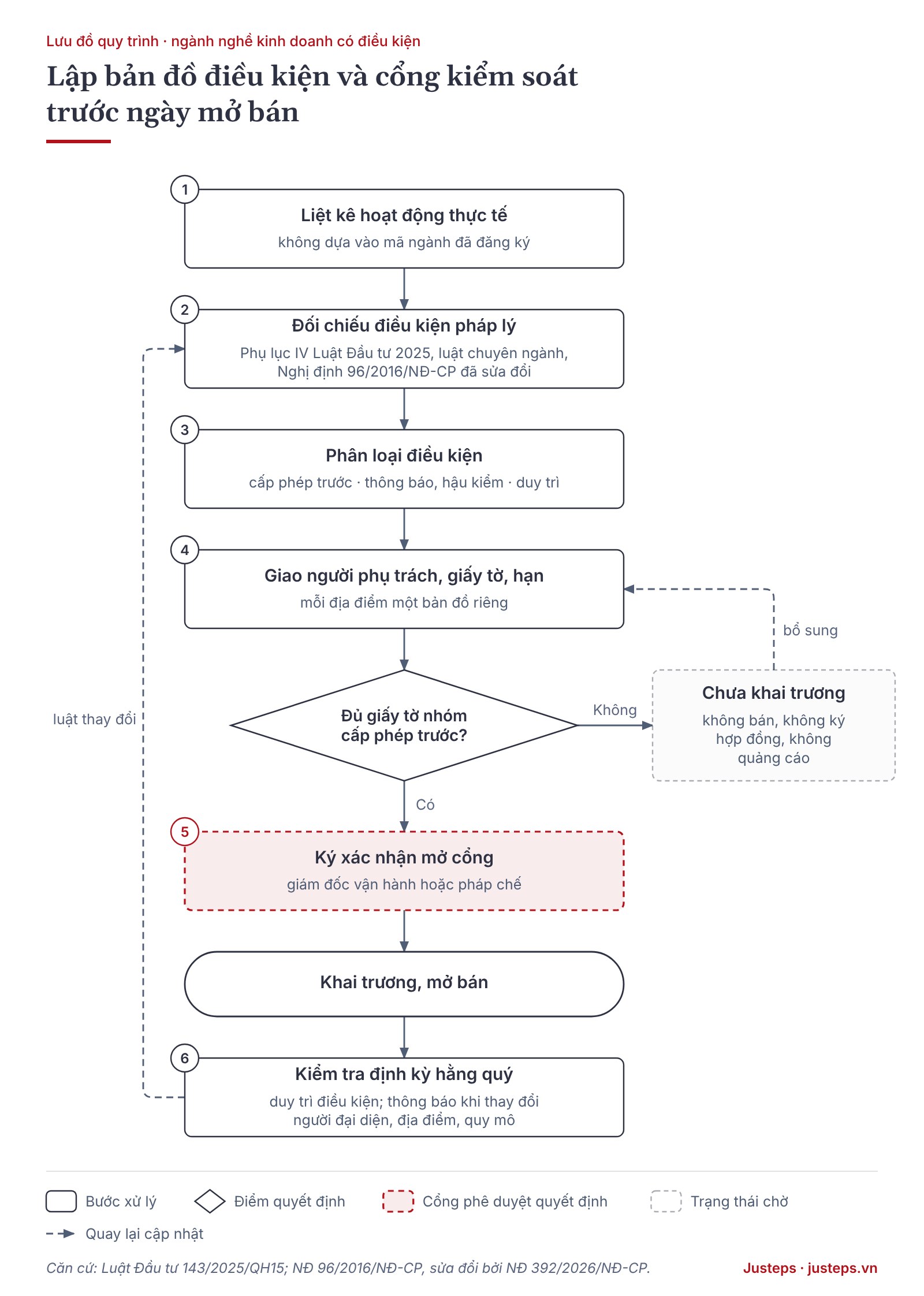
Figure 01. Flowchart for building a business-conditions map and the control gate before opening
Legal basis: Law on Investment 143/2025/QH15; Decree 96/2016/ND-CP as amended by Decree 392/2026/ND-CP
Follow the arrows from step 1; only when all pre-licensing documents are in place does the process pass the sign-off gate (red dashed box). Dashed lines are loops back to supplement documents or to update when the law changes.
Conditions should be sorted into three groups. The first requires a license or certificate before operating. The second only requires notification, declaration or self-compliance subject to later inspection. The third consists of ongoing conditions throughout operation, such as staff training, records and periodic reports. Each group is controlled differently: the first needs a gate before opening, the third needs a periodic review calendar.
Example, conditions map for a 35-room accommodation facility
Suppose a company opens a 35-room hotel. From 15 November 2026, accommodation facilities with 30 or more rooms receive the security and order eligibility certificate from provincial police; facilities with 29 rooms or fewer, as well as karaoke, massage, pawn and printing businesses, receive it from commune-level police (under Article 24 of Decree No. 96/2016/ND-CP as amended by Decree No. 392/2026/ND-CP)[2,3]. As evidence of fire safety conditions, the company submits the fire safety inspection record of the competent authority, and need not submit it if the data is already connected and shared electronically (under Article 4 of Decree No. 392/2026/ND-CP amending Clause 3 Article 19 of Decree No. 96/2016/ND-CP)[2,3].
| Condition | Type | Supporting document | Owner | Deadline |
|---|---|---|---|---|
| Accommodation business line on the enterprise registration certificate | Registration | Confirmation of change in registration content | Legal | Before filing the security and order file |
| Fire prevention and fighting conditions | Prior licensing | Fire safety inspection record by the competent authority | Facility manager | Before filing the security and order file |
| Security and order conditions | Prior licensing | Certificate of eligibility for security and order | Legal | Before opening day |
| Checking guest documents, guest stay notification | Ongoing | Front-desk procedure, stay management software | Front-desk manager | From the first guest |
| Staff training, facility rules | Ongoing | Training records, posted rules | HR | Before opening day |
The order of the table is deliberate: fire safety conditions usually take the longest and must start at the design and renovation stage. At the front desk, the guest document check must switch to chip-based citizen identity cards instead of old identity cards under the new rules.
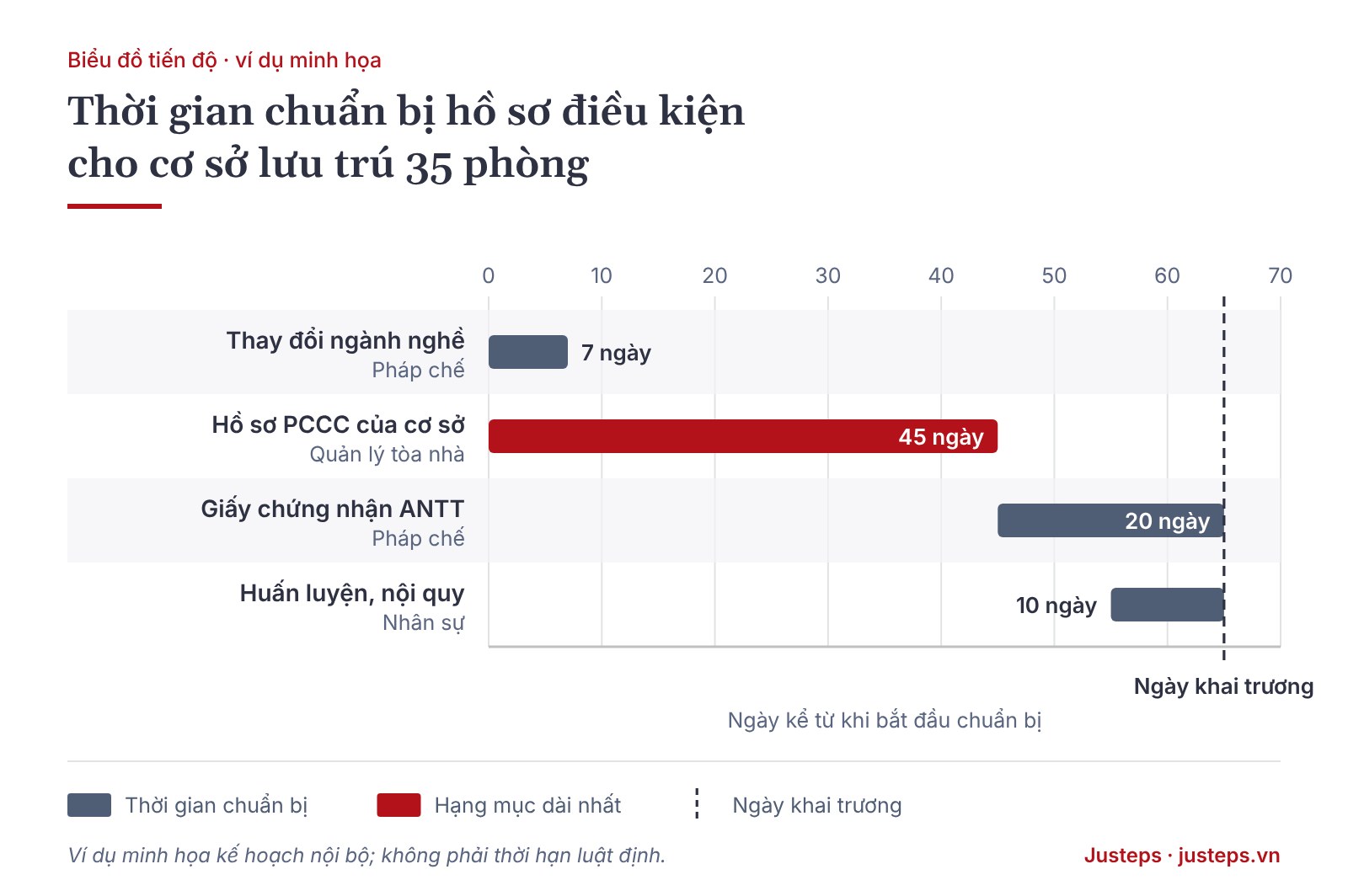
Figure 02. Preparation time for condition documents of a 35-room accommodation facility
Illustrative internal plan; not statutory time limits
Each bar is the preparation time for one document group, laid out by days from the start. The red bar is the fire safety dossier, which takes longest; the dashed line marks the opening date.
The control gate before opening day
The map only has value when tied to a concrete decision: without the group-one documents, no opening, no sales contracts and no advertising. The company should write this principle into its internal rules and give one person, usually the operations director or legal head, the authority to "open the gate" by signing off the checklist before opening day.
For chains with several outlets, each location needs its own map, as fire safety conditions, licensing authority and room count differ. Legal keeps the consolidated version and updates it when the law changes, as with the recent amendment of Decree No. 96/2016/ND-CP. Justeps can build the conditions map and control procedure under its regulatory advice and compliance package.
Monitoring after opening
Business conditions do not end on the day the license is received. The company must maintain the conditions throughout operation and notify changes of representative, location or scale. A quarterly internal review comparing the map with conditions on site is the cheapest way to avoid being caught off guard by an inspection.
Legal basis and sources
- Law on Investment No. 143/2025/QH15, effective 1 March 2026; Article 7 and Appendix IV apply from 1 July 2026.
- Decree No. 96/2016/ND-CP on security and order conditions for certain conditional business lines.
- Decree No. 392/2026/ND-CP amending and supplementing Decree No. 96/2016/ND-CP, issued 20 October 2026, effective 15 November 2026.
- Law on Enterprises No. 59/2020/QH14, as amended and supplemented by Law No. 76/2025/QH15.
How Justeps supports businesses
- Regulatory advice and compliance: building the conditions map and the pre-opening control gate procedure.
- Operations set-up: sub-license files, facility rules and staff training.
- Governance standardization: authority allocation and compliance control rules for multi-outlet chains.
- In-house training: training outlet managers on business conditions and new regulations.
General information on our services is available at Justeps.
Frequently asked questions
Is registering the business line on the enterprise certificate enough to start trading?
No, if it is a conditional line. Registration is only the first step; the company must also meet the conditions and hold the licenses or certificates required by sector law before operating.
Does long-term apartment leasing require a security and order certificate like an accommodation facility?
Under Decree No. 96/2016/ND-CP as amended, accommodation services exclude housing rented under contracts for living, studying or working. The nature of the contract and actual operation must be reviewed.
Must a facility certified before 15 November 2026 apply again?
The company should review the transitional provisions of Decree No. 392/2026/ND-CP and update internal procedures, especially guest document checks and fire safety files when changes occur.
How often should the conditions map be updated?
At least quarterly, and immediately when launching a new service, adding a location or when new legislation in the field is issued.
Related articles
- Opening a representative office of a foreign trader in Vietnam: dossier, activity limits and annual report
- Sales promotion procedures in Vietnam in 2026: notification, registration and results reporting
- Choosing a business structure: household business, LLC or joint stock company — operations, tax and fundraising compared
This article is for reference and reflects the regulations in force at the time of publication. Please consult Justeps for advice tailored to your company’s records and situation.
For further information, please contact:
📩 Email: info@justeps.vn
🌐 Website: https://justepslegal.com · https://justeps.vn
🌐 Page: Justeps
☎️ Hotline (Zalo): 096 172 2607
📍 Thanh Xuan Office: 12th Floor, Licogi 13 Tower, 164 Khuat Duy Tien Street, Thanh Xuan Ward, Hanoi, Vietnam
📍 Ha Dong Office: LK06B, No.10, Dong Dua Area, Ha Dong Ward, Hanoi, Vietnam
📍 Ho Chi Minh City Branch: 528 Le Van Sy, Ho Chi Minh City, Vietnam
📍 Hai Phong Office: Truong Thinh Village, Ha Dong Commune, Hai Phong, Vietnam
📍 Quang Ninh Office: Van Don Special Zone, Quang Ninh Province, Vietnam





