
Setting up a domestic tour operator usually starts with the question "how much is the deposit", but what decides whether the company runs smoothly lies beyond the licence: tour contracts tight enough to handle cancellations, tour guides engaged on the right contracts, and customer data collected and protected lawfully.
This article follows the path a domestic tour operator actually goes through: conditions and licence, deposit, contracts with tourists, tour guide management and controls during peak season.
Conditions for a domestic travel business licence
Under the Law on Tourism No. 09/2017/QH14 and Decree No. 168/2017/ND-CP (as amended and supplemented), a domestic tour operator must meet three groups of conditions: be an enterprise established under enterprise law; place a travel business deposit at a bank; and have a person in charge of travel business with the required qualifications and tour operation certificate. The licence is issued by the provincial tourism authority where the company is headquartered.
The person in charge must hold an actual management position (director, deputy director or head of the travel department) under an employment contract with the company. "Borrowing" the qualifications of someone who does not actually work at the company is a major risk: when that person leaves, the company loses a business condition and must appoint a replacement within the statutory period.
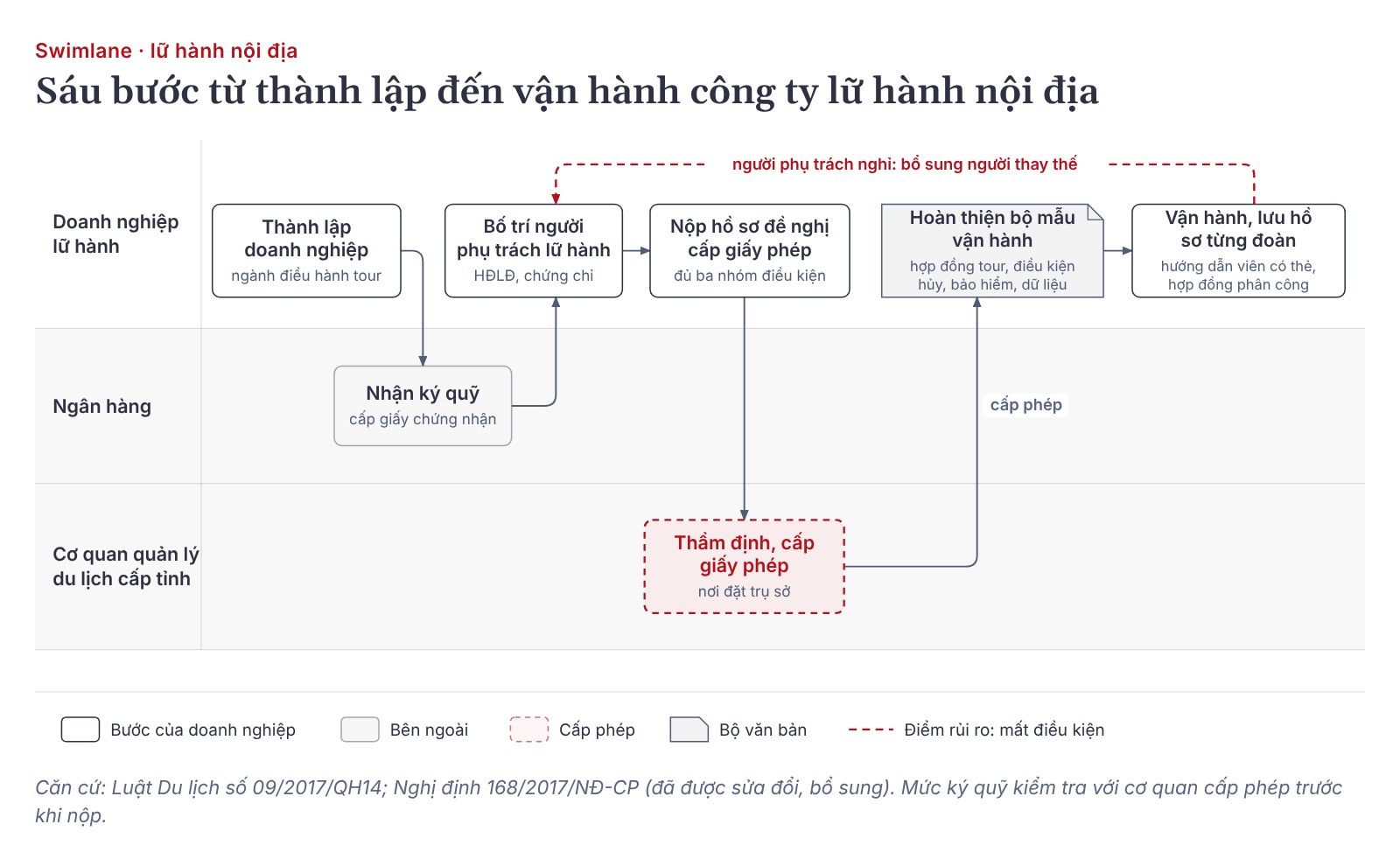
Figure 01. Swimlane of the six steps from incorporation to operation of a domestic tour operator
Basis: Tourism Law No. 09/2017/QH14; Decree 168/2017/ND-CP (as amended)
Each lane is one party: the company, the bank holding the deposit and the provincial tourism authority issuing the licence (red box). The red dashed arrow is the risk when the travel business manager leaves: the company must appoint a replacement.
The deposit, amount, management and release
The deposit level is set by the Government; at the time of writing it is VND 100 million for domestic travel. As business conditions are being reviewed and reduced, companies should confirm the applicable amount with the licensing authority before filing. The deposit is held in a deposit account at a bank; the company earns interest as agreed with the bank but may not withdraw it while operating.
The deposit is used to address risks to tourists if the company becomes unable to honour its commitments. Accounting should track it as a restricted asset, keep the deposit certificate with the licence file and, when ceasing travel business, complete licence revocation first before requesting release of the deposit.
Tour contracts, the clauses that create or prevent disputes
Travel contracts with tourists must be made in writing or an equivalent form under the Law on Tourism. Most disputes with tourists stem not from service quality but from three points: what is and is not included in the tour price, cancellation and change conditions, and responsibility when the itinerary changes due to weather or force majeure.
| Clause | What to state clearly | Risk if missing |
|---|---|---|
| Tour programme | Itinerary, transport, hotel class, meals | Complaints that it was "not as advertised" |
| Tour price | Inclusions and exclusions, single supplement, holiday surcharges | Disputes over extra costs |
| Payment, deposit | Deposit amount, final payment deadline, method | Late cancellations with nothing collected |
| Cancellation, changes | Cancellation fees by time band, transfer of places | Full refund required on cancellation |
| Itinerary changes | Force majeure cases, alternatives, refunds | Compensation claims when destinations change |
| Insurance, safety | Type of insurance, benefits, safety rules for activities | Disputes when tourists are injured |
Cancellation terms should be designed by time band to reflect the costs the company has committed to suppliers (air tickets, hotels, coaches). When using standard contracts for individual tourists, the company must disclose these terms before payment, consistent with the Law on Consumer Rights Protection No. 19/2023/QH15.
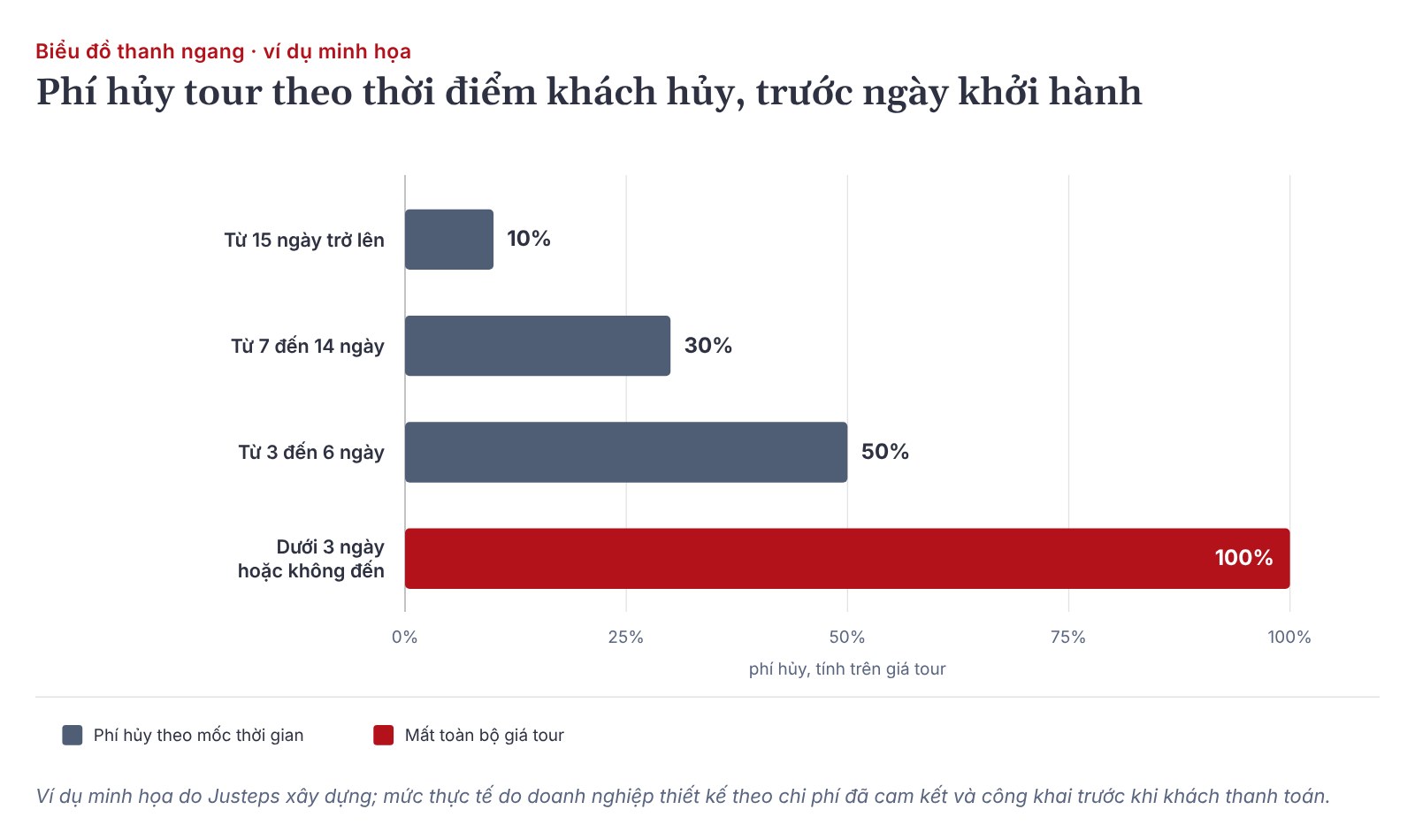
Figure 02. Bar chart of tour cancellation fees by time of cancellation before departure (% of tour price)
Illustrative example prepared by Justeps; actual rates are set by the company and disclosed before payment
The closer to departure the customer cancels, the longer the bar and the higher the fee; the red bar is cancellation within 3 days or no-show, where the full tour price is lost.
Managing tour guides
Guides leading domestic groups must hold an appropriate tour guide card and work under a contract with a travel business under the Law on Tourism. Companies should distinguish two groups: in-house guides on employment contracts under the Labor Code No. 45/2019/QH14 with social insurance under the Law on Social Insurance No. 41/2024/QH15; and freelance guides engaged per group on a service contract for each programme, with a written assignment.
For each group, the file should include a copy of the valid guide card, the contract or assignment decision, the tour programme, the guest list and emergency numbers. From 1 March 2027, the Law amending and supplementing certain articles of the Labor Code and related laws adds two paid public holidays on 27 July and 24 November. These are two more peak dates, and in-house guides working on a public holiday must be paid at least 300%, excluding holiday pay (under Article 98 of the Labor Code); price lists and staff costs should be planned in advance.
Customer data and accommodation
Tour operators collect a lot of personal data: names, dates of birth, identification numbers and health information for adventure activities. Under the Law on Personal Data Protection No. 91/2025/QH15, they need notice and tourists' consent for booking tickets, rooms and insurance, and should share data with suppliers only as necessary. Accommodation establishments now check guests' documents using citizen identity cards under the rules amended by Decree No. 392/2026/ND-CP, so guides should remind tourists to bring appropriate documents.
Legal basis and sources
- Law on Tourism No. 09/2017/QH14, as amended and supplemented.
- Decree No. 168/2017/ND-CP detailing certain articles of the Law on Tourism, as amended and supplemented.
- Law on Consumer Rights Protection No. 19/2023/QH15.
- Labor Code No. 45/2019/QH14 (Article 98); Law on Social Insurance No. 41/2024/QH15.
- Law amending and supplementing certain articles of the Labor Code, the Law on Archives, the Law on Gender Equality, the Law on Red Cross Activities and the Law on Employment, passed 21 November 2026, effective 1 March 2027.
- Decree No. 392/2026/ND-CP amending Decree No. 96/2016/ND-CP on security and order conditions, effective 15 November 2026.
- Law on Personal Data Protection No. 91/2025/QH15, effective 1 January 2026.
How Justeps supports businesses
- Incorporating the company and preparing the domestic travel licence file through Business formation.
- Drafting tour contracts, cancellation terms, guide contracts and customer data policies through Advisory and regulatory compliance.
- Setting up tour operation procedures, group files and approval authority through Operations setup.
- Training operators and guides on complaint and incident handling through In-house training.
Contact Justeps for advice tailored to your business.
Frequently asked questions
Who issues the domestic travel business licence?
The provincial tourism authority where the company is headquartered, under the Law on Tourism and its guiding decree.
What if the person in charge of travel business resigns?
The company must appoint a qualified replacement within the statutory period; otherwise the licence may be revoked.
Can freelance guides be used?
Yes, if the guide holds an appropriate card and signs a contract with the company for that programme, with a written assignment.
Must the full price be refunded if a tourist cancels close to departure?
It depends on the cancellation terms agreed and disclosed in the contract. Without such terms, it is hard for the company to retain amounts collected.
How do the two new public holidays affect tour operators?
From 1 March 2027 there are two more holidays on 27 July and 24 November, creating more tour demand; staff working on holidays must be paid under Article 98 of the Labor Code.
Related articles
- Running a private preschool in Vietnam: HR, child safety and operating records
- Managing a pharmacy chain: pharmacy staff, GPP and inventory control
- Selling on e-commerce platforms in Vietnam: invoices, tax, returns and complaints
This article is for reference and reflects the regulations in force at the time of publication. Please consult Justeps for advice tailored to your company’s records and situation.
For further information, please contact:
📩 Email: info@justeps.vn
🌐 Website: https://justepslegal.com · https://justeps.vn
🌐 Page: Justeps
☎️ Hotline (Zalo): 096 172 2607
📍 Thanh Xuan Office: 12th Floor, Licogi 13 Tower, 164 Khuat Duy Tien Street, Thanh Xuan Ward, Hanoi, Vietnam
📍 Ha Dong Office: LK06B, No.10, Dong Dua Area, Ha Dong Ward, Hanoi, Vietnam
📍 Ho Chi Minh City Branch: 528 Le Van Sy, Ho Chi Minh City, Vietnam
📍 Hai Phong Office: Truong Thinh Village, Ha Dong Commune, Hai Phong, Vietnam
📍 Quang Ninh Office: Van Don Special Zone, Quang Ninh Province, Vietnam





