For export garment manufacturers, orders from international brands usually come with a condition: the factory must pass a social compliance audit against the buyer's code of conduct or schemes such as amfori BSCI, SMETA or WRAP. A poor result can put orders on hold even when the product meets quality standards.
What many factories overlook is that auditors always take Vietnamese labour law as the minimum standard before applying the buyer's criteria. The most effective preparation for a labour compliance audit is therefore to comply with the law in daily operations, not to tidy up records a few weeks before the auditors arrive.
What a labour compliance audit checks
Audit schemes differ in scoring but cover the same themes: no child labour and protection of young workers; no forced labour; no discrimination or harassment; freedom of association and dialogue; working hours; wages and benefits; occupational safety, health and fire safety; environment; and transparency of records. Auditors cross-check three sources of evidence: records, site observation and worker interviews.
| Area | Supporting records | Common findings |
|---|---|---|
| Working hours, overtime | Time records, overtime consent, notice to the labour authority when exceeding 200 hours/year | Time records differ from actual hours, monthly cap exceeded |
| Wages | Wage scale, signed payroll or bank transfer records, payslips | Wrong overtime multipliers, unjustified deductions |
| Social insurance | Participant list, headcount reconciled to payroll | Contributions on lower-than-actual wages, late payment |
| Recruitment, contracts | Copies of ID, contracts, labour register | No age check, original documents retained |
| Safety, fire | Training, workplace environment monitoring, drills, equipment | Blocked exits, missing PPE in cutting and pressing |
| Dialogue, grievances | Dialogue minutes, suggestion box, hotline, case log | Channels exist but no handling records |
Overtime, where most points are lost
The garment sector may organise up to 300 overtime hours per year in the listed cases, but not more than 40 hours per month (under clauses 2 and 3 of Article 107 of the Labor Code No. 45/2019/QH14)[1]. The employer needs workers' consent and must notify the labour authority when overtime exceeds 200 hours in a year. Many buyer codes also set a tighter weekly cap on total hours than the law.
Effective control means tracking overtime by line and by person every week, with an alert when someone reaches 30 hours in a month. When orders are urgent, the options are to shift work to other lines, subcontract or renegotiate delivery dates, not "unrecorded overtime". Double time books are the most serious finding: when auditors detect them through interviews or camera data, the factory is usually rated unacceptable.
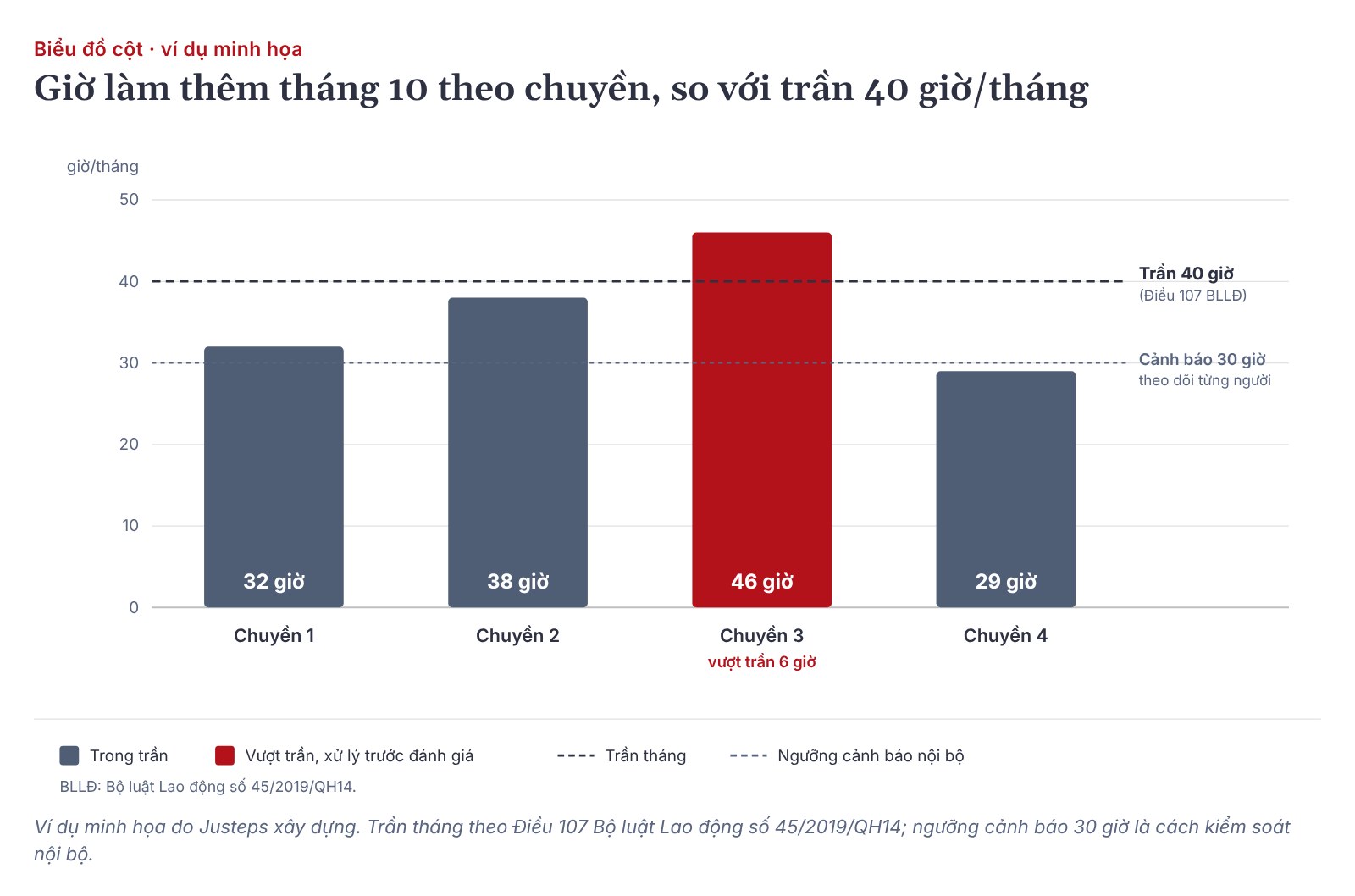
Figure 01. Bar chart of October overtime by production line against the 40-hour monthly cap
Illustrative example prepared by Justeps; cap under Article 107 of Labour Code No. 45/2019/QH14
The bold dashed line is the 40-hour monthly cap and the thin dashed line is the internal 30-hour warning threshold. The red bar (line 3) exceeds the cap and must be fixed before the audit.
Wages, public holidays and social insurance
From 1 January 2027, the monthly minimum wage under Decree No. 399/2026/ND-CP is VND 5,700,000 in Region I, VND 5,080,000 in Region II, VND 4,450,000 in Region III and VND 4,040,000 in Region IV. HR must update the wage scale and piece rates before the January 2027 payroll, ensuring that workers working standard hours earn no less than the minimum. Overtime must be paid at least 150% on normal days, 200% on weekly rest days and 300% on public holidays, excluding holiday pay (under Article 98 of the Labor Code).
The Law amending and supplementing certain articles of the Labor Code and related laws, passed by the National Assembly on 21 November 2026, adds two paid public holidays on 27 July and 24 November, raising the total to 13 days, effective 1 March 2027. Production plans and delivery schedules for 2027 must account for these days. Social insurance must be paid under the Law on Social Insurance No. 41/2024/QH15 on the correct wage base; auditors usually reconcile payroll headcount with the insurance participant list.
Forced labour, child labour and recruitment
Employers may not retain originals of workers' identity papers, diplomas or certificates, nor require workers to provide cash or property as security (under Article 17 of the Labor Code). Recruitment fees paid by workers to brokers, penalties for resigning, toilet restrictions and locked doors during working hours are forced labour indicators auditors will ask about.
Recruitment must verify age against the original citizen identity card, return it immediately and keep a copy. Young workers, if any, need a separate register, limited hours and no assignment to work prohibited under the Labor Code.
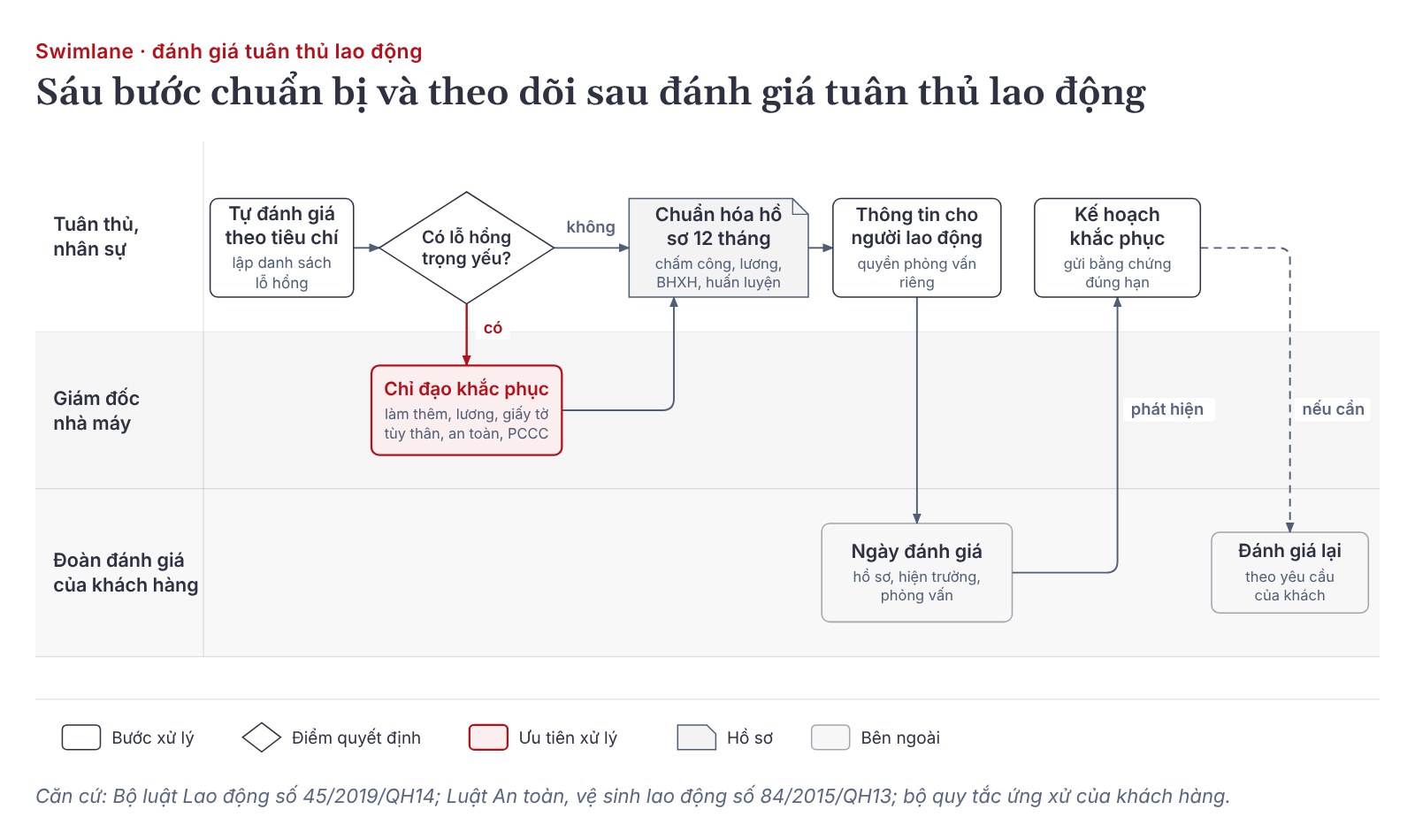
Figure 02. Swimlane of the six steps to prepare for and follow up a social compliance audit
Basis: Labour Code No. 45/2019/QH14; Law on Occupational Safety and Health No. 84/2015/QH13; the buyer's code of conduct
The diamond branches when the self-assessment finds critical gaps: the factory director orders remediation (red box) before records are standardised. The bottom lane is the auditor's work; the dashed arrow is a re-audit if the buyer requires it.
Safety, dialogue and accountability
On safety, the factory needs occupational safety and health training by worker group and periodic workplace environment monitoring under the Law on Occupational Safety and Hygiene No. 84/2015/QH13, plus fire safety records and evacuation drills under the Law on Fire Prevention, Fire Fighting and Rescue No. 55/2024/QH15. On dialogue, the company holds periodic workplace dialogue under Article 63 of the Labor Code and works with the workers' representative organisation under the Law on Trade Unions No. 50/2024/QH15.
Labour compliance is sustainable only when one person (usually the compliance manager or HR manager) is accountable, reports directly to the factory director and has authority to stop overtime beyond the cap. Each month this function reports five indicators: maximum overtime hours, number of workers above 40 hours, number of grievances, number of safety incidents and progress on corrective actions from the last audit.
Legal basis and sources
- Labor Code No. 45/2019/QH14 (Articles 17, 63, 98 and 107); Decree No. 145/2020/ND-CP on working conditions and labour relations.
- Law amending and supplementing certain articles of the Labor Code, the Law on Archives, the Law on Gender Equality, the Law on Red Cross Activities and the Law on Employment, passed 21 November 2026, effective 1 March 2027.
- Decree No. 399/2026/ND-CP on minimum wages, applicable from 1 January 2027.
- Law on Social Insurance No. 41/2024/QH15.
- Law on Occupational Safety and Hygiene No. 84/2015/QH13.
- Law on Fire Prevention, Fire Fighting and Rescue No. 55/2024/QH15.
- Law on Trade Unions No. 50/2024/QH15.
How Justeps supports businesses
- Pre-audits against Vietnamese law and the buyer's code through Advisory and regulatory compliance.
- Standardising labour rules, wage scales and overtime regulations through Governance standardisation.
- Setting up hours tracking, grievance channels and monthly compliance reporting through Operations setup.
- Training line managers and HR on labour compliance through In-house training.
Contact Justeps for advice tailored to your factory.
Frequently asked questions
What is the overtime limit in the garment sector?
No more than 40 hours per month and up to 300 hours per year in the cases listed in clause 3 of Article 107 of the Labor Code, with workers' consent and notification when exceeding 200 hours.
If the buyer's code is stricter than Vietnamese law, which applies?
The company must comply with Vietnamese law and, having committed to the buyer, must also meet the buyer's stricter criteria.
May we coach workers on how to answer interviews?
It is not advisable. Coaching signals a lack of transparency and is usually detected through cross-checking. Only inform workers of their right to be interviewed privately.
How do the two new public holidays affect garment factories?
From 1 March 2027 workers get 27 July and 24 November off with full pay; work on those days must be paid at least 300%, excluding holiday pay.
What should be done after the audit?
Prepare a corrective action plan with owners and deadlines, send evidence to the buyer on time and monitor to avoid repeat findings at the next audit.
Related articles
- Converting an agricultural processing cooperative into an enterprise: choosing the model and restructuring
- Selling on e-commerce platforms in Vietnam: invoices, tax, returns and complaints
- Domestic tour operators in Vietnam: licence, deposit, tour contracts and guides
This article is for reference and reflects the regulations in force at the time of publication. Please consult Justeps for advice tailored to your company’s records and situation.
For further information, please contact:
📩 Email: info@justeps.vn
🌐 Website: https://justepslegal.com · https://justeps.vn
🌐 Page: Justeps
☎️ Hotline (Zalo): 096 172 2607
📍 Thanh Xuan Office: 12th Floor, Licogi 13 Tower, 164 Khuat Duy Tien Street, Thanh Xuan Ward, Hanoi, Vietnam
📍 Ha Dong Office: LK06B, No.10, Dong Dua Area, Ha Dong Ward, Hanoi, Vietnam
📍 Ho Chi Minh City Branch: 528 Le Van Sy, Ho Chi Minh City, Vietnam
📍 Hai Phong Office: Truong Thinh Village, Ha Dong Commune, Hai Phong, Vietnam
📍 Quang Ninh Office: Van Don Special Zone, Quang Ninh Province, Vietnam