Family business succession rarely fails because the successor lacks ability. It fails because the handover is squeezed into a single moment: when the founder falls seriously ill, when siblings start to disagree, or when the bank asks for a new legal representative. At that point every decision on shares, titles and signing authority is made in a hurry, without consensus, and is easy to challenge later.
A safer approach is to split the handover into two parallel tracks, management succession and ownership succession, and tie both to a roadmap of about five years, with a family charter as the foundation and the company charter as the enforcement tool. This article sets out the steps, who is responsible and the controls that should be in place.
Why family business succession needs its own roadmap
In a family business, three roles often sit with one person: owner, chief executive and head of the family. When the founder steps back, these three roles are rarely handed to the same successor. The eldest child may hold the largest stake but not run the business; a capable child who runs the business may hold only a small stake; a hired manager may serve as General Director during the transition.
Without a clear separation, familiar problems appear: the largest owner interferes in daily operations, family members who do not work in the company demand high dividends, in-laws join management without criteria, and the founder’s stake is split among many heirs and loses control. A five-year roadmap lets the family deal with each issue while everyone is calm and the founder still has the authority to broker agreement.
The family charter, what to include and who approves it
A family charter is an agreement among family members on how the family owns and participates in the business. Enterprise law does not regulate this type of document, so on its own it does not bind the company. Its practical value comes from translating its key principles into the company charter, internal regulations, a shareholders’ agreement or contracts between members.
A workable charter usually covers:
- the family’s values and long-term goals for the business, including whether it wants to keep control across generations;
- criteria for family members to work in the company: qualifications, years of outside experience, entry position, and evaluation on the same basis as other staff;
- the structure of the family council, meeting frequency, voting and its relationship with the Board of Directors or Members’ Council;
- dividend policy and support for members who are not involved in management;
- principles for transferring capital outside the family and buy-back mechanisms;
- how disagreements are resolved and the role of an independent adviser.
The family council should be set up in the first year and include the founder, the spouse and the adult children. The council secretary, often one of the children or an in-house legal assistant, keeps the minutes and tracks whether the company charter is updated in line with what has been agreed.
| Item | Family charter | Charter, internal regulations, shareholders’ agreement |
|---|---|---|
| Nature | A commitment among family members, not a document required by law | Documents binding on the company and its members or shareholders |
| Approved by | Family council | General Meeting of Shareholders, Board of Directors, Members’ Council or owner, as authorised |
| Covers | Shared values, criteria for joining management, dividend policy, conduct | Transfer of capital, pre-emptive rights, voting, appointments, authority |
| When disputes arise | Mediation within the family, independent adviser | Mechanism under the charter, arbitration or court |
| Review frequency | Every 2–3 years or when the family changes | When ownership or governance model changes |
A five-year roadmap for family business succession
The roadmap below suits a limited liability company or joint stock company controlled by one family. Each stage can be shortened or extended, but the order should stay the same: clarify ownership first, hand over management next, and transfer the large ownership stake last.
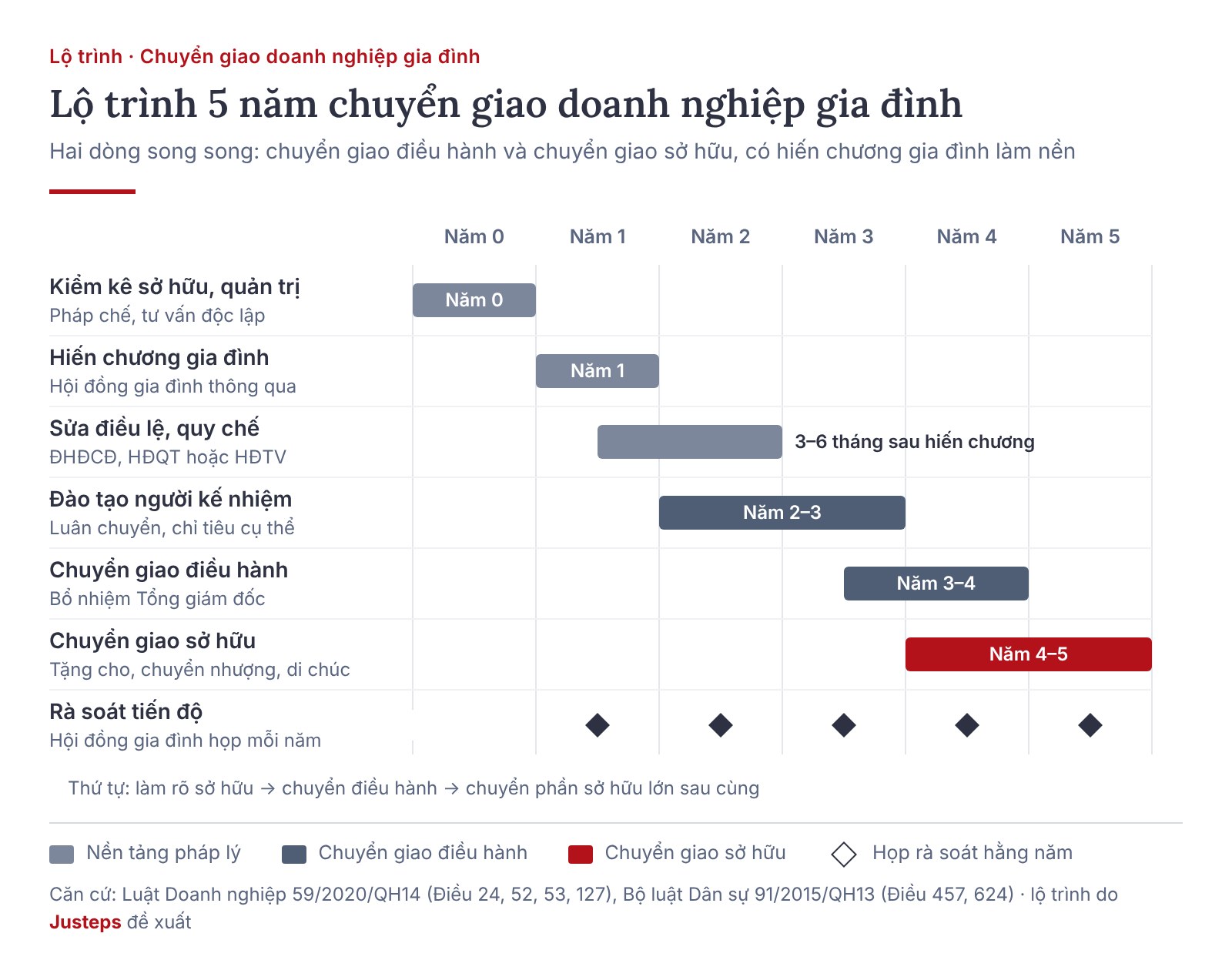
Figure 01. Five-year family business succession roadmap
Basis: Enterprise Law 59/2020/QH14, Civil Code 91/2015/QH13 | Roadmap proposed by Justeps
Read left to right by year: grey is the legal groundwork, dark grey management handover, red the ownership transfer done last; diamonds are annual review meetings.
Year 0, take stock of ownership and governance
The legal team or an outside adviser prepares a summary: who holds the capital, which stakes are joint marital property under Article 33 of the Law on Marriage and Family No. 52/2014/QH13, whether anyone holds shares on behalf of others, and what the current charter says about transfers, inheritance and the legal representative. This is the step most often skipped, yet mistakes here make every later document vulnerable to dispute.
Years 1 to 2, charter and company charter amendments
Once the family council approves the family charter, the company amends its charter to include the main principles. The company charter is binding under Article 24 of the Law on Enterprises No. 59/2020/QH14 (as amended in 2025). For a multi-member limited liability company, pre-emptive rights on the transfer of capital contributions (Article 52) and the handling of a deceased member’s stake, where the heir becomes a member (Article 53), should be redesigned. For a joint stock company, the charter may restrict share transfers (Article 127), helping keep shares within the family.
Years 2 to 4, training and management succession
The successor should rotate through at least two functions, such as sales and finance, with specific targets and evaluation by someone other than the parents. On appointment as General Director, the Board or Members’ Council issues the appointment decision and updates the delegation of authority and the legal representative if needed. The founder moves into the role of Chairperson or board member and supervises through periodic reports instead of approving every expense.
Years 4 to 5, ownership succession
Ownership should be transferred in stages, combining gifts under an asset donation contract (Article 457 of the Civil Code No. 91/2015/QH13)[2], transfers for value and a will (Article 624 of the Civil Code) for the remainder. Each stage requires registering the change of members or updating the shareholder register, and personal income tax on capital transfers, inheritances and gifts should be calculated in advance under current tax law.
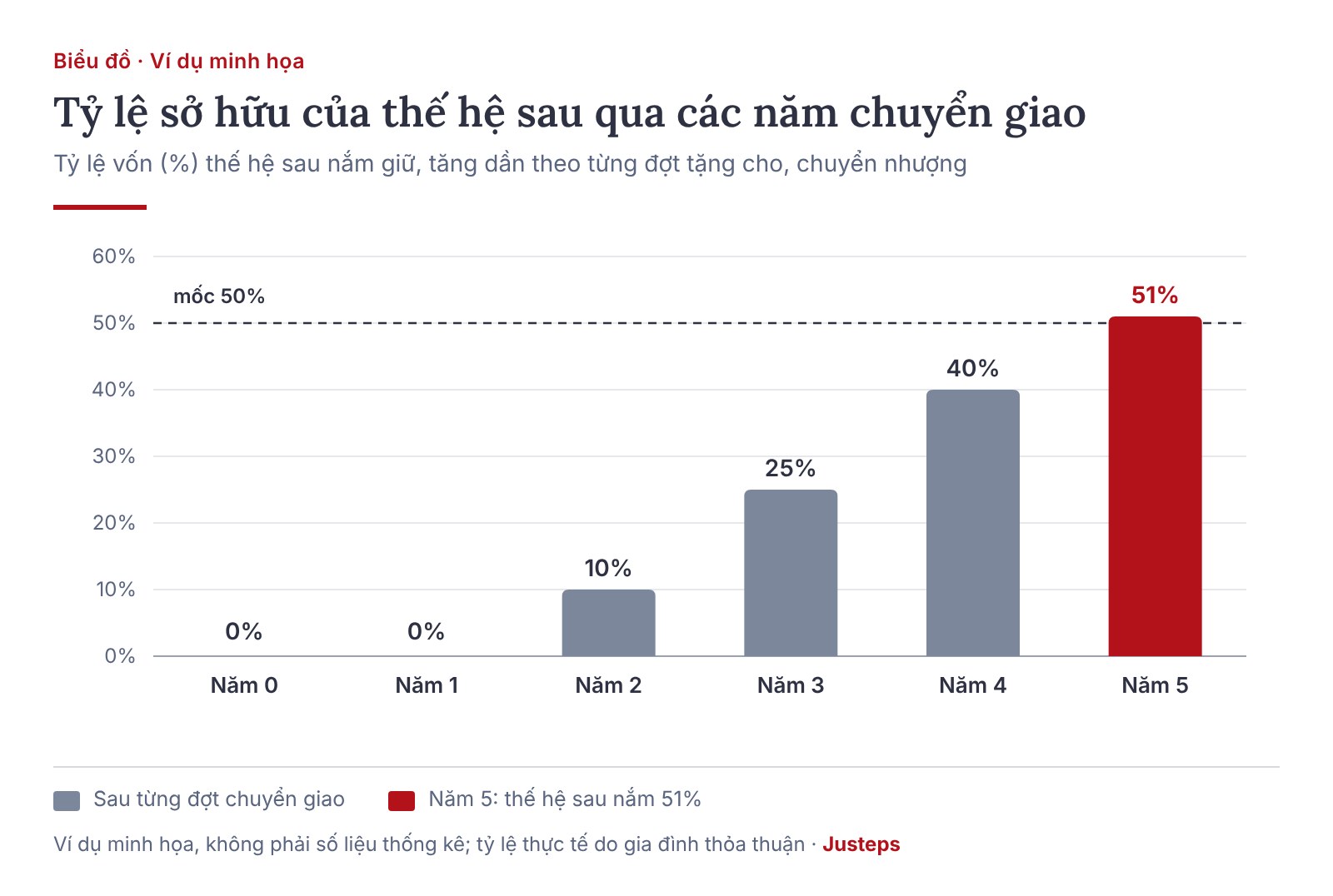
Figure 02. Next generation's ownership over the years
Illustrative example, assumed figures
Each column is the next generation's stake after each transfer; the red year-5 column crosses the 50% line.
Who does what during succession
The founder sets the pace and principles but should not draft the documents personally. The family council approves the family charter and monitors progress. The Board or Members’ Council makes the legally binding decisions: amending the charter, appointments, approving transfers. The chief accountant assesses the tax and cash-flow impact of each option. An independent legal adviser checks that family documents and company documents do not conflict.
One control worth setting is that the family council meets at least once a year specifically on succession, with minutes recording what has been done, what is late and why. When something major happens, such as a divorce, the death of a family member or outside investment, the roadmap must be reviewed immediately.
Common risks and how to prevent them
- The family charter says one thing and the company charter another: always reconcile them and update the company charter within 3–6 months after the family charter is approved.
- Stakes split through inheritance: design buy-back mechanisms or pooled voting proxies in a shareholders’ agreement in advance.
- Marital property of the next generation: consider a separate property agreement under marriage and family law before a large transfer.
- The founder still signs everything after handing over the title: review bank mandates, specimen signatures, seals and the delegation of authority.
Businesses preparing for succession can refer to Justeps’ succession transfer and governance standardisation services to build a suitable roadmap.
Legal basis and sources
- Law on Enterprises No. 59/2020/QH14, as amended in 2025 (Article 24 on the company charter; Articles 52 and 53 on transfer and handling of capital contributions; Article 127 on share transfers).
- Civil Code No. 91/2015/QH13, effective from 1 January 2017 (Article 457 on asset donation contracts; Article 624 on wills).
- Law on Marriage and Family No. 52/2014/QH13 (Article 33 on joint marital property).
- Personal income tax law on income from capital transfers, inheritances and gifts.
How Justeps supports businesses
- Designing a succession transfer roadmap based on the family’s actual ownership structure.
- Drafting the family charter and embedding its principles in the company charter and shareholders’ agreement.
- Building governance and delegation regulations for the new management generation through governance standardisation.
- Advising on restructuring options and tax obligations when gifting or transferring capital.
- Ongoing legal advice throughout the succession. Learn more at Justeps.
Frequently asked questions
Does a family charter need to be notarised?
No. However, legally binding arrangements such as capital transfers, gifts of capital, wills or shareholders’ agreements must follow the form required for each type of document.
Should management or ownership be handed over first?
Usually management first, so the successor can prove their ability, and then the large ownership stake. This lets the founder retain the power to adjust if results fall short.
What happens to the stake of a deceased member of a limited liability company?
Under Article 53 of the Law on Enterprises, the member’s heir under a will or by law becomes a member of the company. If the family wants to avoid fragmenting the stake, it should agree terms and make a will in advance.
Can a non-family member be General Director during the transition?
Yes. Many families hire a professional General Director for 2–3 years while the successor is trained. Clear delegation rules and reporting to the Board or Members’ Council are then essential.
How often should the family charter be reviewed?
About every 2–3 years, or immediately after a major family event such as a marriage, divorce or death, or when the company takes outside investment.
Related articles
- General Director authority: delegation and limits in the charter and internal regulations
- Lawful workforce reduction for structural and technological change: procedure and records
- Merging two subsidiaries within a group: HR, contracts, tax and invoices roadmap
This article is for reference and reflects the regulations in force at the time of publication. Please consult Justeps for advice tailored to your company’s records and situation.
For further information, please contact:
📩 Email: info@justeps.vn
🌐 Website: https://justepslegal.com · https://justeps.vn
🌐 Page: Justeps
☎️ Hotline (Zalo): 096 172 2607
📍 Thanh Xuan Office: 12th Floor, Licogi 13 Tower, 164 Khuat Duy Tien Street, Thanh Xuan Ward, Hanoi, Vietnam
📍 Ha Dong Office: LK06B, No.10, Dong Dua Area, Ha Dong Ward, Hanoi, Vietnam
📍 Ho Chi Minh City Branch: 528 Le Van Sy, Ho Chi Minh City, Vietnam
📍 Hai Phong Office: Truong Thinh Village, Ha Dong Commune, Hai Phong, Vietnam
📍 Quang Ninh Office: Van Don Special Zone, Quang Ninh Province, Vietnam