When a counterparty delivers late, supplies substandard goods or pays late, many companies first phone a reminder and wait. Months later, when they want to sue, they find there is no written breach notice, the delivery record is vague, or they kept accepting goods without reserving their rights, making penalty and damages claims difficult.
Handling a breach of contract effectively requires a clear sequence: record, notify, negotiate, mediate, apply remedies and only then go to arbitration or court. Each step creates records for the next. This article explains how to organise that sequence within a company, who does what and which deadlines to watch.
Handling a breach of contract starts with recording and preserving evidence
As soon as a breach is detected, the team performing the contract, such as purchasing, warehouse or sales, should make a record or a dated email: how much is missing, what defect, how many days late. Photos, videos, inspection reports and delivery documents are filed under the contract number. Legal checks the clauses on obligations, cure periods, penalties, damages and dispute resolution.
An important point is the duty to mitigate. The aggrieved party must take reasonable measures to limit its loss; otherwise the breaching party may request a corresponding reduction in damages (under Article 305 of the Commercial Law No. 36/2005/QH11)[1]. Decisions such as buying replacement goods or suspending production should therefore be recorded with reasons.
Written notice of breach
The breach notice should be sent in writing to the address and in the form agreed in the contract, with confirmation of receipt. At a minimum it should state the clause breached, the specific breach, the demand for cure, a reasonable cure period and the remedies the company reserves the right to apply. Avoid threatening language or fixing a damages figure before there is enough basis to calculate it.
If the counterparty invokes force majeure, check whether it has notified and proved it properly. The breaching party is exempt only in the cases provided by law and must notify the other party in writing of the exemption event (under Articles 294 and 295 of the Commercial Law).
Negotiation and mediation
Most breaches can be resolved by negotiation if the company prepares well. Before the meeting, legal and the business team agree on the maximum demand, the minimum acceptable outcome and trade-offs such as extensions, discounts or replacements. Every meeting should be minuted and signed; any agreement reached should be recorded as a contract addendum to make it binding.
When negotiation stalls but both sides want to keep the relationship, commercial mediation under Decree No. 22/2017/ND-CP is worth considering. The mediator helps the parties find solutions, the process is confidential and a successful mediation result can be submitted to the court for recognition. If the case has already been filed in court, the parties can also use court-annexed mediation and dialogue under the Law on Mediation and Dialogue at Court No. 58/2020/QH14.
| Criterion | Negotiation | Commercial mediation | Commercial arbitration | Court |
|---|---|---|---|---|
| Led by | The parties themselves | A mediator chosen by the parties | Arbitral tribunal | Judge |
| Confidentiality | High | High | High, no public hearing | Public hearing |
| Enforceability | As agreed, may be recorded in an addendum | Successful mediation results can be recognised by a court | Final award, enforced like a judgment | Judgment may be appealed |
| Precondition | None | Both parties agree to mediate | A valid arbitration agreement | No valid arbitration agreement |
| Suitable when | Keeping the relationship, minor breach | Deadlock but goodwill remains | Foreign counterparty, need for confidentiality | Urgent interim measures, uncooperative counterparty |
Applying remedies, penalties, damages, suspension, rescission
The Commercial Law provides remedies including specific performance, contractual penalties, damages, suspension, stoppage and rescission of the contract and other measures agreed by the parties (under Article 292 of the Commercial Law). The penalty is agreed by the parties but may not exceed 8% of the value of the breached portion of the obligation (under Article 301). If the contract provides for a penalty, the aggrieved party may claim both the penalty and damages (under Article 307); damages must be proven under Articles 302 and 303.
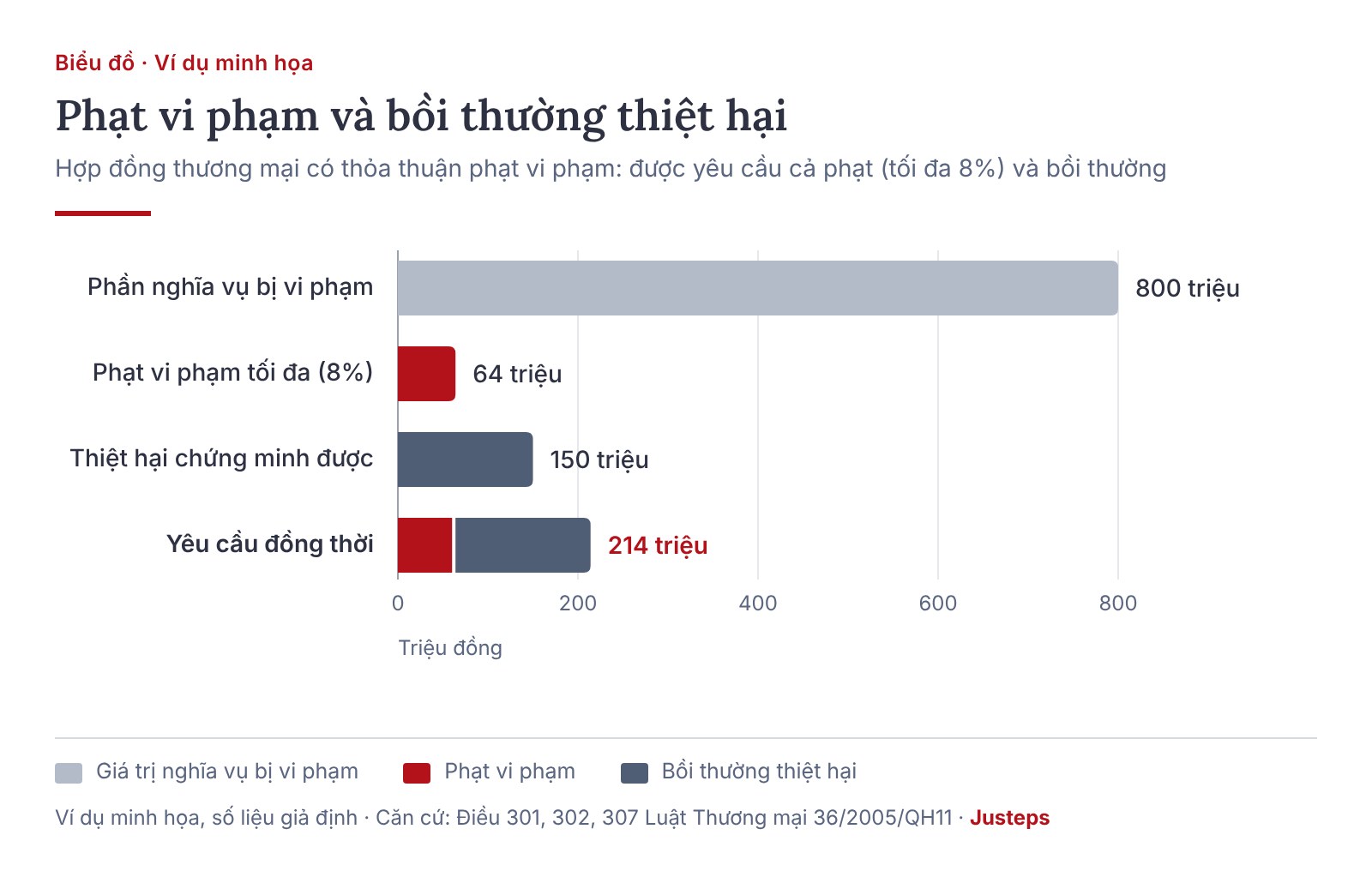
Figure 01. Contractual penalty and damages
Illustrative example, assumed figures | Basis: Arts. 301, 302, 307, Commercial Law 36/2005/QH11
The last bar adds the maximum 8% penalty (red) to proven damages (dark grey): the total that can be claimed together.
For suspension, stoppage or rescission, the company must notify the counterparty immediately. Terminating a contract without proper grounds may make the company itself the breaching party. For civil contracts, rescission and unilateral termination follow Articles 423 and 428 of the Civil Code No. 91/2015/QH13. Decisions to apply severe remedies such as rescission should be approved in writing by the person authorised under internal regulations.
The breach handling sequence within the company
Companies should build the sequence below into their contract management regulations, with internal deadlines for each step to prevent cases from dragging on.
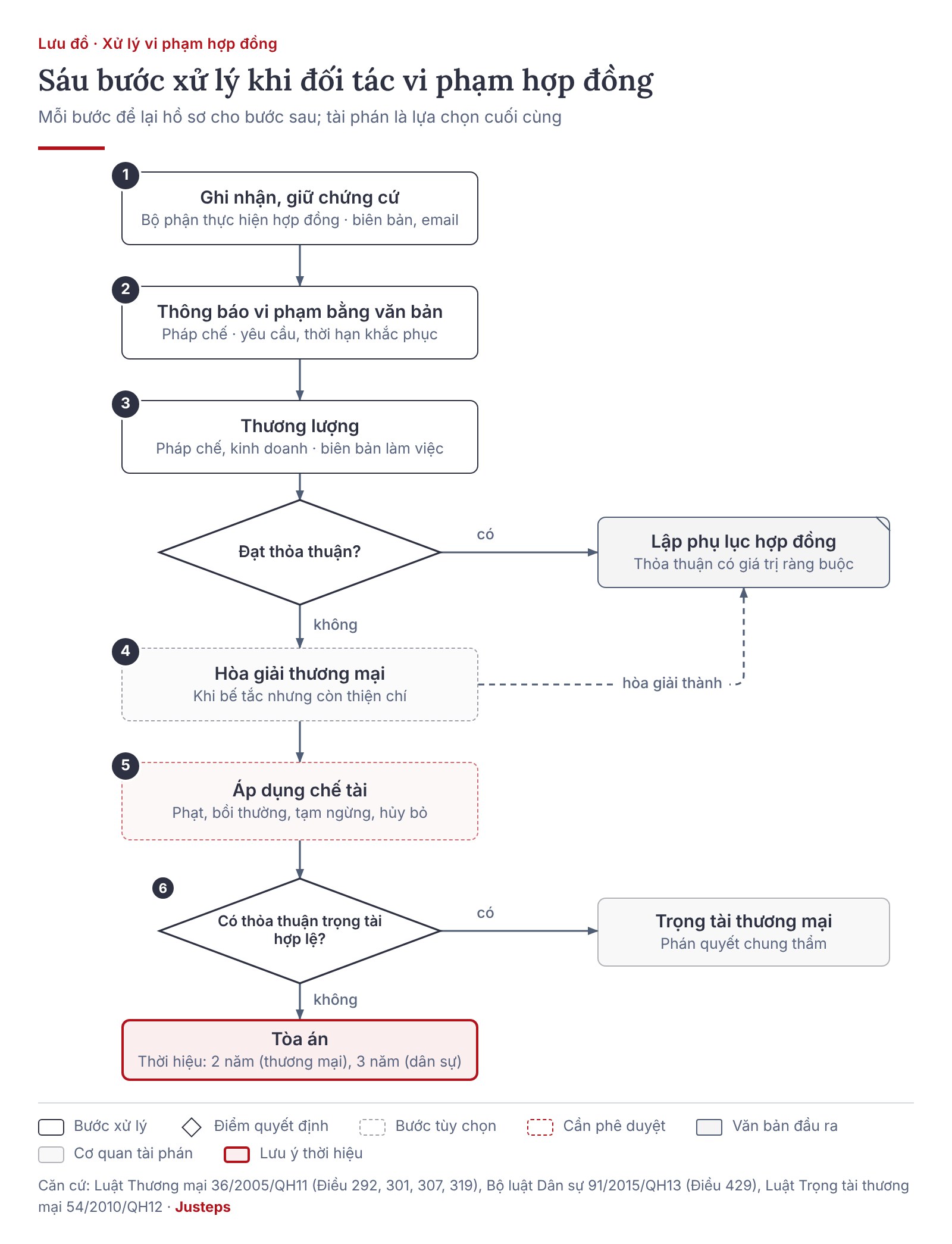
Figure 02. Six steps when a counterparty breaches the contract
Basis: Commercial Law 36/2005/QH11, Civil Code 91/2015/QH13, Commercial Arbitration Law 54/2010/QH12
Read top to bottom; diamonds are decisions, dashed boxes are optional or approval steps, and the red box flags the limitation period.
When going to arbitration or court, the first check is the arbitration agreement. If the contract contains a valid arbitration agreement under the Law on Commercial Arbitration No. 54/2010/QH12, the court will not accept the case. Next is the limitation period: two years from the time lawful rights and interests are infringed for commercial disputes (under Article 319 of the Commercial Law), and three years for civil contracts (under Article 429 of the Civil Code). Legal should enter limitation dates in the dispute register as soon as a breach is detected.
Companies that need to review template contracts or get help with an ongoing dispute can refer to Justeps’ regulatory advice and compliance and operational setup services.
Legal basis and sources
- Commercial Law No. 36/2005/QH11 (Articles 292, 294, 295, 301, 302, 303, 305, 307 and 319).
- Civil Code No. 91/2015/QH13, effective from 1 January 2017 (Articles 423, 428 and 429).
- Law on Commercial Arbitration No. 54/2010/QH12.
- Decree No. 22/2017/ND-CP on commercial mediation.
- Law on Mediation and Dialogue at Court No. 58/2020/QH14.
- Civil Procedure Code No. 92/2015/QH13.
How Justeps supports businesses
- Drafting breach notices and cure demands and preparing negotiation strategy.
- Building contract management regulations and a breach handling process through regulatory advice and compliance.
- Reviewing and standardising penalty, damages and dispute resolution clauses in template contracts through operational setup.
- Representing the company in mediation and coordinating with litigation counsel for arbitration or court.
- Training purchasing and sales teams on contract management through in-house training. Learn more at Justeps.
Frequently asked questions
Is negotiation mandatory before filing a lawsuit?
The law does not generally require it, but many contracts set a negotiation period before arbitration or litigation. Companies should comply with such clauses and keep evidence of negotiation.
Can a penalty be claimed if the contract does not specify one?
No. Penalties apply only if agreed in the contract. Otherwise the company can only claim proven damages.
What is the 8% penalty calculated on?
Under Article 301 of the Commercial Law, the penalty may not exceed 8% of the value of the breached portion of the obligation, not the total contract value.
Does continuing to accept late deliveries waive the right to claim penalties?
The counterparty may argue acceptance. When still accepting goods, the company should note in the delivery record or in a separate letter that it reserves the right to claim penalties and damages.
Is a commercial mediation result enforceable?
A successful mediation agreement binds the parties contractually. To make it enforceable, the parties can ask the court to recognise the successful mediation result under civil procedure.
Related articles
- Software development contracts: acceptance, warranty and source code ownership
- Warehousing and logistics contracts: liability for goods and warehouse operating structure
- Legal and communications crisis management: a 72-hour playbook for companies
This article is for reference and reflects the regulations in force at the time of publication. Please consult Justeps for advice tailored to your company’s records and situation.
For further information, please contact:
📩 Email: info@justeps.vn
🌐 Website: https://justepslegal.com · https://justeps.vn
🌐 Page: Justeps
☎️ Hotline (Zalo): 096 172 2607
📍 Thanh Xuan Office: 12th Floor, Licogi 13 Tower, 164 Khuat Duy Tien Street, Thanh Xuan Ward, Hanoi, Vietnam
📍 Ha Dong Office: LK06B, No.10, Dong Dua Area, Ha Dong Ward, Hanoi, Vietnam
📍 Ho Chi Minh City Branch: 528 Le Van Sy, Ho Chi Minh City, Vietnam
📍 Hai Phong Office: Truong Thinh Village, Ha Dong Commune, Hai Phong, Vietnam
📍 Quang Ninh Office: Van Don Special Zone, Quang Ninh Province, Vietnam