Many factories have the signs, the fire extinguishers and the safety handbook, yet when a labour inspector asks "who is responsible for training group 3", "where are this year's monitoring results", "has the air compressor been inspected", nobody can answer straight away. An occupational safety and health system for a factory is not a set of files; it is a cycle with owners, a calendar and evidence.
This article helps the board and the HR and administration team rebuild that system around three pillars: organising the safety function, group-based training, and monitoring, inspection and health checks. The aim is that every task answers three questions: who does it, when, and where the evidence is kept.
Who is responsible for occupational safety and health in a factory
Under the Law on Occupational Safety and Health No. 84/2015/QH13, the employer is responsible for organising occupational safety and health work at the workplace, even when training or monitoring is outsourced. The factory director cannot hand this responsibility over to a contractor. What the director can do is assign roles clearly internally and control the service providers.
The Labor Code No. 45/2019/QH14 also requires internal labour rules to cover occupational safety and health, so the OSH system must be consistent with the internal labour rules, employment contracts and the company's reward and discipline policies.
Organising the occupational safety and health function
Decree No. 39/2016/ND-CP sets out how to organise the OSH unit and the medical unit at the workplace. The number of full-time or part-time staff depends on headcount and industry; factories in high-risk sectors (mechanical engineering, chemicals, construction materials and the like) need more. Businesses should map their actual industry against the decree to find the minimum, then add capacity according to the risk level of their own production lines.
| Position | Main role | Appointed by | Required records |
|---|---|---|---|
| Manager in charge of OSH | Approves the plan and budget; accountable to the Director | Director | Assignment decision |
| Full-time or part-time OSH officer | Plans, inspects the floor, tracks training and equipment inspection | Director | Decision, group 2 training certificate |
| Medical unit | First aid, health records, periodic check-ups | Director or contract with a healthcare provider | Decision or contract, qualifications |
| Safety and health representative | Reminds workers and spots hazards in the production team | Elected by the team, confirmed by the Director | List, group 6 certificate |
| Workplace OSH council | Advises on and monitors the OSH plan | Director, with the workers' representative organisation | Establishment decision, meeting minutes |
Each production team should have at least one safety and health representative who works on the line, knows the procedures and is trusted by co-workers. This is the "sensor" closest to the floor, and many factories only have it on paper.
Training in 6 groups, build the list first, then the schedule
Decree No. 44/2016/ND-CP (amended by Decree No. 140/2018/ND-CP)[4] divides trainees into 6 groups: managers in charge of safety; OSH staff; workers doing jobs with strict safety requirements; other workers; medical staff; and safety and health representatives. Each group has its own content, duration and form of certification.
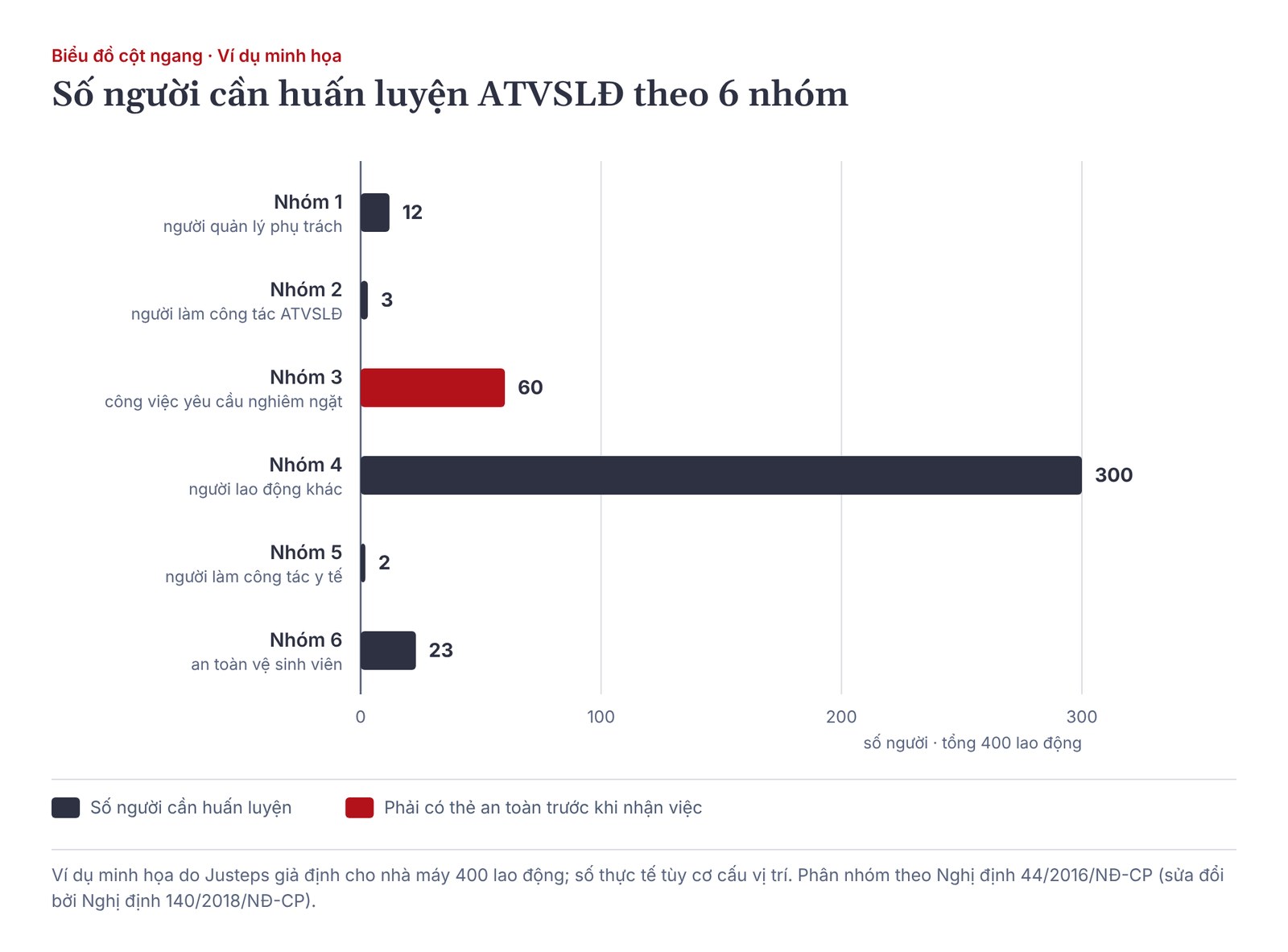
Figure 01. Workers requiring OSH training by the 6 groups
Illustrative example, assumed data | Groups under Decree 44/2016/ND-CP
Each bar is the number of people to train in one group at a 400-worker factory. The red bar is group 3, workers in jobs with strict safety requirements who must be trained and carded before starting work.
The efficient approach is for HR to export the headcount by position, the OSH officer to assign a training group to each position, and only then to schedule sessions. New hires must be trained before being assigned to a workstation; anyone moving to a job with strict safety requirements (boiler operation, forklifts, overhead cranes, welding, chemical handling) must be retrained and issued a safety card before starting. External trainers must be licensed; course acceptance records should include a signed attendance list, tests and a certificate or card for each person.
Workplace environment monitoring, equipment inspection and health checks
These three activities produce the quantitative evidence inspectors usually ask for first. Workplace environment monitoring (microclimate, dust, noise, lighting, toxic gases) is carried out at least once a year by a qualified monitoring organisation. The results are not just for filing: where readings exceed limits, the factory must take corrective measures, consider in-kind allowances and arrange occupational disease screening for those working there.
Machinery, equipment and materials with strict safety requirements (boilers, pressure vessels, refrigeration systems, cranes, forklifts, lifts and so on) must be inspected before being put into use and periodically during use. The factory should keep an equipment register showing the inspection number, expiry date and the person responsible for reminders.
Workers receive periodic health checks at least once a year; those in heavy, hazardous or dangerous jobs are checked at least once every six months under the Law on Occupational Safety and Health. Health records are sensitive personal data, and access should be restricted.
The annual operating cycle
An OSH system only stays alive if it runs as a loop: assess risk, plan, implement, check, improve. The annual OSH plan should be approved together with the production plan, with a dedicated budget for personal protective equipment, training, monitoring, inspection and health checks.
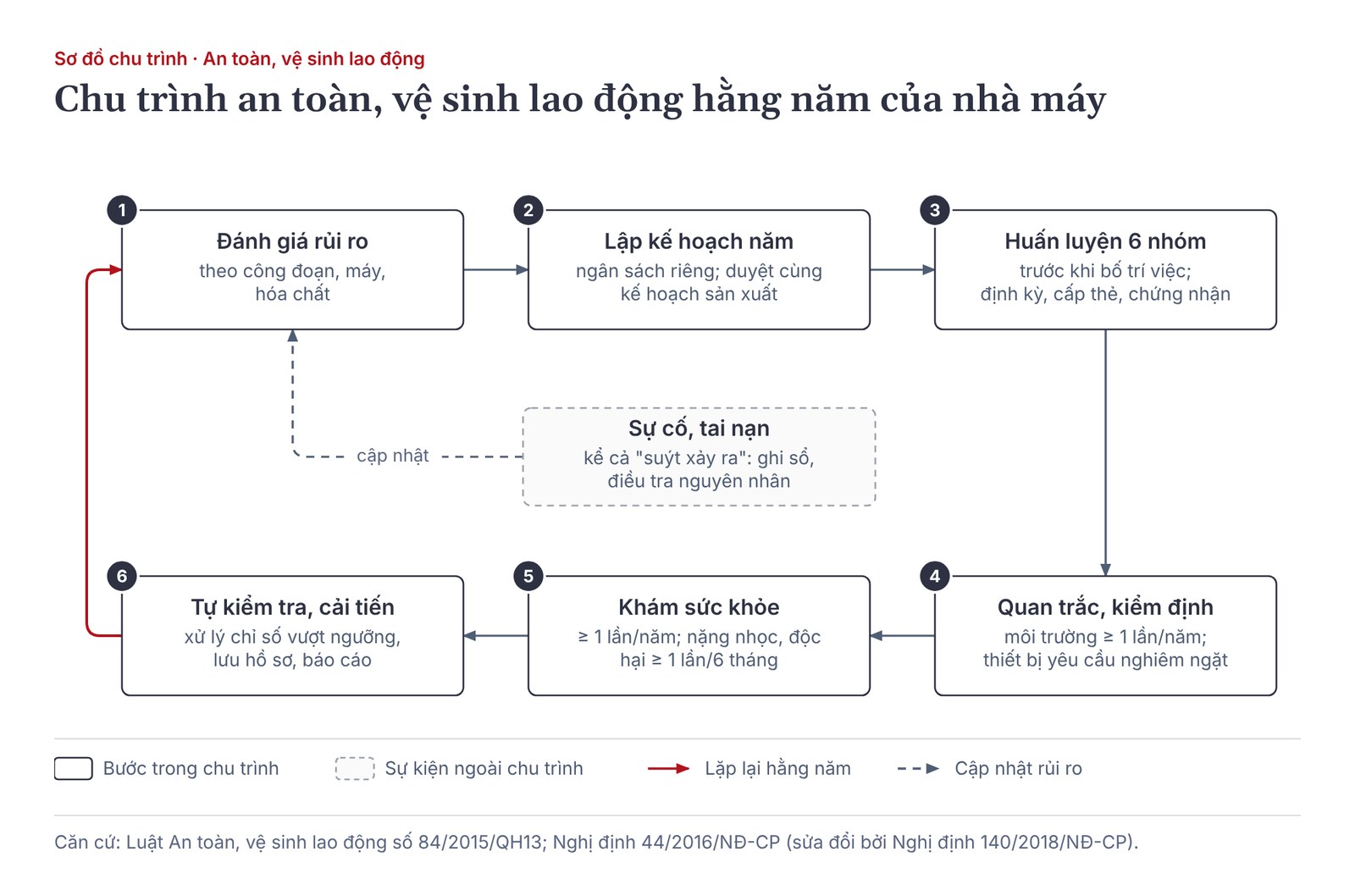
Figure 02. Annual occupational safety and health cycle at a factory
Basis: OSH Law No. 84/2015/QH13; Decree 44/2016/ND-CP
Read clockwise from step 1 to step 6; the red arrow feeds self-inspection results into next year's risk assessment. Incidents sit outside the cycle but always trigger an update of the risk assessment.
Beyond the annual cycle, an incident response procedure is needed: first aid, internal reporting, notifying the competent authority of a fatal or serious accident, root-cause investigation and updating the risk assessment. Every accident, including minor ones and near misses, should be logged to reveal trends.
Common operational mistakes
- Training once at start-up and then letting periodic training lapse, especially for group 3 and safety representatives.
- Paying for monitoring but not reading the results, with no record of how exceedances were handled.
- Running newly purchased equipment in production before its first inspection.
- Letting contractors carry out repairs or installation without a safety briefing or work permit.
- Leaving safety out of the performance criteria for team leaders and supervisors, so safety always comes after output.
Legal basis and sources
- Law on Occupational Safety and Health No. 84/2015/QH13, effective from 1 July 2016.
- Labor Code No. 45/2019/QH14, effective from 1 January 2021.
- Decree No. 39/2016/ND-CP detailing certain articles of the Law on Occupational Safety and Health.
- Decree No. 44/2016/ND-CP detailing certain articles of the Law on Occupational Safety and Health on technical safety inspection, OSH training and workplace environment monitoring; amended by Decree No. 140/2018/ND-CP.
How Justeps supports businesses
- Assessing the factory's current OSH system, listing missing records and setting a remediation roadmap in our Governance standardisation package.
- Drafting decisions establishing the OSH unit and the workplace OSH council, training procedures, and accident reporting and investigation procedures under our Advisory and regulatory compliance services.
- Reviewing internal labour rules and reward and discipline policies to tie safety accountability to supervisors and team leaders through our Corporate governance services.
- In-house training for managers on legal liability when an occupational accident occurs through our In-house training programme.
Contact Justeps for advice on your factory.
Frequently asked questions
If the factory outsources training, does it still need an OSH officer?
Yes. Outsourcing training does not replace the duty to organise an OSH unit at the workplace; the business may only choose the form of organisation that fits its size and industry under Decree No. 39/2016/ND-CP.
How often must the workplace environment be monitored?
At least once a year. Additional monitoring is advisable when technology or production lines change or when working conditions are reported as a concern.
How often should workers in hazardous environments have health checks?
At least once every six months, instead of once a year as for ordinary workers.
If equipment was inspected at the seller's premises, must the factory inspect it again?
Equipment with strict safety requirements must be inspected before being put into use at the factory and periodically afterwards; the manufacturer's documents do not replace inspection at the installation site.
Should safety and health representatives receive an allowance?
Businesses should provide a responsibility allowance for them in the salary policy, both to recognise the additional duty and to keep them motivated.
Related articles
- Fintech legal compliance in Vietnam: eKYC, data and partnering with banks
- Labor dispute mediation in the workplace: the internal procedure before going to a labor mediator
- Software development contracts: acceptance, warranty and source code ownership
This article is for reference and reflects the regulations in force at the time of publication. Please consult Justeps for advice tailored to your company’s records and situation.
For further information, please contact:
📩 Email: info@justeps.vn
🌐 Website: https://justepslegal.com · https://justeps.vn
🌐 Page: Justeps
☎️ Hotline (Zalo): 096 172 2607
📍 Thanh Xuan Office: 12th Floor, Licogi 13 Tower, 164 Khuat Duy Tien Street, Thanh Xuan Ward, Hanoi, Vietnam
📍 Ha Dong Office: LK06B, No.10, Dong Dua Area, Ha Dong Ward, Hanoi, Vietnam
📍 Ho Chi Minh City Branch: 528 Le Van Sy, Ho Chi Minh City, Vietnam
📍 Hai Phong Office: Truong Thinh Village, Ha Dong Commune, Hai Phong, Vietnam
📍 Quang Ninh Office: Van Don Special Zone, Quang Ninh Province, Vietnam