When acquiring a business, the buyer is not just buying assets and revenue but also every past obligation, dispute and error of that company. Legal due diligence is the only way to know what you are buying before signing, and to turn identified risks into price, conditions and specific undertakings in the contract.
This article explains how to organise legal due diligence from the buyer's side: the document request list, common red flags in Vietnamese companies, and how to carry the findings into the share or capital purchase agreement.
Questions legal due diligence must answer
A good due diligence report is not a summary of every document read. It answers four questions: does the seller actually own and have the right to sell the interest; does the company have the licences, assets and contracts to keep operating as it does today; are there obligations or disputes not reflected in the financial statements; and what approvals does the transaction need to close.
The last question is often overlooked. If the buyer is a foreign investor, the transaction may require registration of the capital contribution or purchase of shares or capital under the Law on Investment No. 143/2025/QH15. If the deal exceeds the thresholds, the parties must notify the economic concentration under the Law on Competition No. 23/2018/QH14 and Decree No. 35/2020/ND-CP before implementation. The target's charter may also grant other members or shareholders pre-emptive rights or restrict transfers by founding shareholders.
Legal due diligence process in an acquisition
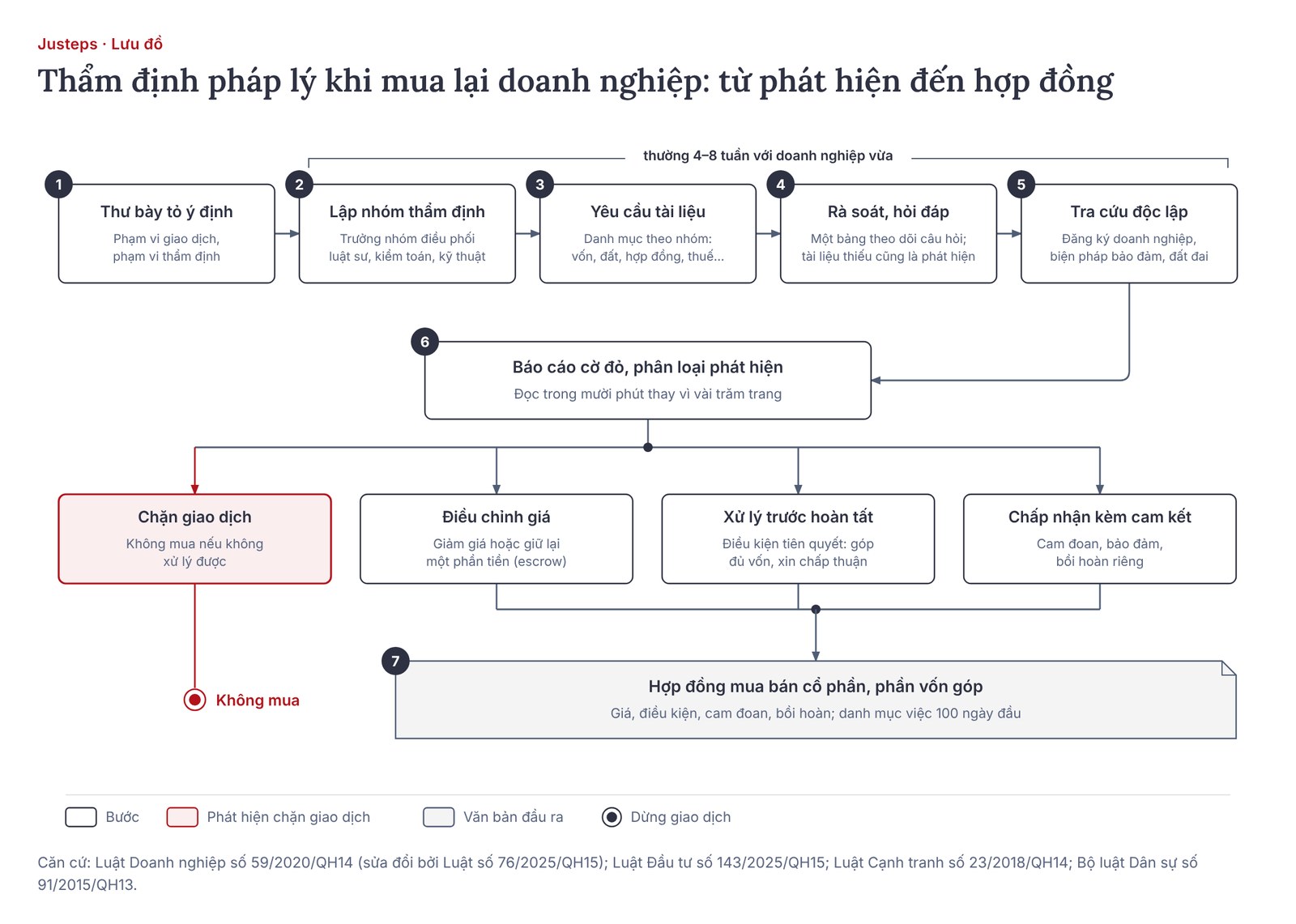
Figure 01. Legal due diligence flow in an acquisition, from findings to the purchase agreement
Basis: Enterprise Law No. 59/2020/QH14 (amended by Law No. 76/2025/QH15); Investment Law No. 143/2025/QH15; Competition Law No. 23/2018/QH14; Civil Code No. 91/2015/QH13
The top row shows five steps to collect and verify documents, typically 4–8 weeks; the red-flag report sorts findings into four types. The red box is a deal-blocking finding leading to no purchase; the other three go into the purchase agreement.
Due diligence on a mid-sized company usually takes four to eight weeks. The buyer should appoint a team lead to coordinate experts, auditors and technical experts, using a shared question tracker to avoid duplicate questions and to see which documents the seller has not provided. A document that is not provided is itself a finding and should be stated in the report.
Independent checks verify what the seller says. Enterprise registration data, the legal representative and the history of changes can be checked on the National Business Registration Portal; encumbrances on assets through the secured transaction registration system; and land use status with the local land authority.
Document list and common red flags
| Group | Documents requested | Common red flags | How to handle |
|---|---|---|---|
| Capital and ownership | Enterprise registration certificates, charter, shareholder register, capital contribution records | Capital not fully paid, nominee shareholdings, unregistered transfers | Fix before signing as a condition precedent |
| Land, assets | Land use right certificates, land lease contracts, construction permits, fire safety files | Land leased with annual rent but booked as an asset, works exceeding permits | Price adjustment or holdback |
| Contracts | Contracts with major customers and suppliers, loans, guarantees | Change-of-control clauses allowing the counterparty to terminate | Obtain counterparty consent before closing |
| Labour | Employment contracts, internal labour regulations, pay scales, social insurance records | Social insurance paid on less than actual wages, unregistered labour regulations | Specific indemnity, holdback |
| Tax | Tax returns, finalisations, tax inspection and audit minutes | Non-deductible expenses, undeclared related-party transactions | Tax warranties with a long survival period |
| Licences, compliance | Sub-licences, environmental impact assessments, certificates of eligibility | Expired licences, licences in the name of a closed branch | Condition precedent or post-closing covenant |
| Disputes, data | List of lawsuits and complaints, personal data processing policy | Disputes not yet filed, customer data collected without consent | Full disclosure, specific indemnity |
Personal data is a new item to add to the list from 2026. With the Law on Personal Data Protection No. 91/2025/QH15 in force, a retail or services company with a large customer database but no evidence of data subjects' consent is a real risk, both for penalties and for the value of the data assets the buyer intends to use. The due diligence team itself must also process the target's employee and customer data for the proper purpose and with security measures.
Turning findings into contract terms
Each finding should be classified in the report itself: deal-breakers (no purchase unless resolved), price adjustments, items to fix before closing, and acceptable items with undertakings. This classification lets decision makers read the report in ten minutes instead of several hundred pages.
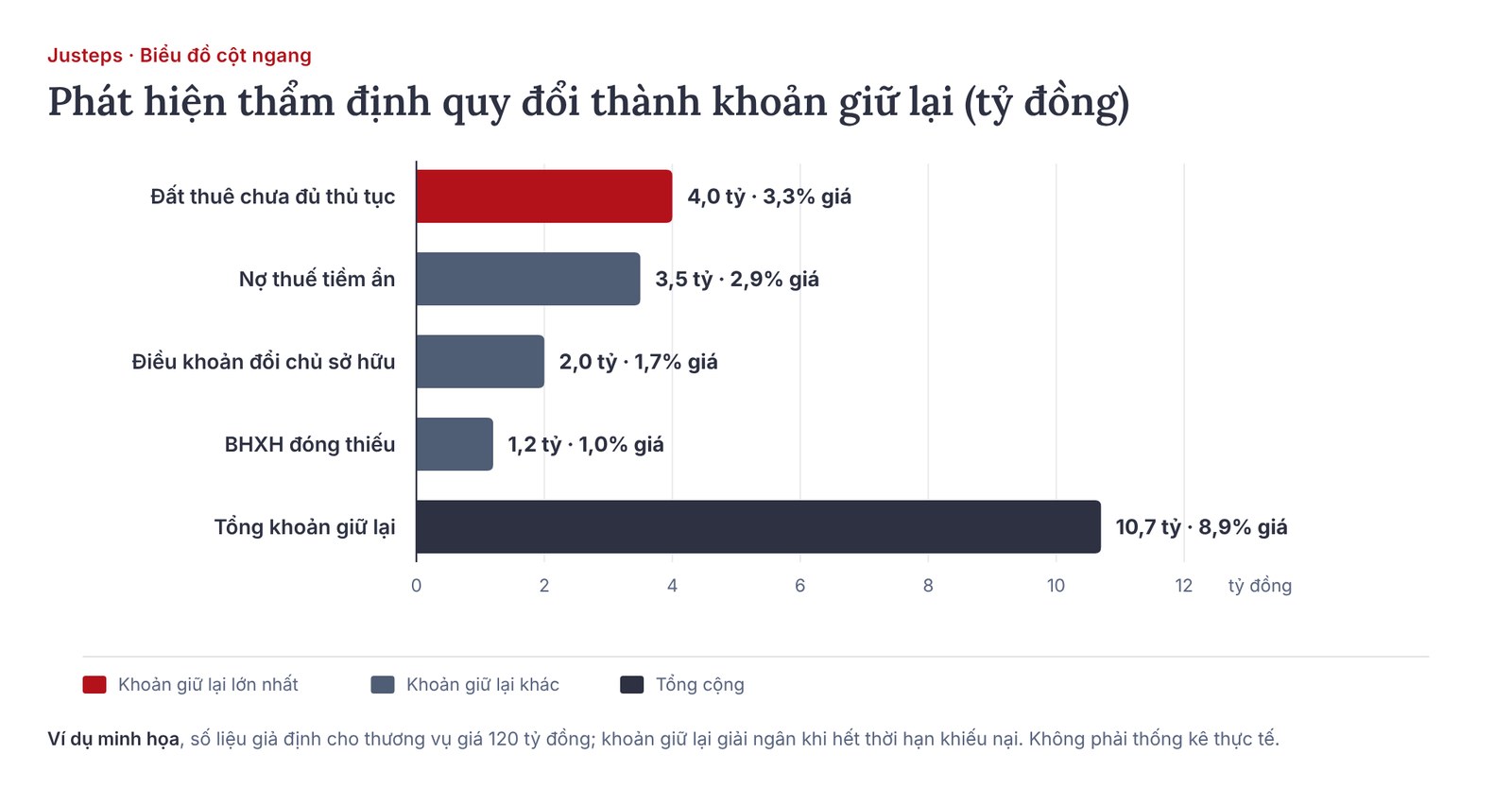
Figure 02. Due diligence findings converted into holdback amounts (VND billion)
Illustrative example, assumed figures for a VND 120 billion deal
Each bar is a holdback and its share of the price; the red bar is the largest, the last bar the 10.7 billion total, released when the claims period ends.
Quantifiable risks such as hidden tax liabilities or social insurance shortfalls are usually handled by an escrow or deferred payment of part of the price, released when the claims period expires. Hard-to-quantify risks such as potential disputes are handled by seller representations and warranties and specific indemnities not limited by the general cap. Issues that must be fixed first, such as completing capital contributions or obtaining lender consent, become conditions precedent.
After closing, the due diligence report becomes the to-do list for the first 100 days: amending the charter, updating licences, standardising employment contracts and reviewing internal regulations. The buyer should assign each item to an owner with a specific deadline, as many risks are only recorded in the report and then forgotten.
Legal basis and sources
- Law on Enterprises No. 59/2020/QH14, as amended by Law No. 76/2025/QH15 (effective 1 July 2025).
- Law on Investment No. 143/2025/QH15.
- Law on Competition No. 23/2018/QH14 and Decree No. 35/2020/ND-CP detailing certain articles of the Law on Competition.
- Law on Personal Data Protection No. 91/2025/QH15 (effective 1 January 2026).
- Labor Code No. 45/2019/QH14, Law on Social Insurance No. 41/2024/QH15, Land Law No. 31/2024/QH15.
- Civil Code No. 91/2015/QH13.
How Justeps supports businesses
- Conducting legal due diligence on the target and preparing a red flag report with risk classification (Corporate and M&A).
- Drafting and negotiating share or capital purchase agreements, conditions precedent and holdback mechanisms (Strategic restructuring).
- Advising on investment procedures, merger control notification and post-closing registration (Business growth).
- Planning the 100-day post-acquisition integration: charter, regulations, labour, licences (Governance standardisation).
Contact Justeps for advice on your acquisition.
Frequently asked questions
How does legal due diligence differ from financial due diligence?
Financial due diligence checks figures, quality of earnings and liabilities; legal due diligence checks ownership, licences, contracts, disputes and compliance. The two teams should work in parallel and share findings, for example on tax and social insurance.
Does buying assets instead of shares avoid historical risks?
An asset purchase limits exposure to the company's past obligations, but each licence, contract and employee must be transferred and other taxes may arise. The structure should be chosen based on the due diligence results.
What if the seller refuses access to some documents for confidentiality reasons?
A clean room accessible only to the buyer's experts can be used, or the risk can be converted into warranties and indemnities in the contract.
Should the report be updated before closing?
Yes. If the period between signing and closing is long, the buyer should require the seller to reconfirm its warranties and carry out a bring-down review of material items.
Related articles
- IPO preparation: governance, accounting and disclosure 2–3 years before listing
- Private placement of shares by a non-public joint stock company: internal process and registration of changes
- Production floor KPIs: productivity, quality, safety and how to link them to piece-rate pay
This article is for reference and reflects the regulations in force at the time of publication. Please consult Justeps for advice tailored to your company’s records and situation.
For further information, please contact:
📩 Email: info@justeps.vn
🌐 Website: https://justepslegal.com · https://justeps.vn
🌐 Page: Justeps
☎️ Hotline (Zalo): 096 172 2607
📍 Thanh Xuan Office: 12th Floor, Licogi 13 Tower, 164 Khuat Duy Tien Street, Thanh Xuan Ward, Hanoi, Vietnam
📍 Ha Dong Office: LK06B, No.10, Dong Dua Area, Ha Dong Ward, Hanoi, Vietnam
📍 Ho Chi Minh City Branch: 528 Le Van Sy, Ho Chi Minh City, Vietnam
📍 Hai Phong Office: Truong Thinh Village, Ha Dong Commune, Hai Phong, Vietnam
📍 Quang Ninh Office: Van Don Special Zone, Quang Ninh Province, Vietnam