
When a group has two subsidiaries in the same line of business or serving the same customers, merging subsidiaries is a common way to cut overheads, remove unnecessary intra-group transactions and simplify reporting. Legally, the registration procedure is not complicated. The difficulty is operational: dozens of employment contracts, hundreds of customer and supplier contracts, and tax and invoicing obligations that must move over on the right day.
This article sets out a roadmap for merging two subsidiaries within a group across four workstreams: HR, contracts, tax and invoices, with milestones counted from the date the surviving company's change registration is completed (day T).
Legal framework for merging subsidiaries
A company merger follows Article 201 of the Law on Enterprises No. 59/2020/QH14 (as amended by Law No. 76/2025/QH15)[1]. The companies prepare a merger contract and a draft charter of the surviving company; the owner, Members' Council or General Meeting of each company approves them; and the merger contract must be sent to creditors and communicated to employees within 15 days of approval. After registration, the merged company ceases to exist; the surviving company enjoys its lawful rights and interests and is responsible for its unpaid debts, employment contracts and other property obligations.
Even where both companies have the same owner, the group should check the economic concentration notification thresholds under the Law on Competition No. 23/2018/QH14 before signing the merger contract.
Overall roadmap
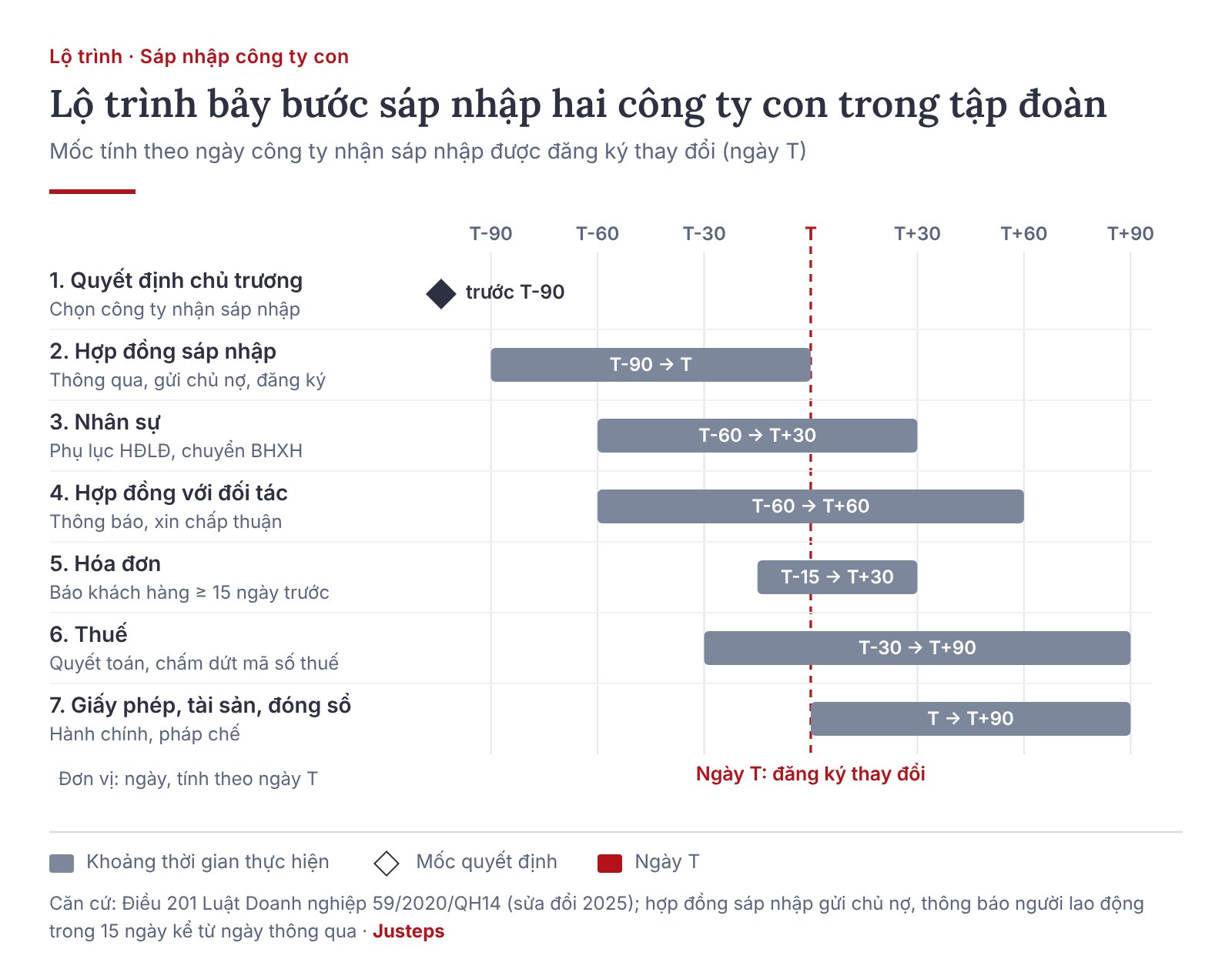
Figure 01. Seven-step roadmap for merging two group subsidiaries
Basis: Article 201, Enterprise Law 59/2020/QH14 (amended 2025) | Indicative timing
Each row is a step and its bar the working window relative to day T; the red line is the date the surviving company's change is registered.
One point to settle early is which company survives. Practical criteria include which company holds more hard-to-obtain sub-licences, more long-term contracts with key customers, cleaner tax records and a better-known brand. Choose wrongly, and the business will have to re-apply for many licences and re-sign contracts unnecessarily.
| Workstream | Tasks | Lead | Timing |
|---|---|---|---|
| Corporate | Merger contract, charter of the surviving company, owner resolutions, change registration | Group legal | T-90 to T |
| HR | Employee list, labour utilisation plan, employment contract annexes, social insurance transfer | HR of both companies | T-60 to T+30 |
| Contracts | Classify contracts, notify counterparties, seek consent where assignment is restricted | Legal, sales | T-60 to T+60 |
| Tax | Finalisation up to the merger date, tax code termination, creditable VAT and losses | Chief accountant | T-30 to T+90 |
| Invoices | Date to stop issuing invoices, adjustment invoices, notifying customers of new invoicing details | Accounting | T-15 to T+30 |
| Licences, assets | Re-apply for or amend sub-licences, transfer assets, bank accounts | Administration, legal | T to T+90 |
HR, continued employment and contract amendments
Under Article 43 of the Labor Code No. 45/2019/QH14, in a merger the successor employer must continue to employ the existing workforce and amend or supplement the employment contracts; if it cannot use all of them, it must prepare and implement a labour utilisation plan under Article 44. In practice, most employees stay, signing an annex that changes the employer's name and, where relevant, the workplace, with continuous service recognised.
HR should handle three things carefully: reconcile the two pay scales and two sets of labour rules into a harmonisation roadmap (committed benefits cannot be reduced); transfer the social insurance contributing unit to the surviving company under the Law on Social Insurance No. 41/2024/QH15; and re-register the labour rules if their content changes. Note also that from 1 March 2027 public holidays rise to 13 days under the Law amending and supplementing certain articles of the Labor Code, so the merged labour rules should be updated at the same time.
Contracts, classify before notifying
In principle, the surviving company inherits the rights and obligations under the merged company's contracts. Counterparties still need to be notified to update payment and invoicing details, and some contracts contain anti-assignment or change-of-control clauses that require prior consent.
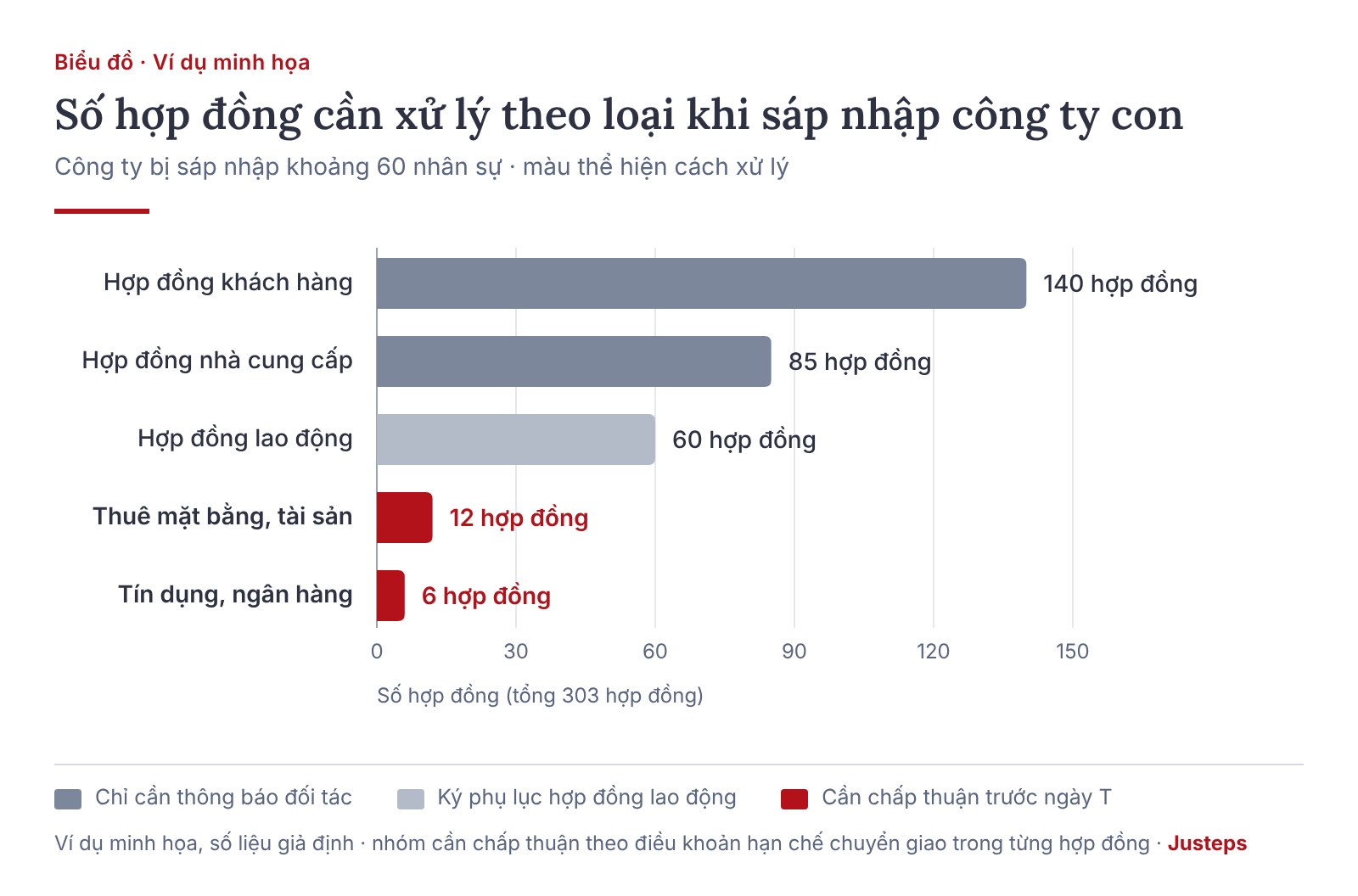
Figure 02. Contracts to handle by type in a merger
Illustrative example, assumed figures
Bar colour shows the action: grey notify only, light grey labour addendum, red needs counterparty consent before day T.
An effective approach is to split contracts into three groups: those needing only notice, those needing counterparty consent (credit facilities, premises leases and exclusive distribution agreements are often here), and those to re-sign or terminate (contracts between the two subsidiaries extinguish on merger). The consent group must be dealt with before day T, as a bank may treat an unannounced merger as an event of default.
Tax and invoices, closing the numbers on the right day
The merged company must fulfil its tax obligations, finalise taxes up to the merger date and terminate its tax code under the Law on Tax Administration No. 108/2025/QH15 (effective 1 July 2026); outstanding tax obligations pass to the surviving company. Accounting should determine early the procedure for transferring creditable VAT, the carry-forward of losses (checking the Law on CIT No. 67/2025/QH15 and guiding documents)[4] and whether asset transfers must be declared for VAT under the Law on VAT No. 48/2024/QH15.
On incentives, if the surviving company is self-applying the 30% CIT reduction under Article 3 of Decree No. 398/2026/ND-CP for businesses with annual revenue of no more than VND 10 billion, it must recalculate revenue after the merger, as it may exceed the threshold. The 3-year CIT exemption for small and medium-sized enterprises under the Law amending the Law on CIT, the Law on Non-agricultural Land Use Tax and the Law on PIT (effective 1 January 2027) excludes businesses formed through merger, consolidation, division, separation or conversion, so restructuring cannot be used to qualify for it.
For invoices, follow Decree No. 123/2020/ND-CP (as amended by Decree No. 70/2025/ND-CP)[6]. Accounting should fix the date the merged company stops issuing invoices, agree with the tax authority how to handle adjustment and replacement invoices for transactions before day T, and send customers the new invoicing details at least 15 days in advance.
If the group is weighing several restructuring options at once, see Justeps' Corporate, M&A services.
Legal basis and sources
- Law on Enterprises No. 59/2020/QH14 (Article 201 on company mergers), as amended by Law No. 76/2025/QH15 (effective 1 July 2025).
- Labor Code No. 45/2019/QH14 (Articles 43 and 44); the Law amending and supplementing certain articles of the Labor Code, the Law on Archives, the Law on Gender Equality, the Law on Red Cross Activities and the Law on Employment, effective 1 March 2027.
- Law on Social Insurance No. 41/2024/QH15.
- Law on Tax Administration No. 108/2025/QH15 (effective 1 July 2026); Law on CIT No. 67/2025/QH15; Law on VAT No. 48/2024/QH15.
- Decree No. 398/2026/ND-CP on PIT and CIT reductions; the Law amending and supplementing certain articles of the Law on CIT, the Law on Non-agricultural Land Use Tax and the Law on PIT, effective 1 January 2027.
- Decree No. 123/2020/ND-CP on invoices and documents, as amended by Decree No. 70/2025/ND-CP.
- Law on Competition No. 23/2018/QH14.
How Justeps supports businesses
- Designing the merger structure, drafting the merger contract and registration file (Corporate, M&A).
- Building an overall group restructuring roadmap (Strategic restructuring).
- Reviewing and classifying contracts, drafting notices and consent requests to counterparties.
- Reviewing tax, invoices and incentives before and after the merger (Tax, Customs & International Trade).
- Harmonising labour rules, pay scales and internal policies after the merger (Governance standardisation).
Contact Justeps for advice on a suitable merger roadmap.
Frequently asked questions
Does a merger require terminating old employment contracts and signing new ones?
No. The surviving company continues to employ the staff and amends the employment contracts, usually by annex. Service at the merged company counts as continuous.
Do we need to notify every customer?
It is advisable. Although the surviving company inherits the contracts, customers need updated invoicing and payment details. Contracts with anti-assignment clauses also require consent.
Do the merged company's sub-licences transfer automatically?
Usually not. Many licences are issued to a specific legal entity and must be re-applied for or amended. List the licences and check the sector rules for each before day T.
How long does it take?
Registration can be done within a few weeks, but the full roadmap from decision to closing the books typically takes 4 to 6 months, mainly due to tax finalisation and the transfer of contracts and licences.
When should the merger take effect?
Many groups choose the start of a financial year or quarter to ease tax finalisation and closing the accounts, reducing the figures that must be split between the two entities.
Related articles
- IPO preparation: governance, accounting and disclosure 2–3 years before listing
- Legal due diligence when acquiring a company: document checklist and common red flags
- Lawful workforce reduction for structural and technological change: procedure and records
This article is for reference and reflects the regulations in force at the time of publication. Please consult Justeps for advice tailored to your company’s records and situation.
For further information, please contact:
📩 Email: info@justeps.vn
🌐 Website: https://justepslegal.com · https://justeps.vn
🌐 Page: Justeps
☎️ Hotline (Zalo): 096 172 2607
📍 Thanh Xuan Office: 12th Floor, Licogi 13 Tower, 164 Khuat Duy Tien Street, Thanh Xuan Ward, Hanoi, Vietnam
📍 Ha Dong Office: LK06B, No.10, Dong Dua Area, Ha Dong Ward, Hanoi, Vietnam
📍 Ho Chi Minh City Branch: 528 Le Van Sy, Ho Chi Minh City, Vietnam
📍 Hai Phong Office: Truong Thinh Village, Ha Dong Commune, Hai Phong, Vietnam
📍 Quang Ninh Office: Van Don Special Zone, Quang Ninh Province, Vietnam





