Most labour violations found during inspections do not stem from major decisions but from monthly routines done incompletely: overtime above the limit, forgetting to report leavers for social insurance, payslips never sent to employees. A monthly labour compliance checklist helps HR turn these tasks into habits with a doer, a controller and evidence on file.
This article sets out the checklist in the order of one payroll cycle, together with the changes businesses must build in from early 2027: the new regional minimum wage and 2 additional public holidays.
Monthly labour compliance checklist, design principles
A checklist only works when each line answers four questions: what is checked, when, by whom and controlled by whom. The doer and the controller must be different people. At month end the HR head signs off the checklist and files it with the payroll; this is evidence that the business has a control mechanism when inspectors or auditors ask.
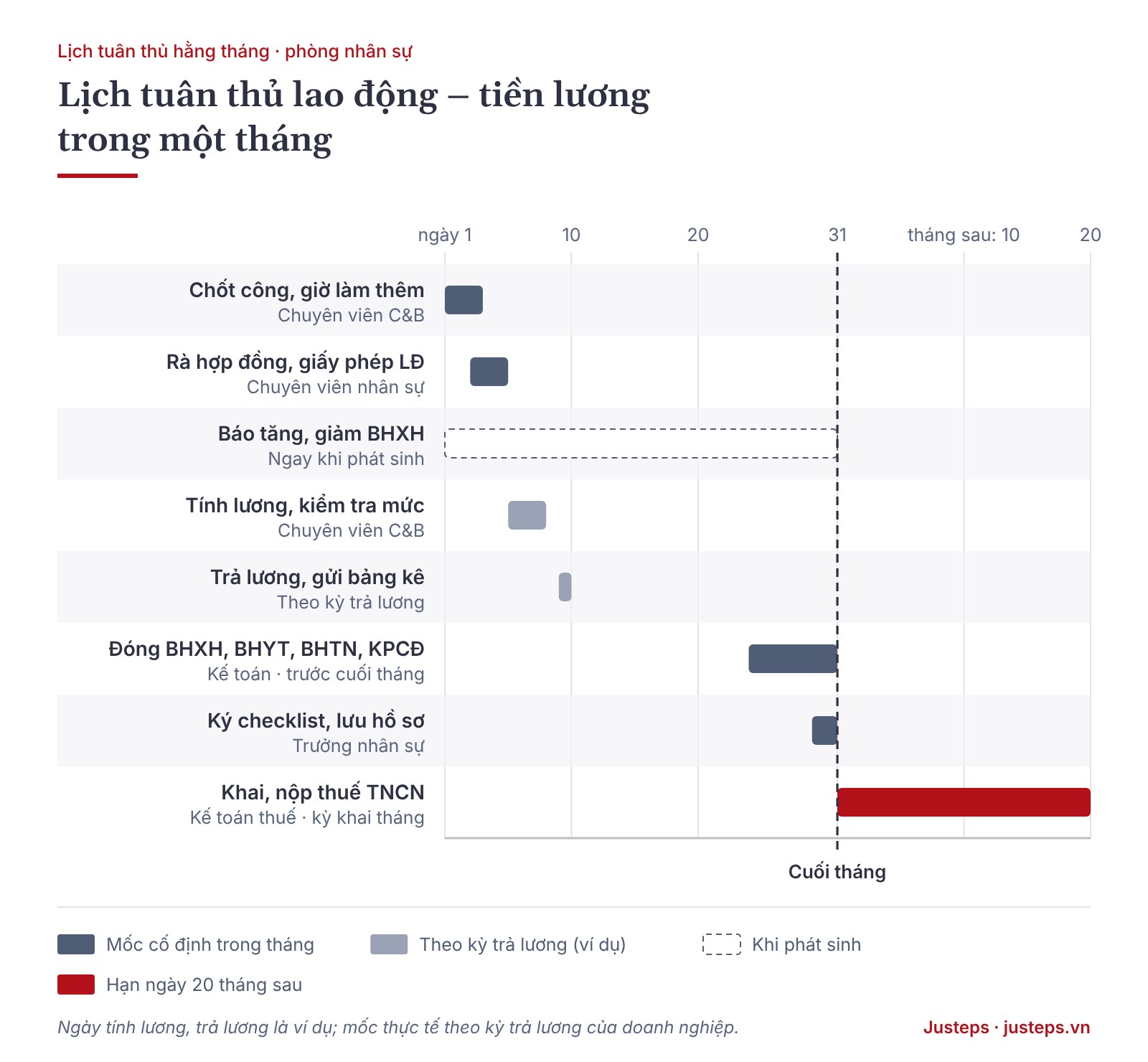
Figure 01. Monthly labour and payroll compliance calendar
Illustrative example; actual dates follow the company’s pay cycle
Each row is a task with its owner, placed by day of the month. Light grey bars depend on the pay cycle, the dashed frame is done as events arise, and the red bar is the PIT filing and payment deadline on the 20th of the following month.
Timekeeping and overtime
At the start of the month the payroll specialist closes the timesheets and totals each employee's overtime. Two points must be checked: the employee consented to overtime, and overtime does not exceed 40 hours in a month (under Article 107 of the Labor Code No. 45/2019/QH14)[1], alongside the annual cap. Timekeeping software should alert managers when someone reaches about 30 hours so schedules can be adjusted before the limit is breached.
Headcount changes and contracts
Days 3–5 are the time to review contracts about to expire, probation periods ending and work permits of foreign employees expiring. Alert lists 30 and 60 days ahead let managers decide in time whether to renew or terminate, avoiding cases where a fixed-term contract expires while the employee keeps working, which has legal consequences for the contract type.
In parallel, every joiner, leaver, maternity leave and unpaid leave must be reported for social insurance under the Law on Social Insurance No. 41/2024/QH15. Late reporting causes overpayment and prevents departing employees from closing their insurance books.
Payroll calculation, three common errors
The first is the regional minimum wage. Pay for the simplest job under normal conditions may not be lower than the minimum wage of the region where the employee works. From 1 January 2027 this rises under Decree No. 399/2026/ND-CP, replacing Decree No. 293/2025/ND-CP.
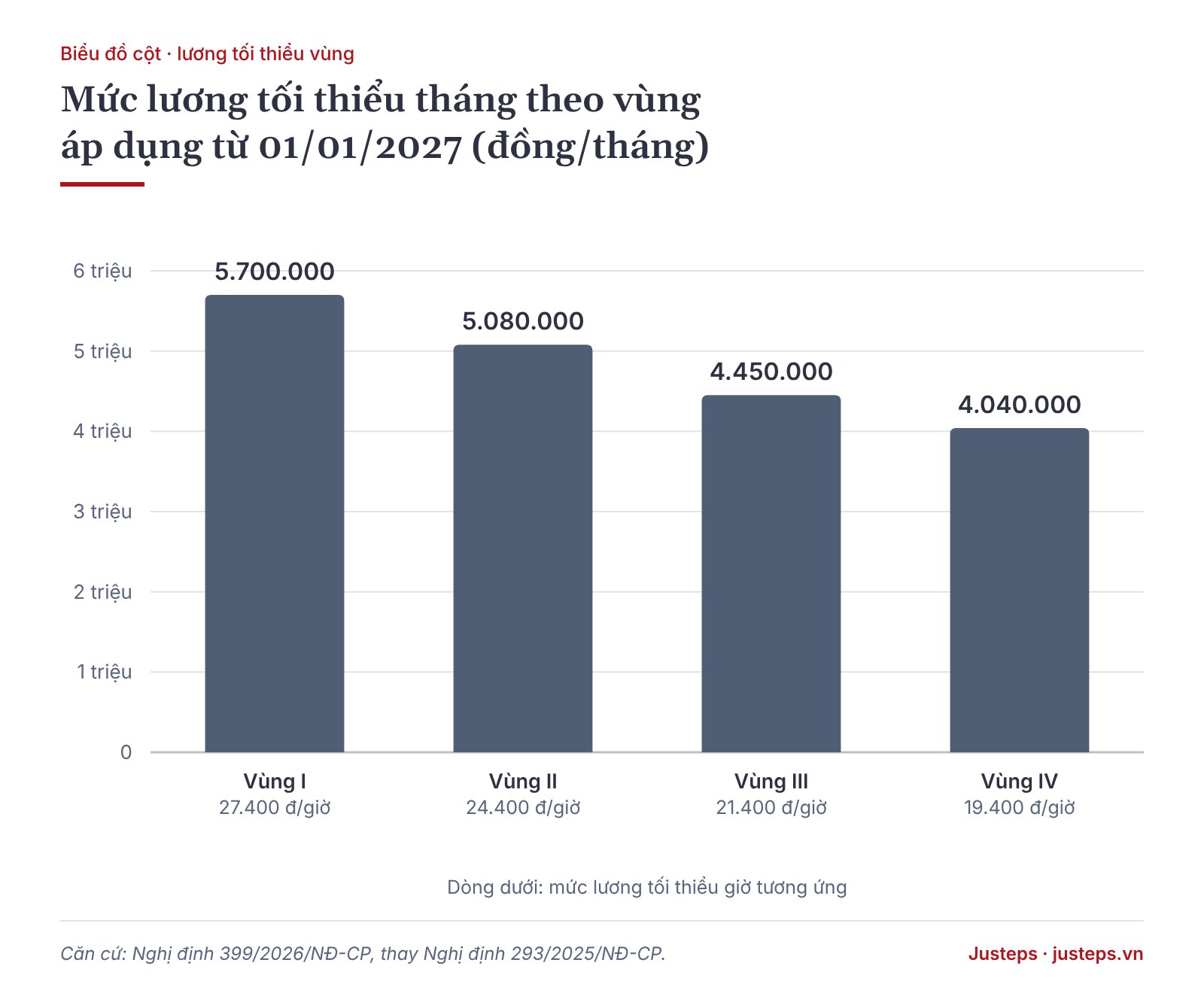
Figure 02. Regional monthly minimum wages from 1 January 2027
Legal basis: Decree 399/2026/ND-CP
Each column is the monthly minimum wage for one region, in VND. The line under each region shows the corresponding hourly minimum wage.
The corresponding hourly minimum wages are VND 27,400, 24,400, 21,400 and 19,400 for Regions I to IV, applying to hourly-paid employees. The January 2027 payroll should be fully rechecked, including positions with a low base salary but high allowances, because the salary used for social insurance contributions must also be adjusted.
The second is overtime rates: at least 150% on normal days, 200% on weekly rest days and 300% on public holidays, excluding holiday pay for daily-paid employees (under Article 98 of the Labor Code No. 45/2019/QH14)[1]. Night work earns at least an extra 30%. The third is deductions: deduct only in cases permitted by law and explain each item on the payslip.
Payment, payslips and personal income tax
Wages must be paid on the agreed schedule (under Article 97 of the Labor Code No. 45/2019/QH14)[1]; each time wages are paid, the employer must give employees a payslip stating wages, overtime and deductions (under Article 95 of the Labor Code No. 45/2019/QH14)[1]. Sending payslips by email or software and keeping acknowledgements is a simple way to have evidence.
The tax accountant withholds personal income tax when paying wages and files monthly or quarterly depending on the business. For monthly filers, the return and payment are due on the 20th of the following month. From the tax period in which the Personal Income Tax Law No. 109/2025/QH15 applies, the tax schedule and family deductions configured in the payroll software should be reviewed.
Social insurance and trade union fee
Each month the business pays social, health and unemployment insurance for employees subject to compulsory participation, covering both the employer's share and the amount deducted from wages. Accounting transfers the money before month end and reconciles it with the contribution notice from the social insurance agency. Unemployment insurance is now governed by the Law on Employment No. 74/2025/QH15. The trade union fee is paid under trade union legislation.
| Check item | Timing | Done by | Controlled by | Evidence kept |
|---|---|---|---|---|
| Timesheets and overtime hours per employee | Day 1–3 | C&B specialist | HR head | Timesheet, overtime consent forms |
| Contracts expiring, probation ending, work permits expiring | Day 3–5 | HR specialist | HR head | 30/60-day alert list |
| Reporting joiners and leavers for social insurance | As they occur, closed before payment | Social insurance specialist | Accountant | Submitted e-files |
| Lowest salary versus regional minimum wage | At payroll calculation | C&B specialist | Chief accountant | Automated comparison sheet |
| Overtime, night work and holiday rates | At payroll calculation | C&B specialist | Chief accountant | Payroll formulas |
| Payslips sent to employees | Each pay period | C&B specialist | HR head | Email or software acknowledgement |
| Filing and paying PIT withheld | Monthly or quarterly filing period | Tax accountant | Chief accountant | Returns, payment slips |
| Paying social, health, unemployment insurance and union fee | Before month end | Accountant | Finance director | Payment orders, contribution notices |
Changes to add to the checklist in 2027
Besides the new minimum wage, the Law amending and supplementing certain articles of the Labor Code, the Law on Archives, the Law on Gender Equality, the Law on Red Cross Activities and the Law on Employment, passed by the National Assembly on 21 November 2026 and effective from 1 March 2027, adds 2 fully paid public holidays: 27 July (Day of National Gratitude – War Invalids and Martyrs Day) and 24 November (Vietnam Culture Day). Total paid public holidays rise from 11 to 13 days. HR should update the 2027 work calendar, production plans and overtime pay formulas for these two days.
Businesses using outsourced (leased) workers should also note that under the amended law the client is responsible for requiring the leasing company to pay full wages when the latter is in breach. The checklist should add a monthly reconciliation of leased workers' payroll.
Legal basis and sources
- Labor Code No. 45/2019/QH14 and Decree No. 145/2020/ND-CP.
- Law amending and supplementing certain articles of the Labor Code, the Law on Archives, the Law on Gender Equality, the Law on Red Cross Activities and the Law on Employment, passed on 21 November 2026, effective from 1 March 2027.
- Decree No. 399/2026/ND-CP on minimum wages, applicable from 1 January 2027, replacing Decree No. 293/2025/ND-CP.
- Law on Social Insurance No. 41/2024/QH15.
- Law on Employment No. 74/2025/QH15, effective from 1 January 2026.
- Personal Income Tax Law No. 109/2025/QH15.
How Justeps supports businesses
- Designing checklists, payroll procedures and control rights for HR under our Operations setup package.
- Reviewing salary scales and pay and bonus regulations against the 2027 regional minimum wage via Advisory and compliance.
- Periodic labour and social insurance compliance checks ahead of inspections with Governance standardisation.
- Reviewing PIT withholding obligations through Tax, Customs & International Trade.
- Labour law update training for HR teams via In-house training.
Contact Justeps for advice on your specific case.
Frequently asked questions
Is 24 November 2026 already a paid public holiday?
No. The amending law takes effect on 1 March 2027, so 24 November becomes a fully paid public holiday from 2027.
Does the regional minimum wage follow the company's head office or the employee's workplace?
It follows the area where the employee actually works. Businesses with branches in several regions must apply each region's rate.
Can overtime be compensated with time off instead of pay?
The business must pay overtime at the statutory rates. Time off in lieu can only replace it where the law permits in a specific case and there is a clear agreement.
Where and for how long should the checklist be kept?
Keep it with that month's payroll, electronically with a sign-off, for at least as long as the related accounting records.
Does a business with fewer than 10 employees need a checklist?
Yes. Obligations to pay wages, contribute social insurance and withhold tax do not depend on size; the checklist simply needs to be shorter.
Related articles
- Full business operations setup: workstreams, implementation sequence and acceptance criteria
- Trademark registration and management in Vietnam: clearance, filing, renewal and enforcement
- Exclusive distribution agreements in Vietnam: sales targets, territory, termination and end-of-term inventory
This article is for reference and reflects the regulations in force at the time of publication. Please consult Justeps for advice tailored to your company’s records and situation.
For further information, please contact:
📩 Email: info@justeps.vn
🌐 Website: https://justepslegal.com · https://justeps.vn
🌐 Page: Justeps
☎️ Hotline (Zalo): 096 172 2607
📍 Thanh Xuan Office: 12th Floor, Licogi 13 Tower, 164 Khuat Duy Tien Street, Thanh Xuan Ward, Hanoi, Vietnam
📍 Ha Dong Office: LK06B, No.10, Dong Dua Area, Ha Dong Ward, Hanoi, Vietnam
📍 Ho Chi Minh City Branch: 528 Le Van Sy, Ho Chi Minh City, Vietnam
📍 Hai Phong Office: Truong Thinh Village, Ha Dong Commune, Hai Phong, Vietnam
📍 Quang Ninh Office: Van Don Special Zone, Quang Ninh Province, Vietnam