
Most legal risk in a company does not come from one bad decision but from things that slip through: a licence that expires, an employment contract template not updated for the new minimum wage, a customer data form without a consent line. A periodic corporate legal review is how a company finds these gaps before a regulator, a counterparty or an employee does.
This article sets out 12 areas worth checking every year, who should own them, when to do it and how to close findings. The checklist suits companies with 50 to a few hundred employees and can be scaled to the industry.
Why a corporate legal review is needed every year
2026 shows how fast the rules move. In the fourth quarter alone, companies had to prepare for the new regional minimum wages applying from 1 January 2027 under Decree No. 399/2026/ND-CP, an increase in public holidays from 11 to 13 days under the Law amending and supplementing certain articles of the Labor Code and related laws effective 1 March 2027, and administrative penalties in the data sector under Decree No. 363/2026/ND-CP effective 11 November 2026. A file that was compliant in January may be out of line by December.
A periodic review also gives management a single picture. Each department usually sees only its own work: HR knows employment contracts, accounting knows invoices, sales knows customer contracts. Risk tends to sit where these meet, for example a collaborator agreement signed by sales that is in substance an employment relationship.
12 areas to check in a legal review
The table below is the framework Justeps commonly uses. The timing column assumes the review is done in Q4, so that adjustments can be made before the year-end tax finalisation and before next year's new rules take effect.
| Area | Documents to check | Owner | Timing |
|---|---|---|---|
| Corporate records, charter | Enterprise registration certificate, charter, member/shareholder register, beneficial owner information | Company secretary, legal | October |
| Internal governance | Minutes and resolutions of the GMS/Members' Council/Board, powers of attorney in force | Company secretary | October |
| Sub-licences, business conditions | List of licences, expiry dates, maintenance conditions for each location | Legal, operations | October |
| Investment, projects | Investment registration certificate, capital contribution progress, investment reports | Finance, legal | November |
| Contracts | Framework contracts nearing expiry, auto-renewal clauses, standard templates | Legal, sales | November |
| Labour, wages | Employment contracts, internal labour rules, pay scales, regional minimum wage, holiday calendar | HR | November |
| Social insurance | Covered employees, contribution levels, adjustments when wages change | HR, accounting | November |
| Tax, invoices | Incentives and tax reductions applied, e-invoices, related-party transactions | Chief accountant | November |
| Personal data, data | Legal basis for processing, consent records, collection procedures, protection measures | Legal, IT | November |
| Intellectual property | Trademarks, domain names, software licences, renewal deadlines | Marketing, legal | December |
| Safety, fire, environment | Fire safety files, occupational safety training, environmental permits | Administration, HSE | December |
| Disputes, penalties, state obligations | Open cases, penalty decisions, tax arrears, fee arrears | Legal, accounting | December |
Corporate records and governance
Check whether the details on the enterprise registration certificate match reality: head office address, legal representative, business lines, and whether charter capital has been fully contributed. Since the amended Law on Enterprises No. 76/2025/QH15 took effect on 1 July 2025, companies must also keep and provide information on beneficial owners, so this belongs on the checklist. In internal governance, the usual gap is authorisations: powers of attorney for branch directors or department heads to sign contracts that have expired but are still in use.
Licences, investment and contracts
List sub-licences by business location, with expiry dates and maintenance conditions. Some conditions have just changed; for example, the documents proving fire safety conditions in an application for a security and order certificate were amended by Article 4 of Decree No. 392/2026/ND-CP. For contracts, prioritise high-value contracts, auto-renewing contracts and standard templates used every day.
Labour, social insurance and tax
This group usually produces the most findings because the rules change constantly. Check pay scales against the new regional minimum wage (Region I VND 5,700,000 per month from 1 January 2027), internal labour rules and the 2027 holiday calendar, and who must participate in social insurance under the Law on Social Insurance No. 41/2024/QH15. On tax, companies with annual revenue of no more than VND 10 billion should check how they self-determine the 30% CIT reduction under Article 3 of Decree No. 398/2026/ND-CP, especially where they have branches or business locations, because revenue for the threshold includes those units.
Data, intellectual property, safety and disputes
For data, check whether the company has a collection procedure and data protection measures. Failing to issue a collection procedure or to apply data protection measures is one of the acts fined VND 20 to 40 million under Clause 1, Article 8 of Decree No. 363/2026/ND-CP, and organisations are fined double the amount for individuals. Trademarks and domain names should be checked against protection terms. Fire safety files, occupational safety training and environmental permits are checked per factory and warehouse. Finally, list open cases and outstanding financial obligations to state authorities.
The process of an annual legal review
A review should take about 8 to 10 weeks. The lead is usually in-house legal or an external adviser, with a member of management as sponsor so that departments submit documents on time.
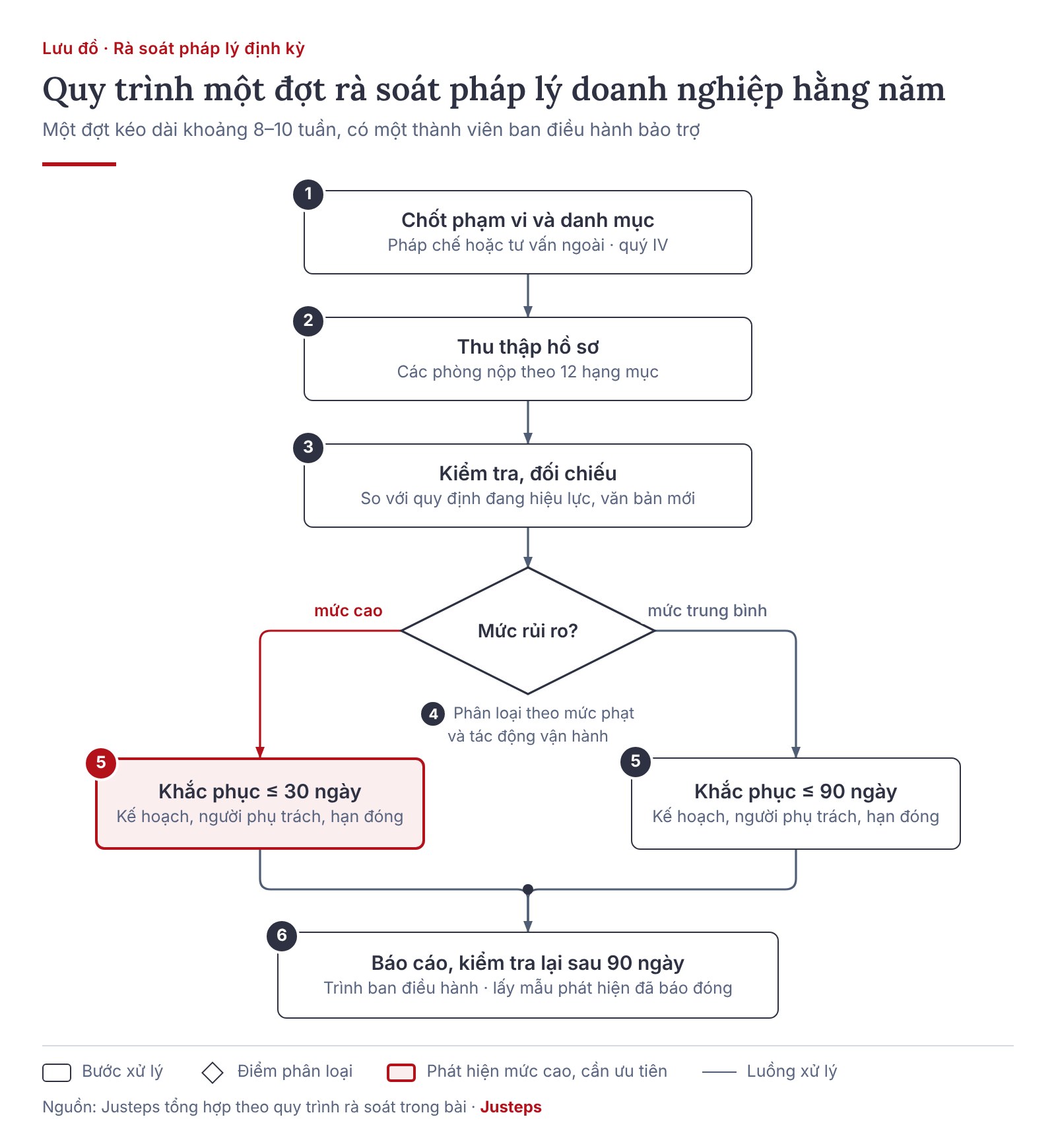
Figure 01. One annual corporate legal review cycle
Source: compiled by Justeps
Read top to bottom: after the check, each finding is graded; the red branch marks high-risk findings to be fixed within 30 days, medium-risk within 90 days.
The step that decides quality is risk classification. Each finding should be scored on two axes: the potential penalty or loss, and the operational impact (whether it could stop sales or production). High findings need a remediation plan within 30 days, medium ones within 90 days.
Reading the results and closing findings
The output should not stop at a long report. Management needs a one-page summary: how many findings, how they are distributed, how many are high, and who is responsible.
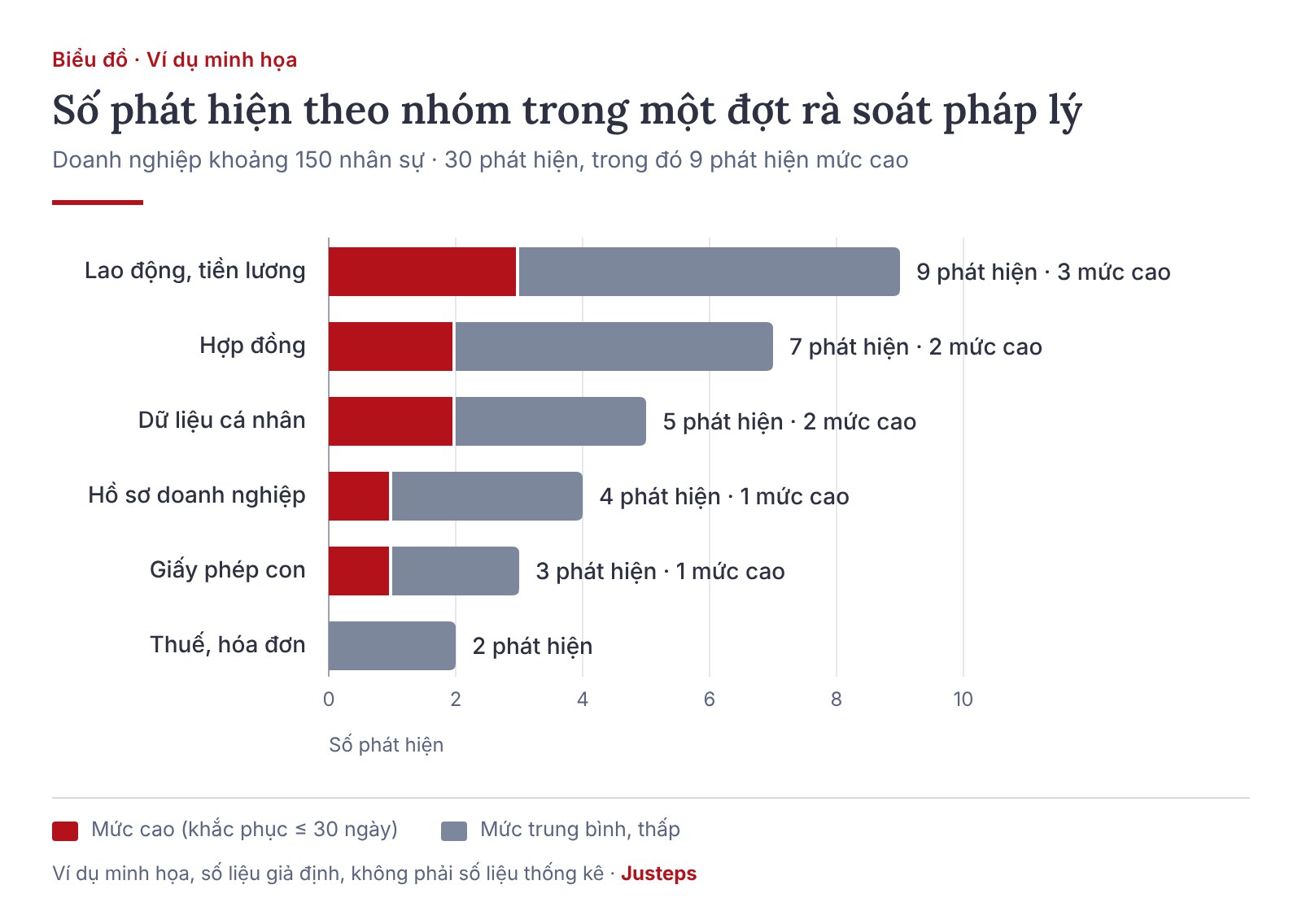
Figure 02. Findings by area in one review
Illustrative example, assumed figures
Each bar shows total findings in an area; the red segment is the number of high-risk findings to prioritise.
In the example above, labour and wages plus contracts account for more than half of the findings. That signals the company should fix the underlying processes, such as standardising contract templates and the schedule for updating pay rules, rather than patching individual files. After 90 days, the review lead re-checks findings reported as closed, using random samples to confirm the fix is real.
Groups with several entities or branches should use one checklist and one risk scale to compare units. If the rules system needs to be rebuilt after the review, see Justeps' governance standardisation services.
Legal basis and sources
- Law on Enterprises No. 59/2020/QH14, as amended by Law No. 76/2025/QH15 (effective 1 July 2025).
- Labor Code No. 45/2019/QH14 and the Law amending and supplementing certain articles of the Labor Code, the Law on Archives, the Law on Gender Equality, the Law on Red Cross Activities and the Law on Employment, passed on 21 November 2026, effective 1 March 2027.
- Decree No. 399/2026/ND-CP on minimum wages for employees under employment contracts, applying from 1 January 2027 and replacing Decree No. 293/2025/ND-CP.
- Law on Social Insurance No. 41/2024/QH15.
- Decree No. 398/2026/ND-CP on PIT and CIT reductions, effective 29 October 2026.
- Law on Personal Data Protection No. 91/2025/QH15 (effective 1 January 2026) and Decree No. 363/2026/ND-CP on administrative penalties in the data sector, effective 11 November 2026.
- Decree No. 392/2026/ND-CP amending Decree No. 96/2016/ND-CP on security and order conditions, effective 15 November 2026.
How Justeps supports businesses
- Conducting periodic corporate legal reviews across the 12 areas, reporting findings and classifying risk (Advisory and regulatory compliance).
- Standardising the charter, internal rules and authorisation system after the review (Governance standardisation).
- Updating pay scales, labour rules and employment contract templates for the rules applying from 2027 (Operational setup).
- Reviewing tax, invoices and eligibility for tax reductions (Tax, Customs & International Trade).
- In-house training for departments on the year's legal changes (In-house training).
Contact Justeps for advice on a review scope that fits your company.
Frequently asked questions
Does a small company need to review all 12 areas?
Not necessarily. A small company can merge some areas and prioritise labour, tax, contracts and personal data. The rest can be reviewed on a two-year rotation.
Should we review internally or hire an outside firm?
A mix works. In-house legal knows the files and processes better, while an outside firm brings an independent view and tracks new rules faster. A common model is for the company to gather documents and the adviser to check them and score risk.
What time of year is best?
Q4 makes sense, as there is time to adjust before tax finalisation and before next year's rules take effect. For 2026, a review in November and December lets companies update for the minimum wage from 1 January 2027 and the holiday calendar from 1 March 2027.
Should the results go to the Board or Members' Council?
It is not legally required, but it is advisable. High findings often relate to managers' liability, so the governing body should know about them and oversee remediation.
What should be kept after the review?
Keep the checklist used, the findings report, the remediation plan and evidence of remediation. This file is the basis for year-on-year comparison and for explanations during inspections.
Related articles
- Production floor KPIs: productivity, quality, safety and how to link them to piece-rate pay
- Designing an annual in-house legal training programme for companies
- Legal due diligence when acquiring a company: document checklist and common red flags
This article is for reference and reflects the regulations in force at the time of publication. Please consult Justeps for advice tailored to your company’s records and situation.
For further information, please contact:
📩 Email: info@justeps.vn
🌐 Website: https://justepslegal.com · https://justeps.vn
🌐 Page: Justeps
☎️ Hotline (Zalo): 096 172 2607
📍 Thanh Xuan Office: 12th Floor, Licogi 13 Tower, 164 Khuat Duy Tien Street, Thanh Xuan Ward, Hanoi, Vietnam
📍 Ha Dong Office: LK06B, No.10, Dong Dua Area, Ha Dong Ward, Hanoi, Vietnam
📍 Ho Chi Minh City Branch: 528 Le Van Sy, Ho Chi Minh City, Vietnam
📍 Hai Phong Office: Truong Thinh Village, Ha Dong Commune, Hai Phong, Vietnam
📍 Quang Ninh Office: Van Don Special Zone, Quang Ninh Province, Vietnam





