A private preschool may have attractive facilities and competitive fees, yet a single child safety incident handled badly can wipe out its reputation within days. When the authorities inspect, the first question is usually not about the curriculum but about the records: the operating permit, staff files, child registers, kitchen and fire safety files.
Governance of a private preschool therefore rests on three pillars: a complete operating file, qualified and well-supervised staff, and child safety procedures that are actually rehearsed. This article suggests how owners and principals can allocate and control each pillar.
The operating file of a private preschool
Conditions for establishing, licensing educational activities, merging, splitting and suspending private preschools are set out in Decree No. 125/2024/ND-CP on conditions for investment and operation in education; the school's organisation and operation follow the Preschool Charter issued with Circular No. 52/2020/TT-BGDDT. Two legal milestones must be distinguished: the decision permitting establishment and the decision permitting educational activities. A school that has the former but not yet the latter may not enrol children.
Beyond these two decisions, the school should keep and update centrally: its organisation and operation regulation, internal spending regulation, the principal's appointment decision, land and facility documents, fire safety records under the Law on Fire Prevention, Fire Fighting and Rescue No. 55/2024/QH15, kitchen food safety records under the Law on Food Safety No. 55/2010/QH12, child registers, health records, and records of tuition and other fees.
| Record group | Responsible person | Review frequency |
|---|---|---|
| Establishment and operating decisions, regulations | Principal, owner's representative | On any change, at least each school year |
| Staff files, qualifications, contracts | Administration and HR officer | Each semester |
| Child records, health, drop-off and pick-up | Class teacher, school nurse | Weekly |
| Kitchen, menus, food samples | Head cook, vice principal in charge of boarding | Daily |
| Fire safety, electrical, play equipment | Security, facilities officer | Monthly and before each school year |
HR management in a private preschool
Recruitment and qualification standards
Teachers must meet the training standards under the Law on Teachers No. 73/2025/QH15 (effective 1 January 2026) and the Law on Education No. 43/2019/QH14. The school should keep a matrix comparing each teacher's qualifications against the standard, showing who needs to upgrade and by when. Nannies, cooks and guards need health certificates, food safety training for kitchen staff and fire safety training.
Because staff work directly with young children, recruitment should add background checks, verification with previous employers and scenario interviews on handling a crying child, a child hitting another or a child falling. Every new hire must sign the code of conduct, which absolutely prohibits any form of insult, abuse or corporal punishment of children, consistent with the Law on Children No. 102/2016/QH13.
Contracts, wages and working schedules
All teachers and staff, including part-timers, must have employment contracts under the Labor Code No. 45/2019/QH14. From 1 January 2027 the monthly minimum wage rises under Decree No. 399/2026/ND-CP: Region I VND 5,700,000, Region II VND 5,080,000, Region III VND 4,450,000, Region IV VND 4,040,000. Schools should review the pay of lower-income staff such as nannies and cooks before that date.
The 2026–2027 school calendar also needs adjusting: the Law amending and supplementing certain articles of the Labor Code and related laws, passed by the National Assembly on 21 November 2026, adds two paid public holidays on 27 July and 24 November, effective 1 March 2027. If the school stays open for childcare on a public holiday, staff working that day must be paid at least 300%, excluding the holiday pay (under Article 98 of the Labor Code).
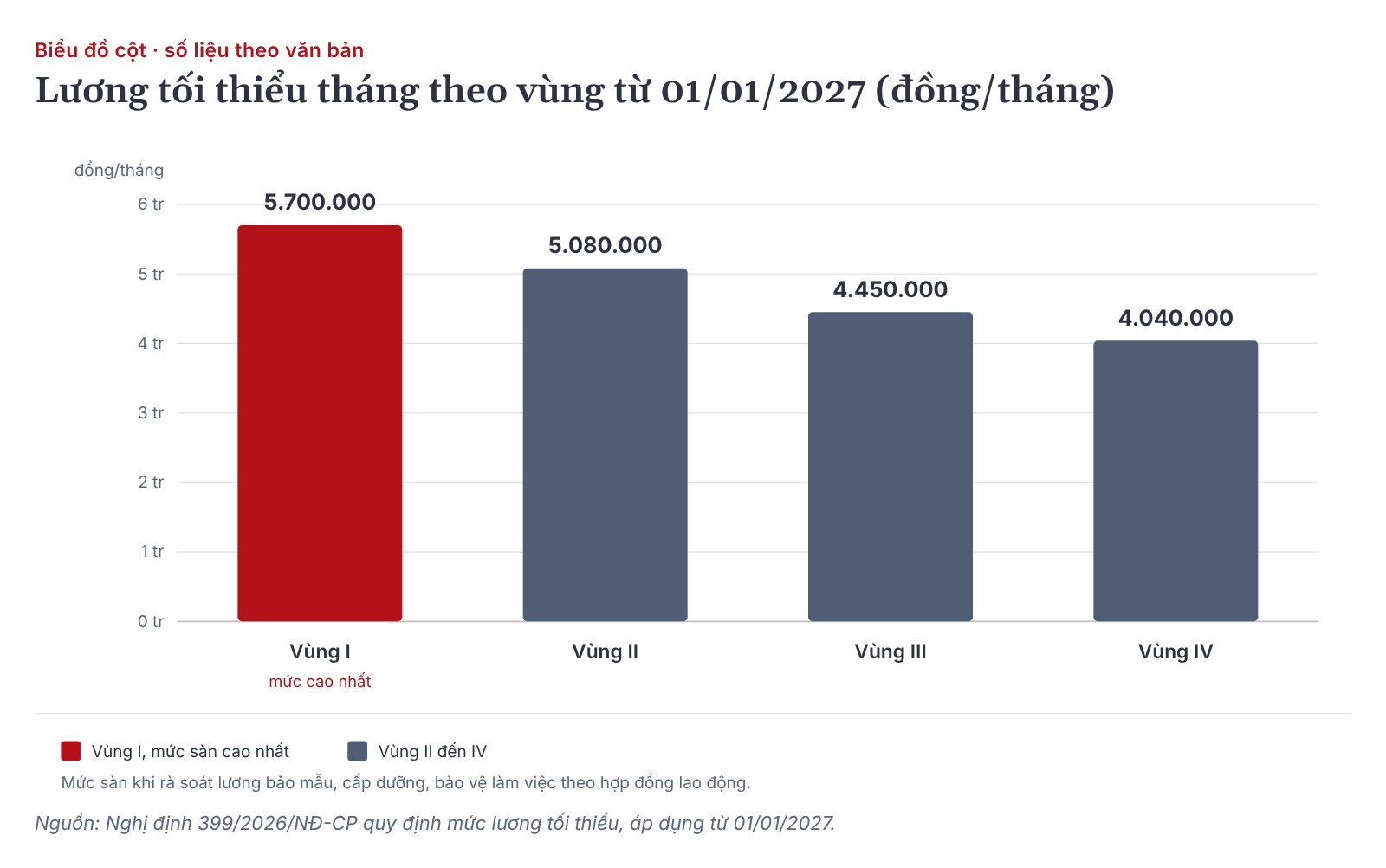
Figure 01. Bar chart of regional monthly minimum wages from 1 January 2027 (VND/month)
Source: Decree 399/2026/ND-CP on minimum wages
Each bar is the floor for one region; the school checks the pay of nannies, cooks and guards against the bar for its own region. The red bar is Region I, the highest level.
Child safety, procedures must be rehearsed
Child safety in a private preschool is more than rules on a wall. The school should have at least these written procedures: drop-off and pick-up (children released only to persons registered by parents, with photo and ID), timed attendance, supervision during nap and meal times, use of outdoor play equipment, giving medicine only with a prescription and parental authorisation, fire evacuation, and handling sudden injury or illness.
The incident procedure needs regular rehearsal, at least once a semester. The principles are a single coordinator, early and honest notice to parents, preserving evidence and written lessons learned.
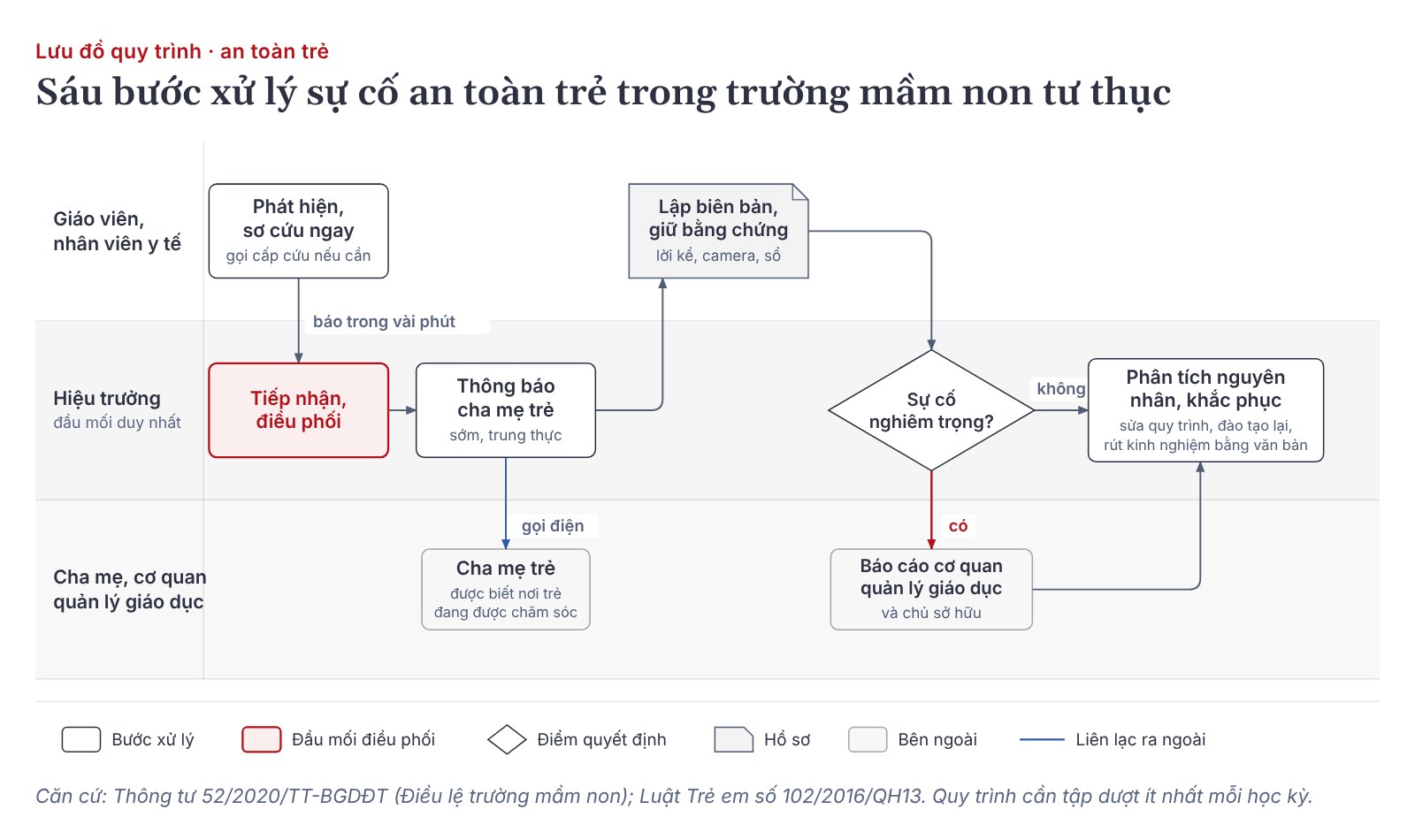
Figure 02. Flowchart of the six steps for handling a child safety incident at a private preschool
Basis: Circular 52/2020/TT-BGDDT (Preschool Charter); Law on Children No. 102/2016/QH13
Read left to right by lane: the teacher gives first aid and reports at once, and the principal (red box) is the single coordinator. The diamond decides whether the education authority must be notified; the blue arrow is contact with parents.
Cameras, children's data and relations with parents
Camera footage, health records and activity photos are all children's personal data, governed by the Law on Personal Data Protection No. 91/2025/QH15 (effective 1 January 2026). The school needs parents' written consent for each purpose: recording for security, posting photos on the school's page, sharing live camera access with parents. Live camera access should be limited to the parent's own child's class and logged.
The service contract with parents should state tuition, other fees, refund policy for absences, drop-off and pick-up times, rules on medicine and allergies, the complaint channel and response time. Most disputes with parents arise from fees and from how incidents are communicated, not from the quality of care.
Splitting control between owner and principal
In many private schools the owner both manages finances and intervenes in professional matters, leaving the principal without authority to deal with staff or incidents. A clear structure is: the owner or school council decides the budget, fees and the principal's appointment; the principal is responsible for teaching, direct staff management and child safety; an independent accountant manages receipts and payments. Each month the principal reports on a fixed template: enrolment, staff changes, incidents, complaints and status of records.
Legal basis and sources
- Law on Education No. 43/2019/QH14, as amended and supplemented.
- Law on Teachers No. 73/2025/QH15, effective 1 January 2026.
- Decree No. 125/2024/ND-CP on conditions for investment and operation in education.
- Circular No. 52/2020/TT-BGDDT issuing the Preschool Charter.
- Law on Children No. 102/2016/QH13.
- Labor Code No. 45/2019/QH14 (Article 98 on overtime and holiday work pay).
- Law amending and supplementing certain articles of the Labor Code, the Law on Archives, the Law on Gender Equality, the Law on Red Cross Activities and the Law on Employment, passed 21 November 2026, effective 1 March 2027.
- Decree No. 399/2026/ND-CP on minimum wages, applicable from 1 January 2027.
- Law on Personal Data Protection No. 91/2025/QH15, effective 1 January 2026.
- Law on Food Safety No. 55/2010/QH12; Law on Fire Prevention, Fire Fighting and Rescue No. 55/2024/QH15.
How Justeps supports businesses
- Reviewing establishment, operating and condition files through Advisory and regulatory compliance.
- Building the organisation and operation regulation, HR regulation and code of conduct through Governance standardisation.
- Setting up child safety procedures, parent contract templates and data consent forms through Operations setup.
- Training teachers and staff on the code of conduct and incident handling through In-house training.
Contact Justeps for advice tailored to your school.
Frequently asked questions
Can a school enrol children once it has the establishment decision?
No. It may enrol and care for children only after obtaining the decision permitting educational activities under Decree No. 125/2024/ND-CP.
Do nannies have to meet the same qualification standards as teachers?
The training standards under the Law on Teachers apply to teachers. Nannies and other staff still need employment contracts, health checks and training suited to their work.
May the school install cameras in classrooms?
Yes, for security and safety, but it must notify parents, obtain consent for specific purposes and control access under the Law on Personal Data Protection.
How do the two new public holidays affect the school?
From 1 March 2027 employees get 27 July and 24 November off with full pay. If the school operates on those days, it must pay holiday work rates under the Labor Code.
How often should the incident procedure be rehearsed?
At least once a semester, together with fire and evacuation drills under the school's plan.
Related articles
- Domestic tour operators in Vietnam: licence, deposit, tour contracts and guides
- Managing a pharmacy chain: pharmacy staff, GPP and inventory control
- Managing subcontractors in a construction company: selection, contracts, acceptance and payment
This article is for reference and reflects the regulations in force at the time of publication. Please consult Justeps for advice tailored to your company’s records and situation.
For further information, please contact:
📩 Email: info@justeps.vn
🌐 Website: https://justepslegal.com · https://justeps.vn
🌐 Page: Justeps
☎️ Hotline (Zalo): 096 172 2607
📍 Thanh Xuan Office: 12th Floor, Licogi 13 Tower, 164 Khuat Duy Tien Street, Thanh Xuan Ward, Hanoi, Vietnam
📍 Ha Dong Office: LK06B, No.10, Dong Dua Area, Ha Dong Ward, Hanoi, Vietnam
📍 Ho Chi Minh City Branch: 528 Le Van Sy, Ho Chi Minh City, Vietnam
📍 Hai Phong Office: Truong Thinh Village, Ha Dong Commune, Hai Phong, Vietnam
📍 Quang Ninh Office: Van Don Special Zone, Quang Ninh Province, Vietnam