
In many factory workshops, KPIs come down to a single number: output. Workers are paid by piece, so they run fast, defect rates rise and safety is mentioned only after an accident. When managers want to bring quality and safety into the assessment, the usual method is to deduct money, which is exactly where labour law violations happen.
This article suggests how to design production floor KPIs that balance productivity, quality and safety, how to measure them shift by shift, and how to link them to piece-rate pay so that workers understand them, supervisors can run them and the company is not exposed during inspections.
Which groups a production floor KPI set should include
A workable production KPI set usually has three to five indicators, measurable with data already available on the line, without extra staff for statistics. Any indicator that relies on handwritten records nobody checks will sooner or later look better than reality.
| Group | Suggested indicators | How measured | Frequency | Linked to |
|---|---|---|---|---|
| Productivity | Conforming output against norm; overall equipment effectiveness (OEE) | Shift output sheets, machine data | Per shift, closed monthly | Piece-rate pay |
| Quality | In-line defect rate; customer returns | QC records, complaint reports | Per shift, closed monthly | Quality bonus |
| Safety | Days without accidents; near-miss reports; PPE compliance | Safety log, spot checks | Weekly | Safety bonus |
| Discipline, 5S | Punctuality, area housekeeping, complete records | Team leader checklists | Weekly | Performance rating |
| Improvement | Number of improvement suggestions implemented | Suggestion log | Quarterly | Improvement bonus |
Safety indicators should also measure positive behaviour such as reporting near misses, not just count accidents. If the safety bonus depends only on "no accidents", workers tend to hide minor incidents and the company loses the chance to act before a real accident occurs.
Labour norms, the foundation of piece-rate pay
Piece-rate pay is only fair when norms are reasonable. The Labor Code requires employers to establish labour norms as a basis for pay; a norm must be an average level that most workers can achieve without extending normal working hours, must be trialled before official issuance, must be developed in consultation with the employee representative organisation at the workplace (if any) and must be made public (Article 93 of the Labor Code No. 45/2019/QH14)[1].
Operationally, the engineering or IE team times a group of average workers, not the fastest ones. Trial results are recorded in minutes. When machines, product codes or processes change, norms must be reviewed; applying an old norm to a new machine is a common source of complaints.
Process for building production KPIs and piece-rate pay
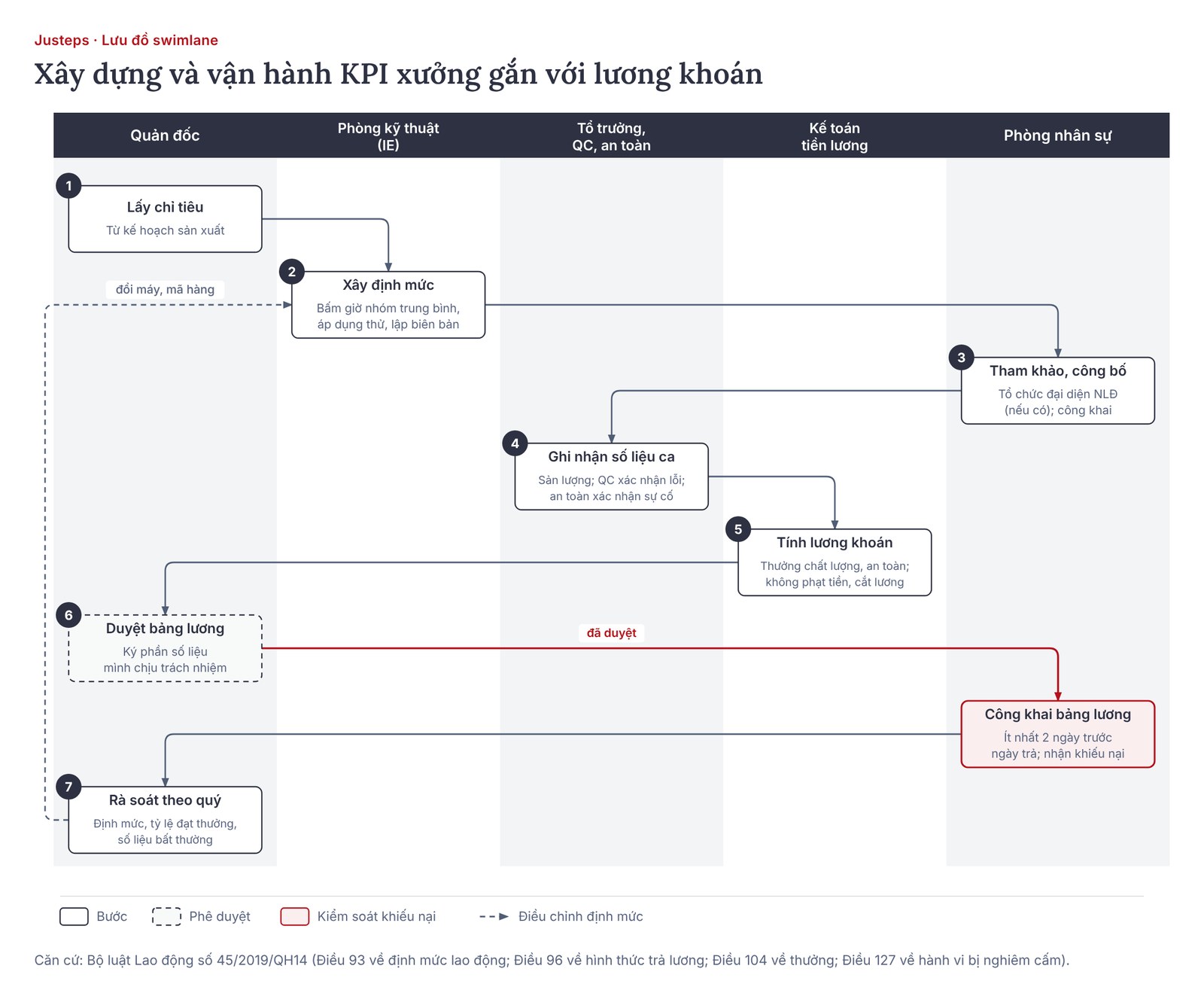
Figure 01. Swimlane for building and running shop-floor KPIs linked to piece-rate pay
Basis: Labour Code No. 45/2019/QH14 (Articles 93, 96, 104, 127)
Each column is a responsible unit; follow the numbers. The dashed box is the foreman's approval. The red box is posting the pay sheet at least 2 days before payday; the dashed loop revises output norms when machines or product codes change.
Clear assignment of each step keeps the KPI set from staying on paper. Team leaders record shift data, QC confirms defects, the safety officer confirms incidents, the payroll accountant calculates, the workshop manager approves and HR publishes the pay sheet before payday. Each person signs only for the data they are responsible for.
Linking KPIs to piece-rate pay without breaking the law
The Labor Code allows pay by time, by product or by lump-sum contract (Article 96 of the Labor Code). Whatever the form, pay for simple work under normal conditions may not be lower than the minimum wage. From 1 January 2027, the regional minimum wage is VND 5,700,000 per month in Region I, VND 5,080,000 in Region II, VND 4,450,000 in Region III and VND 4,040,000 in Region IV (under Decree No. 399/2026/ND-CP)[3]. The workshop's pay scales and piece rates should be reviewed before that date.
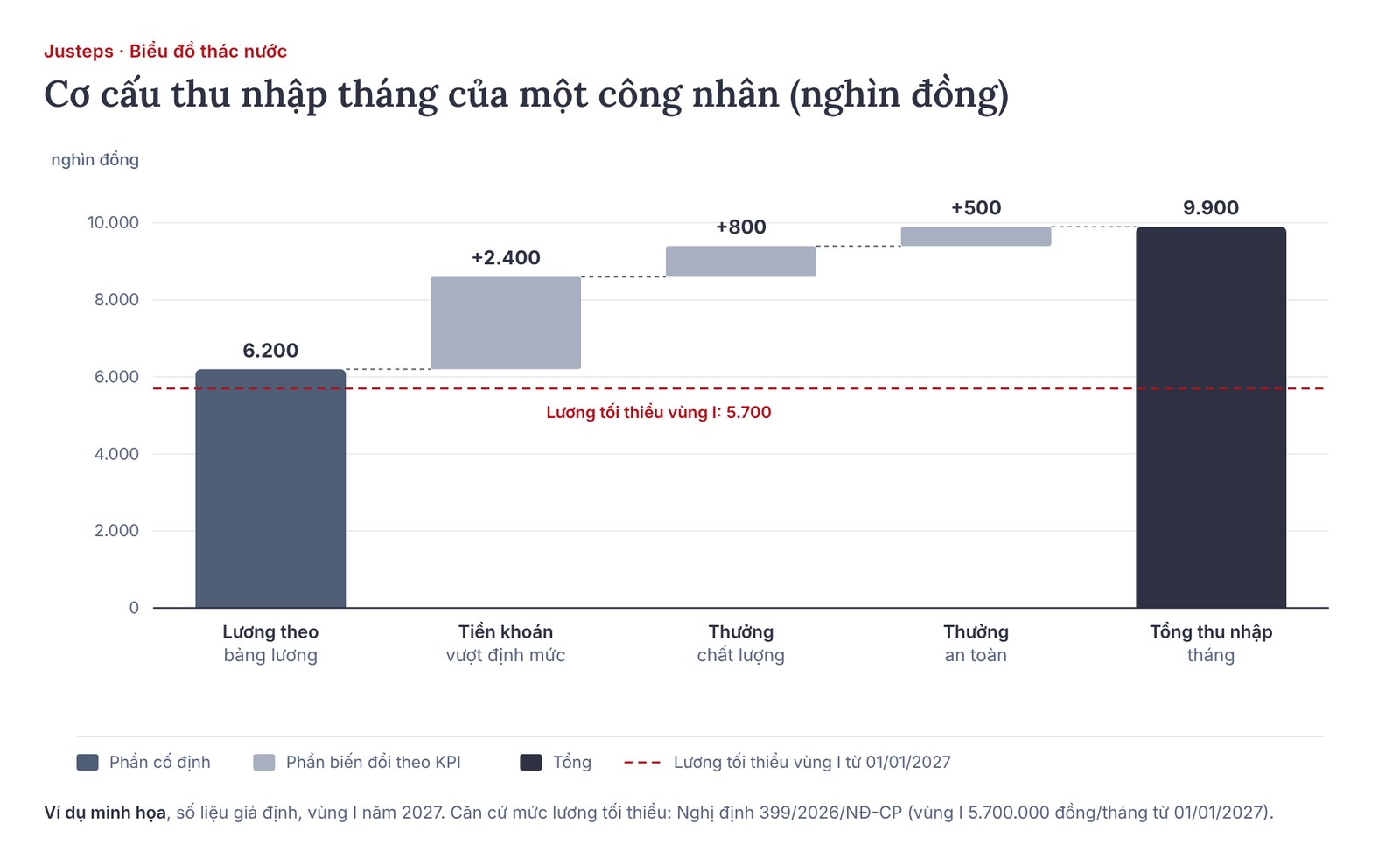
Figure 02. Monthly income structure of a production worker (VND thousand)
Illustrative example, assumed figures; minimum wage under Decree 399/2026/ND-CP
The first bar is the scale wage; light blocks add piece-rate and bonuses to reach a total of 9,900 thousand. The red dashed line is the Region I minimum wage of VND 5,700,000/month from 01/01/2027.
The key point is to design quality and safety as bonuses, not deductions. The Labor Code prohibits fines or wage cuts in place of labour discipline (Article 127 of the Labor Code). So instead of "deduct VND 50,000 for each defective product", the company should provide "quality bonus of VND 800,000 when the defect rate is below 2%, reduced in steps as the defect rate rises". Both may give similar results, but the second is genuinely a bonus under Article 104 of the Labor Code, governed by a bonus policy issued by the company.
Extra hours worked to reach the norm must be counted as overtime and paid under Article 98 of the Labor Code. If data shows most workers must stay after their shift to meet the norm, that signals the norm is too high, not that workers are slow.
Data control and handling complaints
The piece-rate pay sheet should be posted in the workshop at least two days before payday so workers can check it. Each complaint is logged and answered within a fixed time. Each quarter, the workshop manager and HR review three questions: are the norms still appropriate, is the share of workers earning bonuses too low or too high, and is any indicator being "dressed up". Occupational safety and health records should also be consistent with the Law on Occupational Safety and Health No. 84/2015/QH13 so that safety KPI data matches the mandatory logs.
Legal basis and sources
- Labor Code No. 45/2019/QH14 (Article 93 on pay scales and labour norms; Article 96 on forms of pay; Article 98 on overtime pay; Article 104 on bonuses; Article 127 on prohibited acts in labour discipline).
- Decree No. 145/2020/ND-CP detailing certain articles of the Labor Code on working conditions and labour relations.
- Decree No. 399/2026/ND-CP on minimum wages for employees under labour contracts, applicable from 1 January 2027 (replacing Decree No. 293/2025/ND-CP).
- Law on Occupational Safety and Health No. 84/2015/QH13.
How Justeps supports businesses
- Designing production KPIs, piece-rate pay rules and quality and safety bonus policies (Governance standardisation).
- Reviewing pay scales and labour norms against the 2027 regional minimum wages (Advisory and regulatory compliance).
- Setting up data closing, pay sheet publication and complaint handling procedures in the workshop (Operational setup).
- Training workshop managers and team leaders on lawful assessment and labour discipline (In-house training).
Contact Justeps for advice on your factory's KPI and pay system.
Frequently asked questions
Can wages be deducted when a worker damages products?
Wages may not be deducted as a penalty. If a worker damages property, the company handles it under the compensation rules in the internal labour regulations, following the statutory procedure and deduction limits.
Do labour norms need to be registered with the authorities?
No registration is required, but norms must be trialled, discussed with the employee representative organisation (if any) and publicly posted at the workplace before use.
What if piece-rate pay falls below the regional minimum wage in a month with few orders?
If the worker has worked full normal hours, the company must still pay at least the minimum wage. Where work stops due to lack of orders, the rules on pay during work stoppage apply.
How often should KPIs and piece rates be updated?
Review them quarterly, and always when machines, product codes or processes change, or when regional minimum wages change, as from 1 January 2027.
Related articles
- Periodic corporate legal review: 12 areas to check every year
- Ongoing legal advice under an annual package: comparing packages, scope and effective use
- Opening a representative office of a foreign trader in Vietnam: dossier, activity limits and annual report
This article is for reference and reflects the regulations in force at the time of publication. Please consult Justeps for advice tailored to your company’s records and situation.
For further information, please contact:
📩 Email: info@justeps.vn
🌐 Website: https://justepslegal.com · https://justeps.vn
🌐 Page: Justeps
☎️ Hotline (Zalo): 096 172 2607
📍 Thanh Xuan Office: 12th Floor, Licogi 13 Tower, 164 Khuat Duy Tien Street, Thanh Xuan Ward, Hanoi, Vietnam
📍 Ha Dong Office: LK06B, No.10, Dong Dua Area, Ha Dong Ward, Hanoi, Vietnam
📍 Ho Chi Minh City Branch: 528 Le Van Sy, Ho Chi Minh City, Vietnam
📍 Hai Phong Office: Truong Thinh Village, Ha Dong Commune, Hai Phong, Vietnam
📍 Quang Ninh Office: Van Don Special Zone, Quang Ninh Province, Vietnam





