In spa chains, commission often makes up more than half of a therapist’s income. A poorly drafted spa therapist commission policy is therefore the source of most disputes: competition for customers between shifts, differences between branches, disputes on resignation and even the risk of social insurance arrears.
This article covers income structure, how to calculate commission for each revenue type, the monthly reconciliation process, therapist contracts and how to link commission to service quality, from the perspective of a chain operator.
What a therapist’s income structure should include
A stable structure usually has four parts: job-based salary, service commission, commission on cards or products, and a quality bonus. Customer tips should be addressed separately: they belong to the therapist and are not part of the payroll fund, but the policy should state how they are received to avoid misunderstandings.
The job-based salary may not be lower than the regional minimum wage. From 1 January 2027, Decree No. 399/2026/ND-CP raises the monthly minimum wage to VND 5,700,000 in Region I, VND 5,080,000 in Region II, VND 4,450,000 in Region III and VND 4,040,000 in Region IV. Chains with branches in several provinces must set floors by region rather than one rate for the whole system.
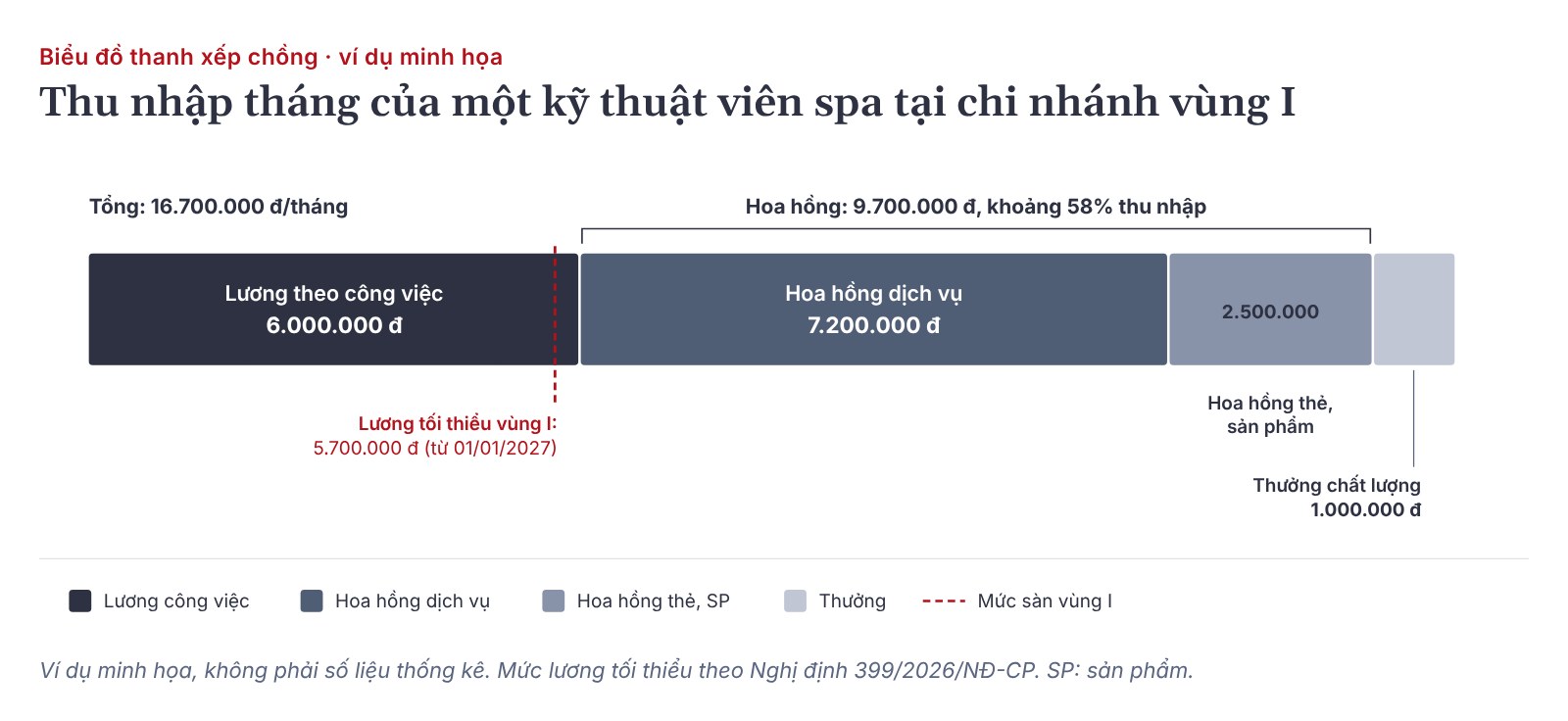
Figure 01. Stacked bar of the monthly income structure of a spa technician at a Region I branch
Illustrative example, not statistics; minimum wage under Decree 399/2026/ND-CP
Each segment is one income component; the bracket above groups the two commission items (about 58%). The red dashed line is the Region I minimum wage, which the job-based salary must exceed.
Commission is a payment linked to work results and therefore forms part of wages under Article 90 of the Labor Code No. 45/2019/QH14. Amounts paid on a fixed, regular basis each pay period should be considered for inclusion in the social insurance contribution base under the Law on Social Insurance No. 41/2024/QH15. Separating each component in the policy helps HR respond when the insurance authority inspects.
Designing the spa therapist commission policy by revenue type
The most common mistake is paying commission as soon as a treatment card is sold. When the customer cancels or transfers the card, the company has already paid commission on unearned revenue and struggles to recover it. The table below shows a common split:
| Commission source | Recommended method | When recognised | When adjusted or clawed back |
|---|---|---|---|
| Single services (massage, skincare) | Fixed amount per session by service group | When the session is completed and confirmed by the customer | Session subject to a justified complaint or free redo |
| Prepaid treatment cards | Percentage of the value of each session used | When the customer uses each session, not when the card is sold | Customer cancels the card and is refunded the unused part |
| Selling new cards and packages | Small percentage with a monthly cap | When payment reaches the company account | Customer is refunded within the return period |
| Selling cosmetic products | Percentage of net revenue | When the invoice is issued | Goods are returned |
The policy should also resolve frequently disputed cases: customer-requested therapists, last-minute shift swaps, two therapists on one treatment, and therapists moving branches mid-month. Each case should have one rule and one worked example.
Monthly commission calculation and payment process
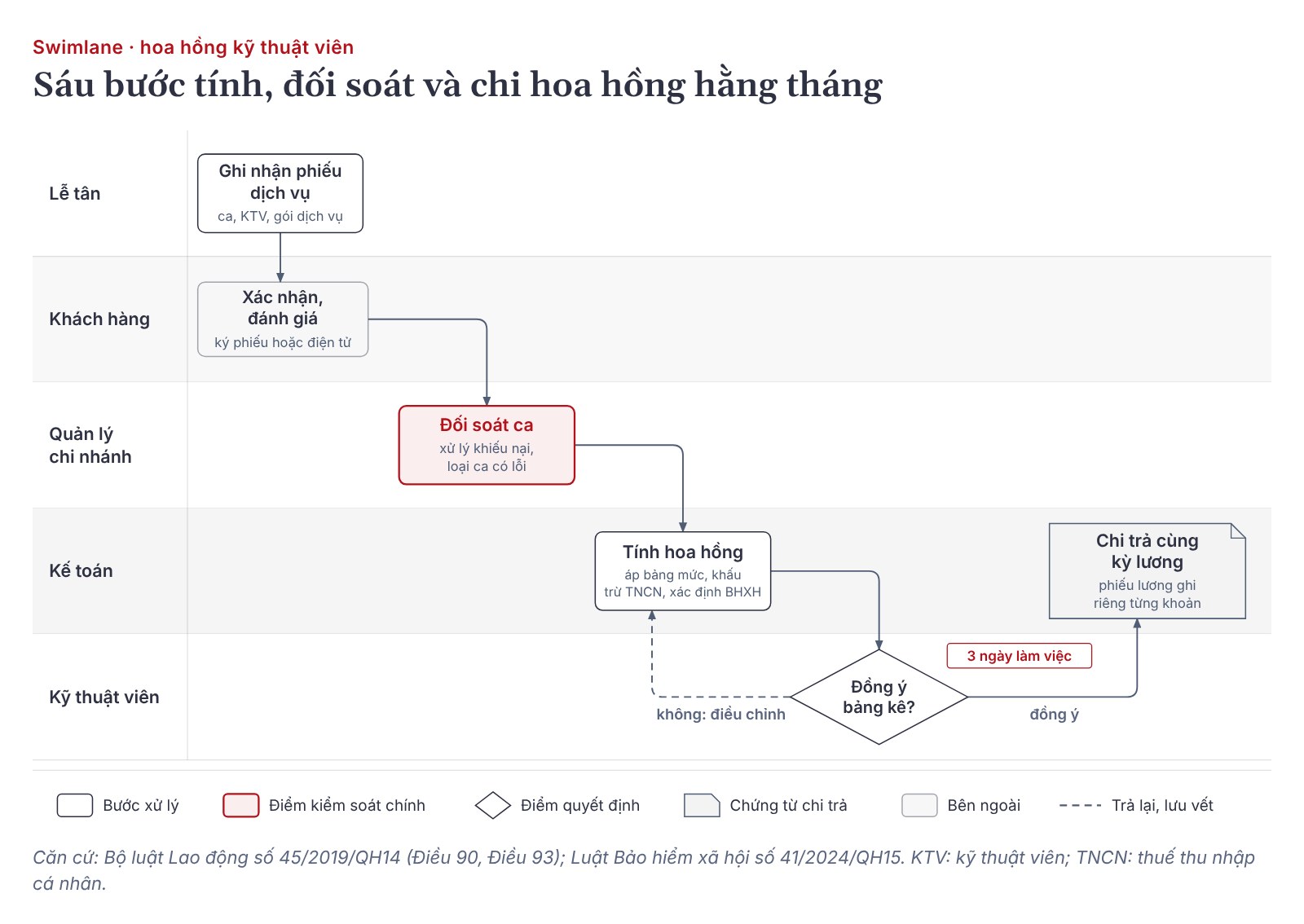
Figure 02. Swimlane of the six steps to calculate, reconcile and pay technician commissions each month
Basis: Labour Code No. 45/2019/QH14 (Articles 90 and 93); Law on Social Insurance No. 41/2024/QH15
The red box is the key control where the branch manager reconciles sessions. Technicians have 3 working days to confirm the statement; if they disagree, the dashed arrow returns it to accounting for a logged adjustment.
The key controls are the branch manager’s reconciliation and the therapist’s confirmation of the statement. The software must keep an edit history of service tickets; every adjustment after period close needs a reason and an approver. Accounting withholds personal income tax on total income, including commission, and issues a payslip itemising each component.
Contracts with therapists
Many spas sign “collaboration contracts” with therapists to avoid insurance obligations. This is risky: if the arrangement involves paid work under the spa owner’s management, direction and supervision (shift scheduling, uniforms, mandatory procedures), it is still deemed a labour contract under Clause 1, Article 13 of the Labor Code.
Three documents should accompany the labour contract. First, a vocational training contract if the company bears training costs, with a committed service period and reimbursement amount (Article 62 of the Labor Code). Second, a confidentiality agreement covering customer information and business secrets (Clause 2, Article 21 of the Labor Code). Third, an acknowledgement of the wage and bonus regulations, including the commission policy. That policy is part of the wage system, so it must be consulted with the employee representative organisation (if any) and publicly announced at the workplace before applying (Article 93 of the Labor Code).
Linking commission to service quality
Pure sales-based commission easily leads to pressuring customers into extra packages, a brand risk and a legal risk under the Law on Protection of Consumer Rights No. 19/2023/QH15. Spa chains should allocate 10–20% of the variable pool to a quality bonus based on customer ratings, justified complaints, repeat-visit rates and hygiene and instrument sterilisation audits.
Quality also depends on the scope of permitted services. Establishments offering massage must hold a certificate of satisfaction of security and order conditions, issued by commune-level police under Article 24 of Decree No. 96/2016/ND-CP as amended by Decree No. 392/2026/ND-CP. Invasive procedures such as injections, microneedling and therapeutic laser fall under medical examination and treatment under the Law on Medical Examination and Treatment No. 15/2023/QH15; the policy must not pay therapists commission for such services. Customer before-and-after photos are personal data and may only be taken and used with consent under the Law on Personal Data Protection No. 91/2025/QH15.
Legal basis and sources
- Labor Code No. 45/2019/QH14 (effective 1 January 2021) and Decree No. 145/2020/ND-CP detailing working conditions and labour relations.
- Law on Social Insurance No. 41/2024/QH15 (effective 1 July 2025).
- Decree No. 399/2026/ND-CP on minimum wages for employees under labour contracts, applicable from 1 January 2027.
- Decree No. 96/2016/ND-CP on security and order conditions for certain conditional business lines, as amended by Decree No. 392/2026/ND-CP (effective 15 November 2026).
- Law on Medical Examination and Treatment No. 15/2023/QH15; Law on Protection of Consumer Rights No. 19/2023/QH15.
- Law on Personal Data Protection No. 91/2025/QH15 (effective 1 January 2026).
How Justeps supports businesses
- Designing wage, bonus and commission policies and pay scales for spa chains: Governance standardisation.
- Standardising labour contracts, vocational training contracts and confidentiality agreements: Regulatory advice and compliance.
- Setting up branch operations, reconciliation and quality control processes: Operational setup.
- Reviewing business conditions when expanding the chain into new provinces: Business growth.
- Training branch managers on policies and complaint handling: In-house training.
Contact Justeps for a policy tailored to your chain model.
Frequently asked questions
Is commission subject to social insurance contributions?
It depends on the design. Amounts paid on a fixed, regular basis each pay period should be considered for the contribution base under the 2024 Law on Social Insurance. Performance-based commission should be itemised separately with retained calculations.
Should full-time therapists sign collaboration contracts?
No. If therapists work shifts, are managed and are paid for their work, the relationship is still deemed a labour contract under Clause 1, Article 13 of the Labor Code.
How is card commission handled when a therapist resigns?
If commission is recognised per session used, the therapist receives it in full for sessions performed up to the leaving date. Remaining sessions are performed and earned by others.
Can commission be deducted when a customer complains?
Only under conditions set out in the published policy, with a finding of fault and notice to the therapist. Commission deductions must not replace labour discipline procedures.
What is the salary floor for therapists in 2027?
No lower than the regional minimum wage under Decree No. 399/2026/ND-CP: VND 5,700,000 (Region I), 5,080,000 (Region II), 4,450,000 (Region III) and 4,040,000 (Region IV) per month.
Related articles
- Converting an agricultural processing cooperative into an enterprise: choosing the model and restructuring
- Internal financial regulation for limited liability companies: norms, approvals, advances and settlement
- Export garment manufacturers: preparing for buyers' labour compliance audits
This article is for reference and reflects the regulations in force at the time of publication. Please consult Justeps for advice tailored to your company’s records and situation.
For further information, please contact:
📩 Email: info@justeps.vn
🌐 Website: https://justepslegal.com · https://justeps.vn
🌐 Page: Justeps
☎️ Hotline (Zalo): 096 172 2607
📍 Thanh Xuan Office: 12th Floor, Licogi 13 Tower, 164 Khuat Duy Tien Street, Thanh Xuan Ward, Hanoi, Vietnam
📍 Ha Dong Office: LK06B, No.10, Dong Dua Area, Ha Dong Ward, Hanoi, Vietnam
📍 Ho Chi Minh City Branch: 528 Le Van Sy, Ho Chi Minh City, Vietnam
📍 Hai Phong Office: Truong Thinh Village, Ha Dong Commune, Hai Phong, Vietnam
📍 Quang Ninh Office: Van Don Special Zone, Quang Ninh Province, Vietnam