
Many companies only realise their General Director has exceeded his or her authority when the bank refuses to disburse for lack of a resolution, when a counterparty sues to enforce a guarantee the Board never knew about, or when auditors find a loan to a manager’s relative. The usual cause is a charter copied from a template, internal regulations without concrete limits, and powers of attorney drafted more broadly than needed.
Clearly defining the General Director’s authority is not about tying the executive’s hands. The aim is to let the General Director decide quickly within the delegated scope while high-risk transactions go through the right approval level. This article explains how to layer authority in the charter, internal regulations and powers of attorney, along with operational controls.
General Director authority under the law and what the company can design
In a joint stock company, the Director or General Director runs day-to-day business, is supervised by the Board of Directors, is accountable to the Board and to the law, and serves a term of no more than five years (under Article 162 of the Law on Enterprises No. 59/2020/QH14, as amended in 2025)[1]. The General Director decides daily matters not reserved to the Board, implements Board resolutions, appoints managers whose appointment is not reserved to the Board, and hires employees.
The law leaves a lot of room to the charter. The Board approves contracts and transactions worth 35% or more of total assets in the latest financial statements (under point h, clause 2, Article 153 of the Law on Enterprises), while the General Meeting decides on investment in or sale of assets worth 35% or more (under point d, clause 2, Article 138), but both allow the charter to set a different ratio or value. In a limited liability company, the Members’ Council approves loans, lending and sales of assets worth 50% or more of total assets unless the charter provides otherwise. Everything below these thresholds belongs to internal regulations, and that is where the company must design its own rules.
Three layers of documents that limit authority
Company charter
The charter should state the number and titles of legal representatives and the scope of each one’s authority. If a company has several legal representatives and the charter does not divide their powers, each is a full representative of the company towards third parties (under clause 2, Article 12 of the Law on Enterprises). The charter should also lower the 35% threshold to a level that fits the company’s size, since 35% of the total assets of a company worth several hundred billion dong is too large to entrust to one person.
Governance regulations or delegation of authority regulations
These regulations set limits by transaction type: sales contracts, loans, guarantees, mortgages, asset disposals, unbudgeted spending, hiring and employment contracts with senior managers. Each type needs a value threshold, a proposer, a controller and an approver. Because the Board or Members’ Council issues them, they are easier to amend than the charter as the company grows.
| Matter | General Director | Board of Directors | General Meeting of Shareholders |
|---|---|---|---|
| Ordinary sale and service contracts | Decides within the delegated limit | Decides above the limit | No |
| Contracts and transactions of 35% or more of total assets | Submits | Approves (unless the charter provides otherwise) | No |
| Investment or sale of assets of 35% or more of total assets | Submits | Submits | Decides (unless the charter provides otherwise) |
| Borrowing, guarantees, pledges of company assets | Proposes | Decides within limits in the charter and regulations | According to charter thresholds |
| Related-party transactions | Cannot decide alone | Approves under Article 167 | Approves above the threshold |
| Middle management appointments, hiring | Decides | Positions reserved to the Board | No |
Delegation resolutions and powers of attorney
When the General Director delegates further to a Deputy General Director, branch director or department head, the power of attorney must stay within the scope the General Director has received. The Civil Code No. 91/2015/QH13 governs authorised representation in Article 138, the term of representation in Article 140 and sub-delegation in Article 564. A power of attorney should have a fixed term, list the matters covered and value limits, and state that sub-delegation is not allowed unless needed.
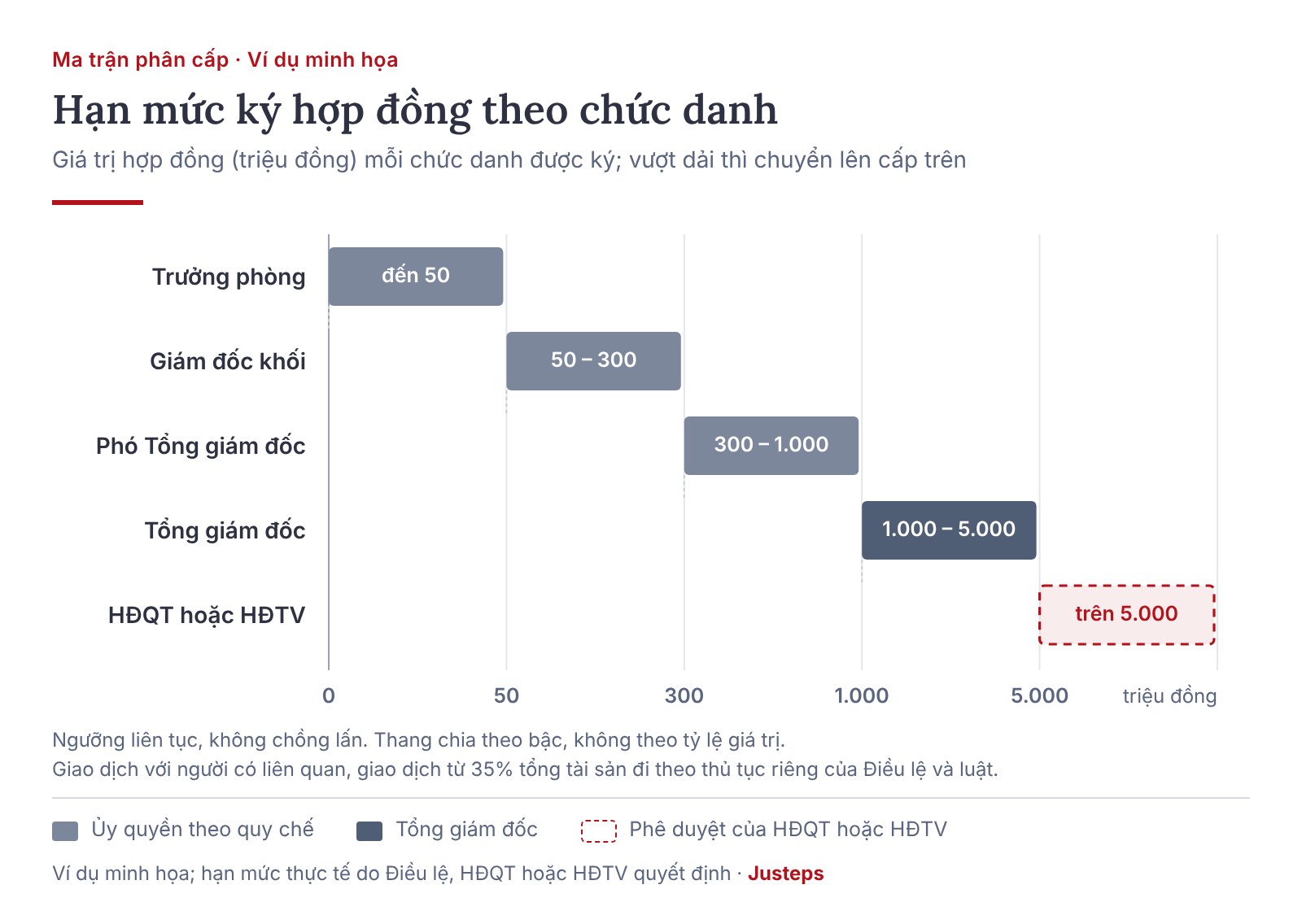
Figure 01. Contract signing limits by position
Illustrative example; actual limits set by the charter, Board or Members' Council
Each position signs within a continuous value band; amounts above VND 5,000 million (red dashed box) go to the Board or Members' Council.
Consequences when the General Director exceeds authority
A transaction entered into by a representative beyond the scope of representation does not create rights or obligations for the company in respect of the excess, unless the company consents, knows and does not object within a reasonable time, or is at fault in causing the other party not to know of the excess (under Article 143 of the Civil Code). In practice, proving that the counterparty knew or should have known of internal limits is not easy, so the company may still be drawn into a long dispute.
As for the manager, a General Director who breaches the charter or regulations and causes damage is personally liable under Article 165 of the Law on Enterprises, and shareholders holding at least 1% of ordinary shares may sue under Article 166. A related-party transaction not approved under Article 167 may be invalidated, and the signatory must compensate the company and return any benefit obtained.
Controlling General Director authority in daily operations
Good documents are not enough if the contracting team does not check before submitting for signature. The simple six-step process below can be assigned to the legal team or company secretary.
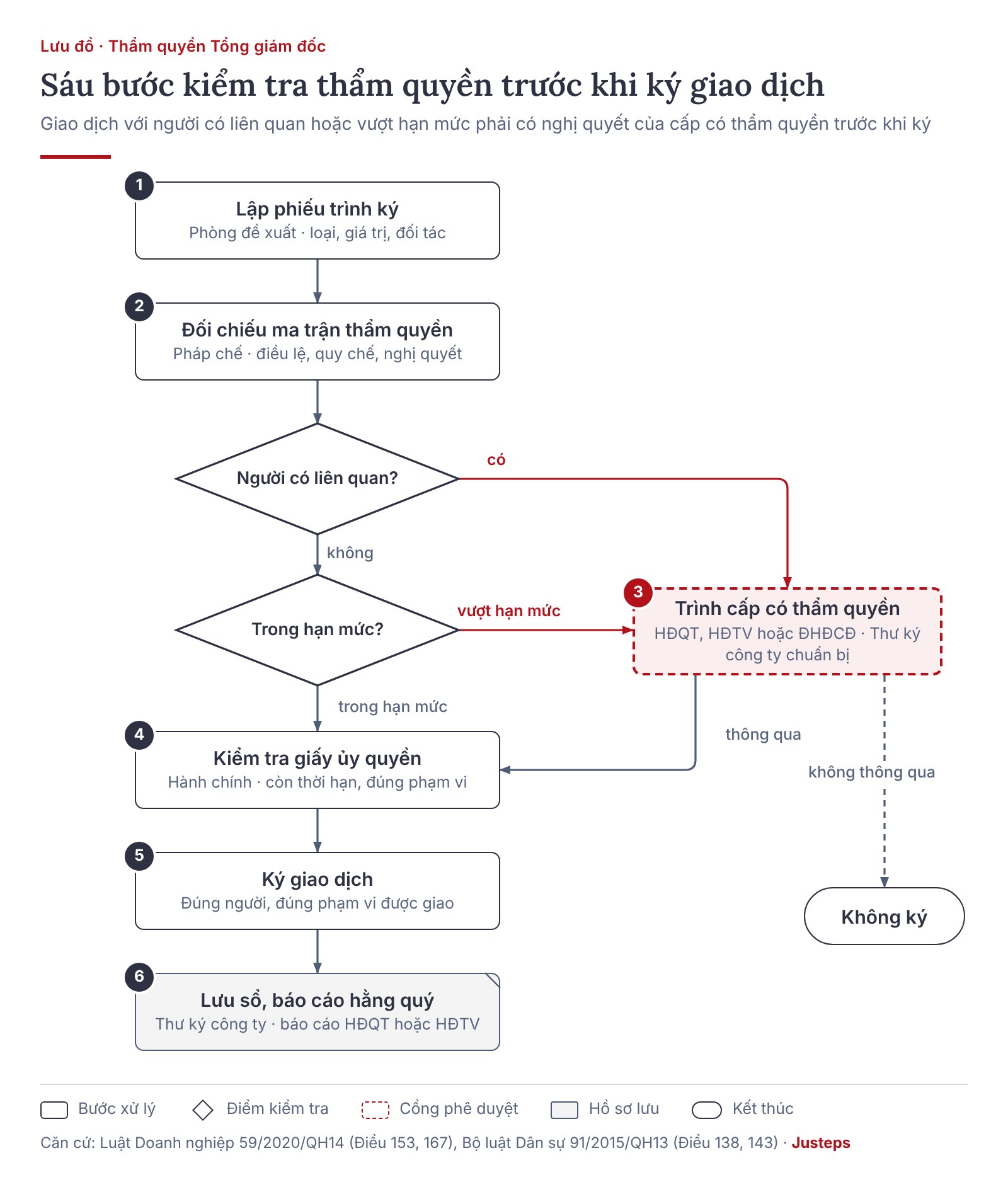
Figure 02. Six checks on authority before signing
Basis: Enterprise Law 59/2020/QH14 (Arts. 153, 167), Civil Code 91/2015/QH13 (Arts. 138, 143)
Diamonds are checks; related-party or over-limit deals follow the red branch to the approval gate and are signed only after a resolution.
- The requesting department records the transaction type, value and counterparty on the signature request form.
- Legal checks the authority matrix and whether the counterparty is a related person of any manager.
- Above the limit, the company secretary prepares a submission to the Board, Members’ Council or General Meeting; the contract is signed only after the resolution is issued.
- Administration verifies that the power of attorney is current and within scope before applying the seal.
- The company secretary keeps a register of transactions signed under delegation and reports to the Board or Members’ Council quarterly.
Each year, when approving the business plan, the Board or Members’ Council should review the limits. Limits that are too low push everything up to the Board; limits that are too high leave controls on paper only. Powers of attorney must also be revoked when the holder leaves or changes role, with notice to banks and key counterparties.
Companies that need to build or review their delegation regulations can refer to Justeps’ governance standardisation and regulatory advice and compliance services.
Legal basis and sources
- Law on Enterprises No. 59/2020/QH14, as amended in 2025 (Article 12 on legal representatives; Articles 138 and 153 on the powers of the General Meeting and the Board; Article 162 on the Director or General Director of a joint stock company; Articles 165, 166 and 167 on managers’ duties, the right to sue and related-party transactions).
- Civil Code No. 91/2015/QH13, effective from 1 January 2017 (Articles 138, 140 and 143 on authorised representation, term of representation and transactions beyond the scope of representation; Article 564 on sub-delegation).
How Justeps supports businesses
- Reviewing and amending the charter on legal representatives and approval thresholds through governance standardisation.
- Building delegation of authority regulations and a value-based approval matrix.
- Drafting template delegation resolutions, powers of attorney, signature request forms and transaction registers.
- Advising on related-party transaction controls through regulatory advice and compliance.
- In-house training for executives and contracting teams through in-house training. Learn more at Justeps.
Frequently asked questions
Can the charter limit the General Director to contracts below VND 1 billion?
Yes. The Law on Enterprises allows the charter to set a ratio or value other than 35%. A fixed monetary threshold is often easier to apply.
Does a General Director who is the legal representative need a power of attorney to sign contracts?
No, but he or she must still respect the limits in the charter and regulations. For transactions above the limit, a resolution of the competent body is needed before signing.
Can a Deputy General Director authorised by the General Director sub-delegate?
Only if the power of attorney allows it or in a force majeure case under Article 564 of the Civil Code, and the sub-delegated scope may not exceed the original scope.
Is a contract signed beyond authority automatically void?
Not automatically. Under Article 143 of the Civil Code, the excess does not bind the company except in certain cases. The company may ratify the contract later if it is beneficial.
How often should authority limits be reviewed?
At least once a year when approving the business plan, and immediately when the company changes its legal representative, General Director or asset size.
Related articles
- Family business succession to the next generation: family charter and a five-year roadmap
- Liability of company managers: Directors, Board members and chief accountants
- Merging two subsidiaries within a group: HR, contracts, tax and invoices roadmap
This article is for reference and reflects the regulations in force at the time of publication. Please consult Justeps for advice tailored to your company’s records and situation.
For further information, please contact:
📩 Email: info@justeps.vn
🌐 Website: https://justepslegal.com · https://justeps.vn
🌐 Page: Justeps
☎️ Hotline (Zalo): 096 172 2607
📍 Thanh Xuan Office: 12th Floor, Licogi 13 Tower, 164 Khuat Duy Tien Street, Thanh Xuan Ward, Hanoi, Vietnam
📍 Ha Dong Office: LK06B, No.10, Dong Dua Area, Ha Dong Ward, Hanoi, Vietnam
📍 Ho Chi Minh City Branch: 528 Le Van Sy, Ho Chi Minh City, Vietnam
📍 Hai Phong Office: Truong Thinh Village, Ha Dong Commune, Hai Phong, Vietnam
📍 Quang Ninh Office: Van Don Special Zone, Quang Ninh Province, Vietnam





