Ongoing legal advice under an annual retainer is how many companies get a legal expert at their side without paying per matter. Yet plenty of companies sign a package and then leave it idle, asking only a few questions a year, and at renewal time cannot tell whether it was worth the money.
This article compares common ongoing legal advice packages, what should and should not fall within the scope, and how companies can organise themselves internally to use the package effectively.
How ongoing legal advice differs from matter-based advice
Matter-based advice charges for each specific job: drafting a contract, handling a dispute, completing a procedure. Ongoing legal advice is a service contract (under Article 513 of Civil Code No. 91/2015/QH13)[1], usually for 12 months, under which the adviser answers issues arising in day-to-day operations for a fixed fee, with or without an hours cap.
The biggest benefit is not a cheaper hourly rate but a legal expert who understands the business and can warn in advance. In the last few months of 2026 alone came Decree No. 398/2026/ND-CP cutting corporate income tax by 30% for companies with revenue up to VND 10 billion, the law amending the Labor Code adding two public holidays from 01/3/2027, new minimum wages under Decree No. 399/2026/ND-CP from 01/01/2027, and Decree No. 363/2026/ND-CP on administrative penalties in the field of data, effective from 11/11/2026. A good package turns these changes into a concrete to-do list for the company.
Comparing ongoing legal advice packages
Names and fees vary between firms, but most packages are designed in three tiers. The table below helps companies match their needs.
| Criterion | Basic package | Standard package | Extended package |
|---|---|---|---|
| Best suited to | New companies, under 30 staff | Companies with 30–150 staff | Over 150 staff or company groups |
| Format | Email and phone answers | Email, phone, periodic meetings | Email, phone, periodic meetings, attendance at negotiations |
| Contract review | Limited number per month | Contracts above the agreed value threshold | All contracts above the threshold, including English-language contracts |
| Drafting | Simple documents | Regulations, template contracts, resolutions | Full sets of regulations, governance files for multiple entities |
| New-law updates | General newsletter | Newsletter with company-specific actions | Impact analysis and implementation plan |
| Reporting | Year end | Quarterly | Monthly and quarterly |
When comparing, companies should ask three things: is there a cap on hours or matters and how is overage charged; what is the committed response time; who is the responsible legal expert and can that change mid-term.
What the scope of an ongoing legal advice package should state
The more specific the scope, the fewer the disputes. The contract should have an annex listing the work included, usually:
- Answering legal questions on the company's day-to-day operations.
- Reviewing and commenting on sale, service, lease and employment contracts up to the agreed threshold.
- Drafting simple internal documents: decisions, notices, minutes, routine resolutions.
- Updates on new legislation affecting the company's industry.
- Compliance reminders: periodic reports, expiring licences, enterprise registration changes.
Work usually outside the package and charged separately: representation in litigation and arbitration; legal due diligence for M&A; restructuring; complex licensing procedures; certified translation. If the company knows a major matter is coming during the year, it should negotiate a preferential rate when signing the package.
Using an ongoing legal advice package effectively
A package only delivers when the company is proactive. The process below helps make full use of the hours paid for.
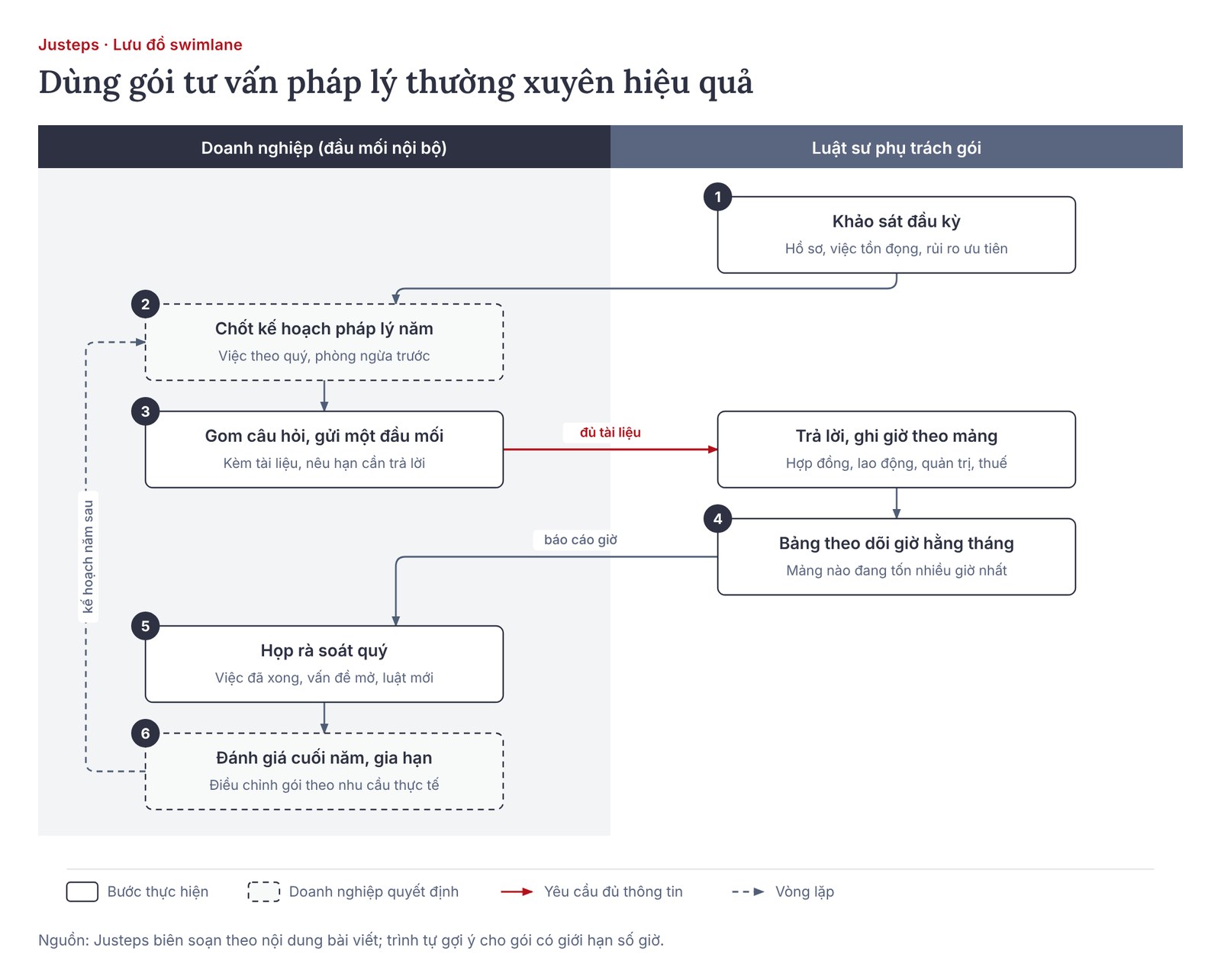
Figure 01. Swimlane for using an annual legal retainer: company and responsible legal expert
Source: compiled by Justeps from the article; suggested sequence
The left column is the company's work, the right column the legal expert's; dashed boxes are company decisions. The red arrow stresses complete requests sent through one contact; the dashed loop is next year's plan.
The annual legal plan is the step most often skipped. Instead of calling only when a question arises, the company and legal expert list the work for the year, such as standardising template contracts in Q1, updating labor regulations before 01/3/2027 in Q1, reviewing the personal data policy in Q2 and preparing the annual meeting in Q2. This way hours go into prevention rather than firefighting.
The internal point of contact should batch questions, attach complete documents and state the required response date. A well-described question can save half the hours of one sent piecemeal by several people.
Tracking hours and the value of the package
For packages with an hours cap, companies should request a monthly time report broken down by area. It shows where effort goes, so the company can adjust next year's package or invest in standardising the most time-consuming area.
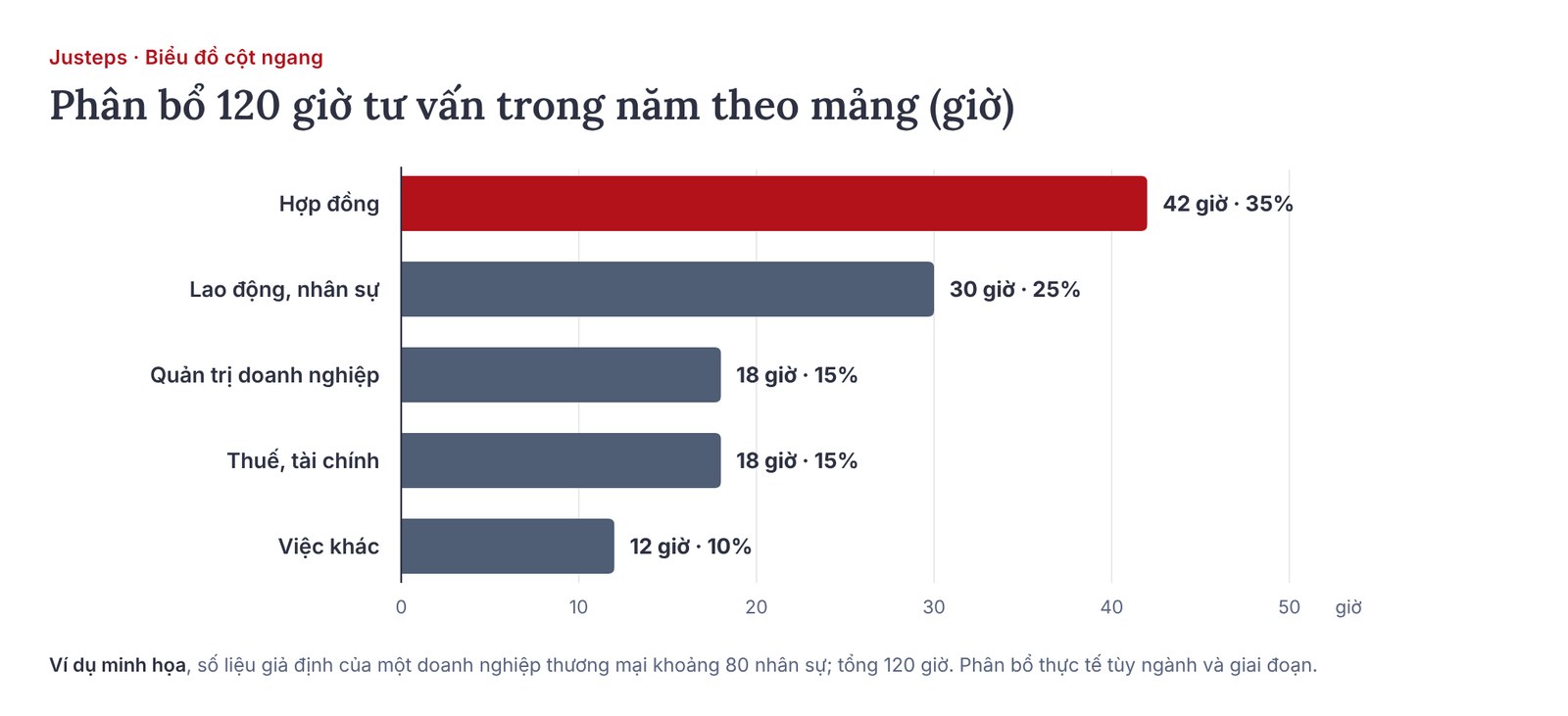
Figure 02. Allocation of 120 advisory hours in a year by area (hours)
Illustrative example, assumed figures for a trading company of about 80 staff
Each bar shows hours and share of the 120-hour total; the red bar marks contracts as the largest area, suggesting priority for standard templates.
In this example, contracts take the most hours. A good set of template contracts can significantly cut review hours the following year. Labor comes second, usually because of labor regulations, discipline and termination; this is a sign to revisit the HR policies.
Mistakes that make a package ineffective
Asking only once a dispute has arisen. No point of contact, so each department contacts the legal expert separately and asks the same questions. Sending contracts to the legal expert after signing. Not filing advice, so the same question is asked repeatedly. No periodic reviews, so only at year end does the company discover unused hours or overage. Finally, advisory fees need a contract, invoices and payment records to be deductible under Law on Corporate Income Tax No. 67/2025/QH15.
Legal basis and sources
- Civil Code No. 91/2015/QH13 (Article 513 on service contracts), effective from 01/01/2017.
- Law on Experts No. 65/2006/QH11, as amended and supplemented.
- Law on Corporate Income Tax No. 67/2025/QH15.
- Decree No. 398/2026/ND-CP on personal income tax and corporate income tax reductions, effective from 29/10/2026.
- Law amending and supplementing certain articles of the Labor Code, the Law on Archives, the Law on Gender Equality, the Law on Red Cross Activities and the Law on Employment, passed on 21/11/2026, effective from 01/3/2027.
- Decree No. 399/2026/ND-CP on minimum wages, applicable from 01/01/2027.
- Decree No. 363/2026/ND-CP on administrative penalties in the field of data, effective from 11/11/2026.
How Justeps supports businesses
- Advisory and regulatory compliance: annual ongoing legal advice packages with a responsible legal expert, an annual legal plan and periodic reports.
- Corporate governance: meeting documents, resolutions and enterprise registration changes during the year.
- Operational setup: template contracts and an internal legal request process.
- Tax, Customs & International Trade: updates on new tax policies and their impact on the company.
- In-house training: legal training for the point of contact and department managers.
Contact Justeps for a package proposal suited to your company.
Frequently asked questions
Is there a limit on the number of questions in an ongoing legal advice package?
It depends on the package. Some cap hours, some cap matters, and some are unlimited but only for listed work. Read the scope annex and the overage terms carefully.
Can unused hours be carried over to the next year?
It depends on the agreement. Some firms allow partial carry-over or conversion into other work such as in-house training. Negotiate this at signing.
Does a small company need an ongoing legal advice package?
If there are only a few legal matters a year, matter-based advice may be enough. Once the company signs more contracts, hires more staff or expands its business lines, an annual package is usually cheaper and helps prevent risks.
Are legal advisory fees deductible expenses?
Yes, if the expense serves business activities and is supported by a contract, invoices and payment records as required.
How does an ongoing legal advice package differ from outsourced legal counsel?
An ongoing advice package focuses on answering and handling issues as they arise. Outsourced legal counsel is broader: the adviser takes on almost the entire legal function, including the compliance calendar and governance records.
Related articles
- Personal data protection in HR under Vietnam's 2025 Law on Personal Data Protection
- A minimum set of internal governance regulations for companies with 50–200 employees
- Corporate restructuring and lawful tax optimisation: options and risks
This article is for reference and reflects the regulations in force at the time of publication. Please consult Justeps for advice tailored to your company’s records and situation.
For further information, please contact:
📩 Email: info@justeps.vn
🌐 Website: https://justepslegal.com · https://justeps.vn
🌐 Page: Justeps
☎️ Hotline (Zalo): 096 172 2607
📍 Thanh Xuan Office: 12th Floor, Licogi 13 Tower, 164 Khuat Duy Tien Street, Thanh Xuan Ward, Hanoi, Vietnam
📍 Ha Dong Office: LK06B, No.10, Dong Dua Area, Ha Dong Ward, Hanoi, Vietnam
📍 Ho Chi Minh City Branch: 528 Le Van Sy, Ho Chi Minh City, Vietnam
📍 Hai Phong Office: Truong Thinh Village, Ha Dong Commune, Hai Phong, Vietnam
📍 Quang Ninh Office: Van Don Special Zone, Quang Ninh Province, Vietnam