When goods in an outsourced warehouse are lost, soaked or damaged, the first question is always "who pays, and how much". The answer lies almost entirely in the signed warehousing contract and in the receipt record made on the day the goods entered the warehouse. Many cargo owners only discover that the maximum compensation is far below the value of the shipment after the incident has happened.
This article is for both sides: businesses renting warehouse services and businesses providing warehousing and logistics services. It focuses on the risk-allocation clauses in a warehousing contract, the statutory liability limits, and an operating structure that can prove the condition of the goods at any time.
What kind of contract is a warehousing contract
Warehousing is a logistics service under Article 233 of the Commercial Law No. 36/2005/QH11. Where the warehouse operator only leases space and the cargo owner manages the goods, the relationship is close to an asset lease; where the operator receives, keeps, preserves and returns the goods, it is in substance a bailment contract under Article 554 of the Civil Code No. 91/2015/QH13 and subject to specific logistics rules. Distinguishing the two models comes first, because it determines who is responsible for the goods.
The contract should define the scope clearly: storage only, or value-added services such as labelling, repacking, counting, sorting and last-mile delivery. Each service carries a different risk.
Liability for goods and the compensation limit
The Commercial Law allows logistics service providers to benefit from liability limits (Article 238) and to exercise a lien over goods when the customer does not pay (Article 239). Under Article 5 of Decree No. 163/2017/ND-CP, where specialised law is silent and the parties have not agreed otherwise, if the customer did not declare the value of the goods in advance, the maximum liability is VND 500 million per claim; if the value was declared in advance and confirmed, the limit may not exceed that value. A logistics provider loses this limit if it causes the damage intentionally.
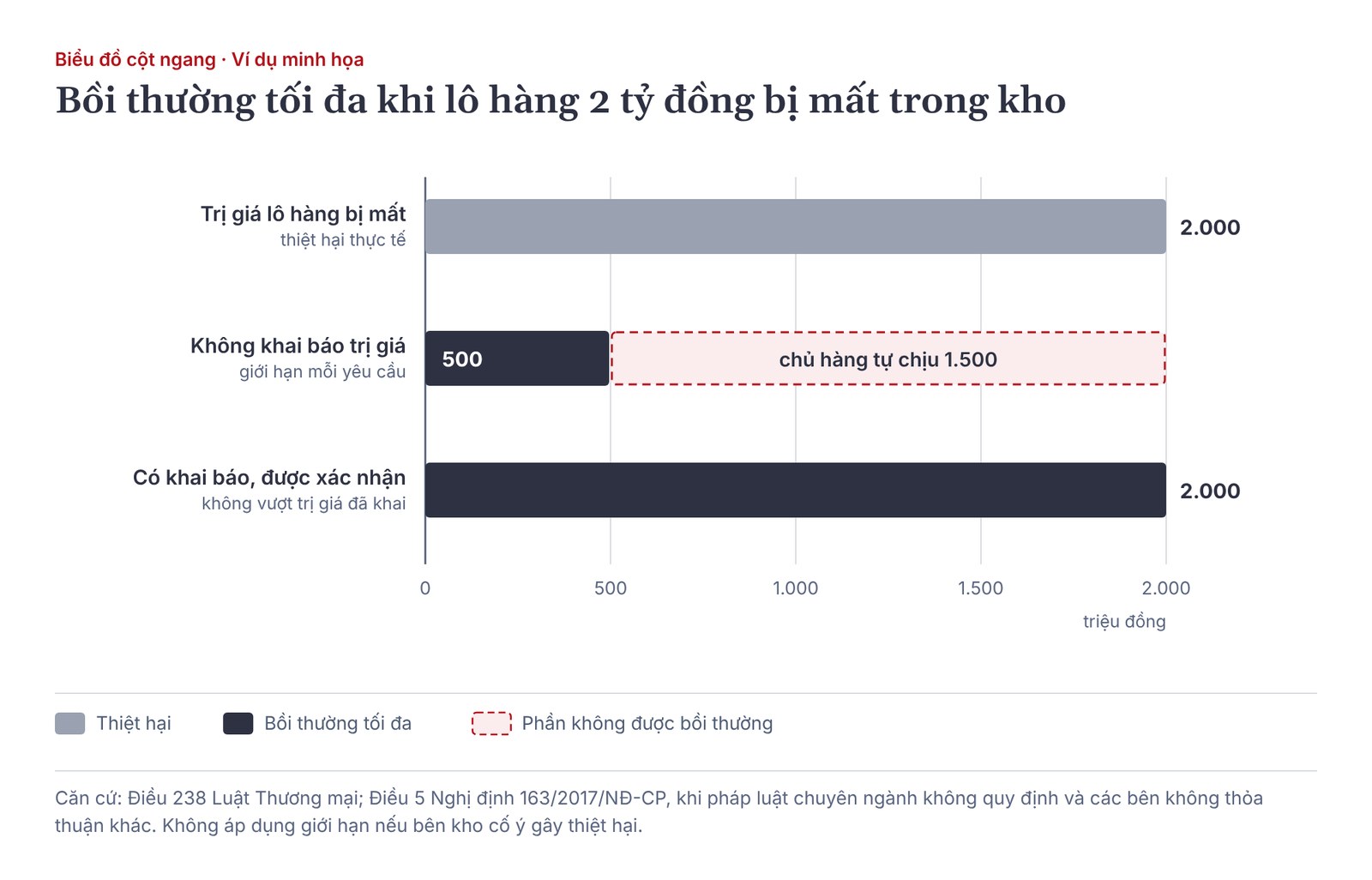
Figure 01. Maximum compensation when a VND 2 billion lot is lost in storage
Basis: Article 238, Commercial Law No. 36/2005/QH11; Article 5, Decree 163/2017/ND-CP | Illustrative example
Two cases with the same VND 2,000 million loss: without a declared value, compensation is capped at VND 500 million and the red dashed part, VND 1,500 million, is borne by the owner; with a declared and confirmed value, compensation goes up to that value.
The operational consequence is clear: owners of high-value shipments should declare the value in writing, obtain the warehouse's confirmation and consider insuring goods in storage. Warehouse operators, for their part, need a tariff that distinguishes declared-value and undeclared goods, since the risks differ.
| Clause | The customer needs | The warehouse operator needs |
|---|---|---|
| Scope of services | A full list of services and storage standards | Exclusion of services not provided |
| Receipt and release | A condition record on receipt; release only on valid orders | Liability limited to quantity and outer packaging if no detailed inspection |
| Liability limit | Declared value, higher limit, insurance | Limit per package, per kg or per incident |
| Permitted loss | A low, justified rate | A rate suited to the nature of the goods |
| Notice of loss | A period long enough to detect loss | A short period with mandatory documents |
| Lien and payment | Lien limited to goods matching the debt | Right of lien and disposal when payment is overdue |
| Insurance, fire safety | Operator holds liability insurance and meets fire safety requirements | Owner correctly declares dangerous and flammable goods |
Common sources of dispute
Shrinkage and stock-count differences. Bulk and agricultural goods lose weight naturally; the contract must define a permitted loss rate and how it is calculated per period, or every difference becomes a dispute.
Goods not declared correctly. Flammable goods, chemicals or temperature-sensitive goods sent as ordinary cargo are a frequent cause of incidents. The owner must provide information and safety data sheets where relevant; the operator may refuse and is exempt from liability for losses caused by misdeclaration.
Claim deadlines. Many operators' standard contracts set a very short period for notifying loss after release. Cargo owners should build this deadline into their receiving procedure, inspect goods on arrival and make a record signed by the driver or the warehouse representative.
Lien for unpaid fees. The operator may hold goods to recover fees due, but must give notice and keep the held goods in good condition. Owners should agree that only goods matching the debt may be held, so that a dispute over one small invoice does not "lock" the whole stock.
A warehouse operating structure that proves the condition of goods
In a warehousing contract dispute, the side with better evidence usually wins. That evidence comes from daily operating procedures, not from files rebuilt after the incident.
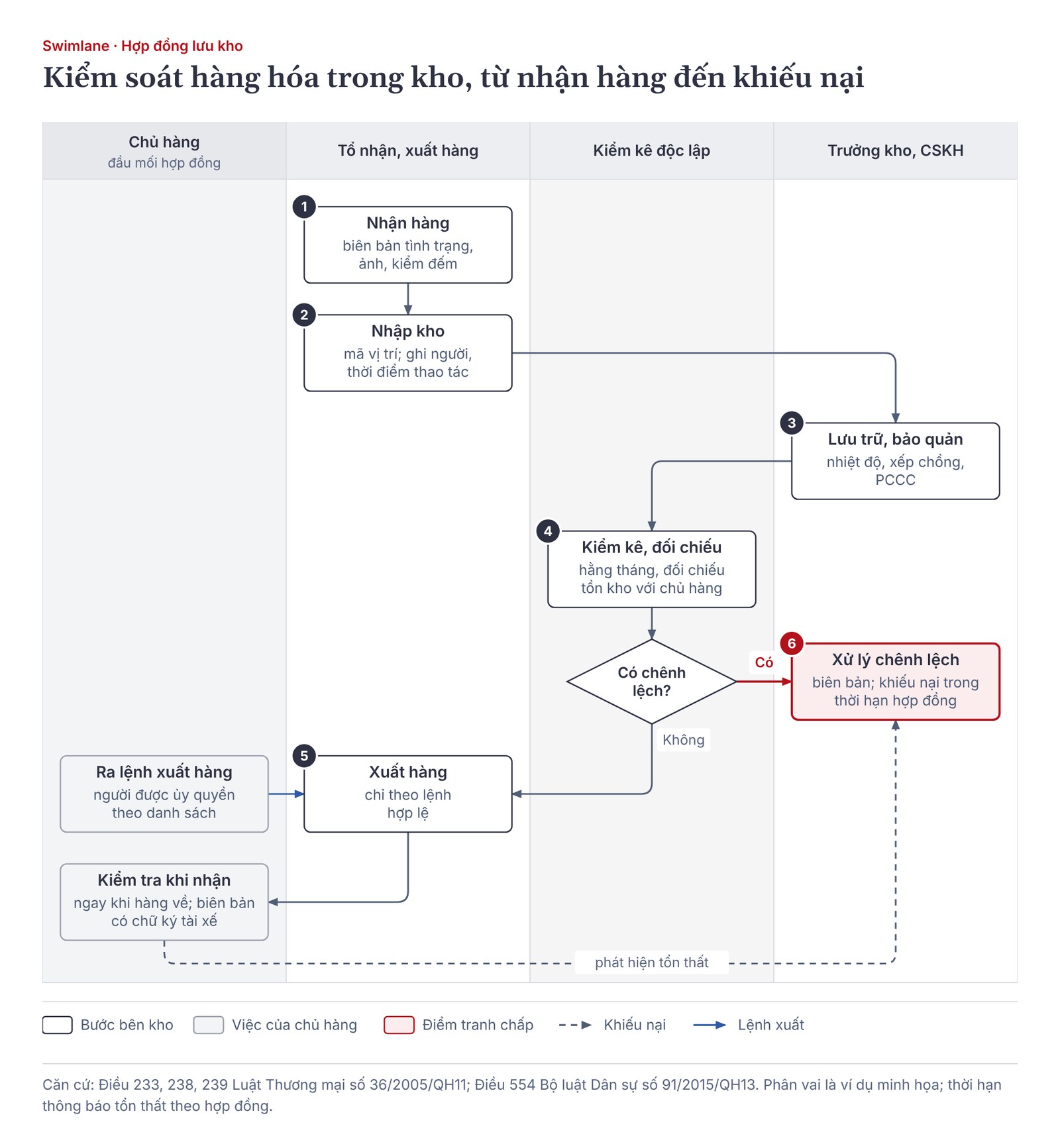
Figure 02. Controlling goods in storage, from receipt to claims
Basis: Articles 233, 238, 239, Commercial Law No. 36/2005/QH11; Article 554, Civil Code No. 91/2015/QH13 | Role split is illustrative
Each column is a party; light grey boxes are the cargo owner's tasks, white boxes the warehouse's. Any stock-count discrepancy or loss found on delivery ends in the red box, where a record is made and a claim filed within the contractual deadline.
The warehouse operator should set up these roles: a warehouse manager with overall responsibility; a receiving and dispatch team that makes records and photographs the condition of goods; a stock-count team independent of receiving and dispatch; a safety and fire prevention unit under the Law on Fire Prevention, Firefighting and Rescue No. 55/2024/QH15; and customer service to receive claims. The warehouse management system should log the operator, time and location of every receipt, release and movement.
The customer needs a contract owner: a list of persons authorised to issue release orders, a monthly stock reconciliation schedule and a procedure for spot checks. Release orders sent by email or chat from someone not on the authorised list are a loophole that is often exploited.
Legal basis and sources
- Commercial Law No. 36/2005/QH11, effective from 1 January 2006 (Article 233 on logistics services, Article 238 on liability limits, Article 239 on lien and disposal of goods).
- Civil Code No. 91/2015/QH13, effective from 1 January 2017 (Article 554 on bailment contracts).
- Decree No. 163/2017/ND-CP on logistics services (Article 5 on liability limits).
- Law on Fire Prevention, Firefighting and Rescue No. 55/2024/QH15, effective from 1 July 2025.
How Justeps supports businesses
- Drafting and reviewing warehousing contracts, logistics service contracts and liability limitation clauses for customers or operators, under our Advisory and regulatory compliance services.
- Designing the organisational structure and procedures for receipt, release, stock counts and claims for logistics businesses in our Operations setup package.
- Advising on business conditions for logistics services, bonded warehouses and import-export procedures with our Tax, Customs & International Trade team.
- Supporting negotiation and dispute resolution when cargo losses occur through our Corporate governance services.
Contact Justeps for advice on your specific contract.
Frequently asked questions
Goods were lost in the warehouse and the contract says nothing about a compensation limit. What then?
Absent another agreement and specialised rules, if the owner did not declare the value in advance, maximum compensation is VND 500 million per claim under Decree No. 163/2017/ND-CP.
How can the owner be compensated for the full value of a large shipment?
Declare the value of the goods in writing before storage, obtain the operator's confirmation and buy suitable cargo insurance.
May the warehouse hold goods if the owner pays late?
Yes. The Commercial Law allows logistics providers to hold goods to recover amounts due, subject to notice and the duty to preserve the held goods.
How much shrinkage is the operator not liable for?
The law sets no general rate; the parties should agree a permitted loss rate based on the nature of each type of goods and how it is calculated per count period.
How do leasing warehouse space and buying warehousing services differ in terms of liability?
With a space lease, the owner manages the goods and the lessor is mainly responsible for the premises. With a warehousing service, the operator receives, preserves and returns the goods and is therefore liable for them under the contract.
Related articles
- Managing subcontractors in a construction company: selection, contracts, acceptance and payment
- Software development contracts: acceptance, warranty and source code ownership
- Managing a pharmacy chain: pharmacy staff, GPP and inventory control
This article is for reference and reflects the regulations in force at the time of publication. Please consult Justeps for advice tailored to your company’s records and situation.
For further information, please contact:
📩 Email: info@justeps.vn
🌐 Website: https://justepslegal.com · https://justeps.vn
🌐 Page: Justeps
☎️ Hotline (Zalo): 096 172 2607
📍 Thanh Xuan Office: 12th Floor, Licogi 13 Tower, 164 Khuat Duy Tien Street, Thanh Xuan Ward, Hanoi, Vietnam
📍 Ha Dong Office: LK06B, No.10, Dong Dua Area, Ha Dong Ward, Hanoi, Vietnam
📍 Ho Chi Minh City Branch: 528 Le Van Sy, Ho Chi Minh City, Vietnam
📍 Hai Phong Office: Truong Thinh Village, Ha Dong Commune, Hai Phong, Vietnam
📍 Quang Ninh Office: Van Don Special Zone, Quang Ninh Province, Vietnam